



தொல்காப்பியம் 106 · எழுத்து 4.3
பாடல் · The poem
Tap a word to see where else it occurs.
பொருள் · Meaning in TamilAI
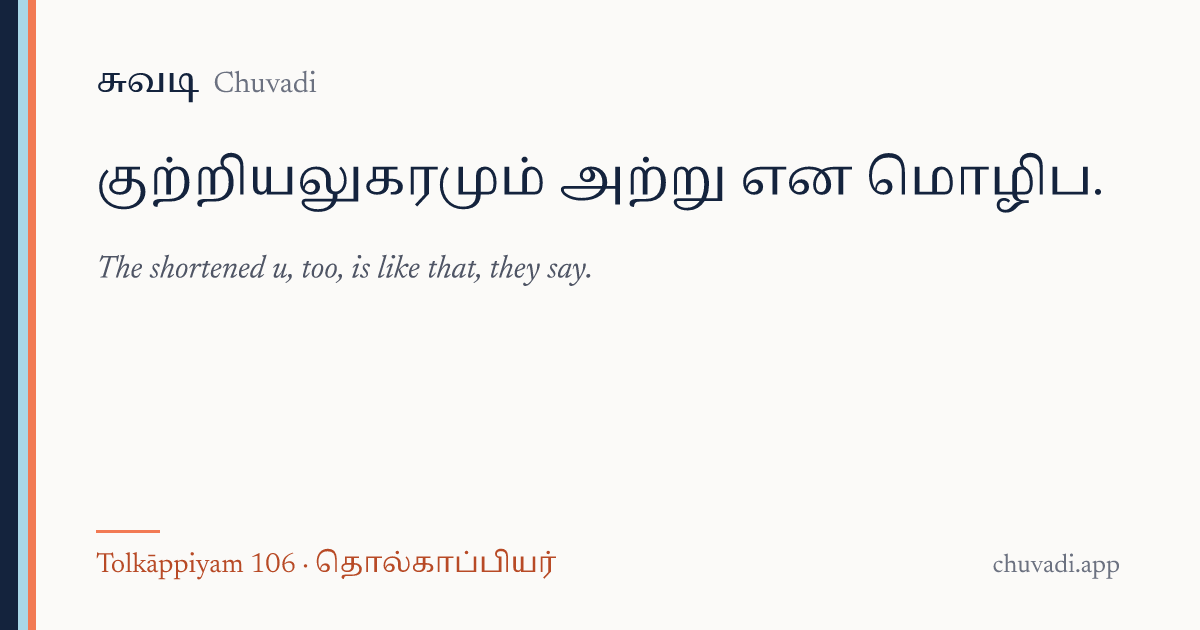
குற்றியலுகரமும் புள்ளி ஈற்றைப் போன்றதே என்று புலவர் கூறுவர். அதாவது, சொல்லின் இறுதியில் நிற்கும் குற்றியலுகரத்தின் முன் உயிர் முதலான சொல் வந்தால், அந்த உகரம் கெட்டு, வரும் உயிர் அதற்கு முன் உள்ள மெய்யின் மேல் ஏறும். நாகு என்பதுடன் அரிது சேர்ந்து நாகரிது ஆவது இதற்கு எடுத்துக்காட்டு.
இளம்பூரணர்
இளம்பூரணரும் இதனைப் புணர்ச்சி பற்றிய விதியாகவே கொண்டு, சொல்லின் இறுதியில் நிற்கும் குற்றியலுகரம் புணர்ச்சியில் புள்ளி ஈற்றைப் போலவே நடக்கும் என்று பொருள் கொள்வார்.
உரையாசிரியர்கள் இதனைப் புணர்ச்சி பற்றிய விதியாகவே கொள்கின்றனர். சொல்லளவில் பார்த்தால் குற்றியலுகரமும் மெய்யைப் போலப் புள்ளி பெறும் என்றும் பொருள்படக்கூடும்; ஆனால் பழைய உரைகள் அப்பொருளைக் கொள்ளவில்லை.
ஆங்கிலம் · English translationAI
Translation
- The shortened u, too, is like that, they say.
What the poem says
The kuṟṟiyalukaram, the "shortened u" at the end of words like nāku or kātu, behaves like a dotted consonant ending. When the next word begins with a vowel, the shortened u drops away and the incoming vowel mounts the consonant before it: nāku "young cow" plus aritu gives nākaritu.
This is how the commentators read "aṟṟu" ("is like that"): the likeness is to the previous rule, that a dotted final gives a following vowel room to mount. Nacciṉārkkiṉiyar adds that the sound of the shortened u is heard first and then the vowel, and only the two together yield the joined meaning. Taken quite literally, the line could also be taken to mean that the shortened u is written with a dot like a consonant; the old commentators, however, take it as a statement about sandhi.
உரை · Commentary
நச்சினார்க்கினியர்
இது முன்னர்ப் புள்ளியீற்றுமுன் உயிர் தனித்தியலாதென்று மெய்க்கு எய்துவிக்கின்ற கருவியை எதிரது போற்றி உயிர்க்கும் எய்துவிக்கின்ற கருவிச் சூத்திரம்.
இ-ள்: குற்றியலுகரமும் அற்றென மொழிப — ஈற்றுக் குற்றியலுகரமும் புள்ளியீறுபோல உயிரேற இடங்கொடுக்கு மென்று கூறுவர் புலவர்; எ-று.
இம்மாட்டேறு ஒருபுடைச் சேறல் புள்ளி பெறாமையின், அங்ஙனம் உயிரேறுங்காற் குற்றுகரங் கெட்டுப்போக நின்ற ஒற்றின் மேல் உயிரேறிற்றென்று கொள்ளற்க. நாகரிதென்புழி முன்னர்க் குற்றுகர வோசையும் பின்னர் உயிரோசையும் பெற்று அவ்விரண்டுங் கூடி நின்றல்லது அப்பொருளுணர்த்த லாகாமையின், இஃது உயிரோடுங் கூடி நிற்குமென்றார்