



தொல்காப்பியம் 1066 · பொருள் 3.32
பாடல் · The poem
Tap a word to see where else it occurs.
பொருள் · Meaning in TamilAI
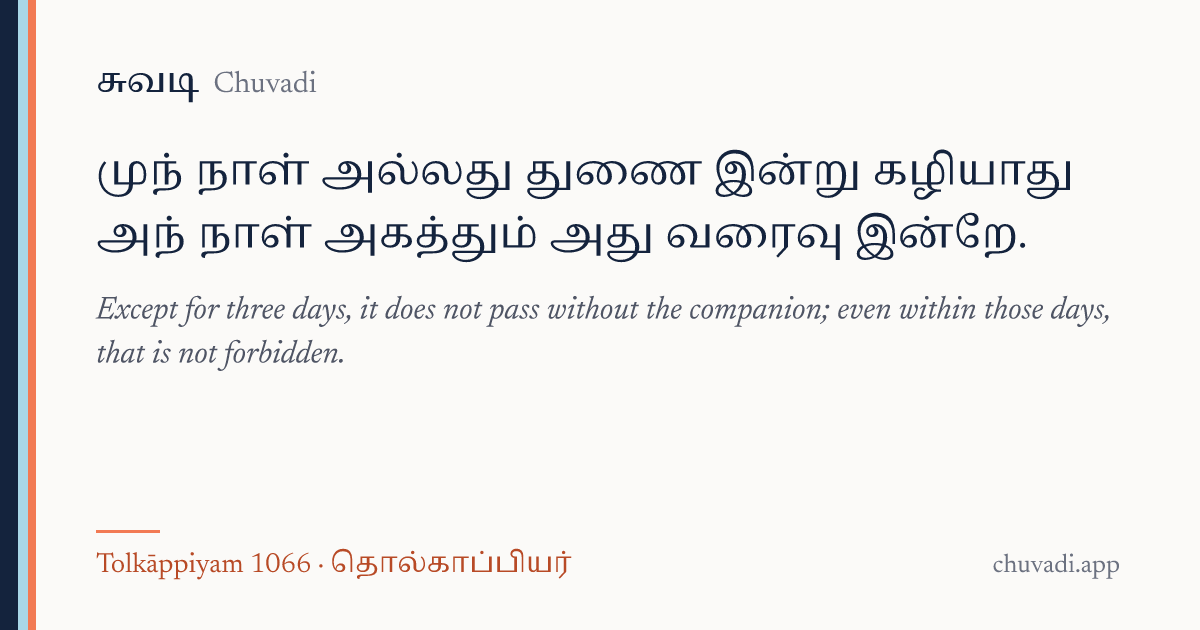
மூன்று நாள் அல்லாமல், துணையின்றிக் காலம் கழியாது; அந்த மூன்று நாளுக்குள்ளும் அது விலக்கப்படுவது இல்லை.
இளம்பூரணர்
இவர் உரையும் இந்நூற்பாவுக்கு மேற்கூறிய பொருளையே தருவதாகக் கொள்ளலாம்; 'துணை', 'அது' என்பவற்றுக்கு இவர் தரும் விளக்கம் இங்குச் சரிபார்க்கப்படவில்லை.
நச்சினார்க்கினியர்
இவர் உரையும் இந்நூற்பாவுக்கு மேற்கூறிய பொருளையே தருவதாகக் கொள்ளலாம்; மூன்று நாள் என்பதை இவர் எதனோடு தொடர்புபடுத்துகிறார் என்பது இங்குச் சரிபார்க்கப்படவில்லை.
களவுக் காலத்தில் காதலர் மூன்று நாளுக்கு மேல் பிரிந்திருப்பதில்லை, அதற்குள்ளும் சந்திப்பு தடைசெய்யப்படுவதில்லை என்பது ஒரு பொருத்தமான பொருளாகத் தோன்றுகிறது. ஆனால் "துணை" யார், "அது" எதைக் குறிக்கிறது என்பன நூற்பாவில் தெளிவாக இல்லை; இதன் பொருள் எங்களுக்கு உறுதியாகத் தெரியவில்லை.
ஆங்கிலம் · English translationAI
Translation
- Except for three days, it does not pass without the companion;
- even within those days, that is not forbidden.
What the poem says
A short and obscure rule. Literally: "except for three days, (time) does not pass without the companion (tuṇai); even within those days, it is not prohibited." One plausible sense is that in the period of secret love the lovers are not apart for longer than three days, and even within that short span meeting is not barred.
What exactly is being counted, who the "companion" is (the lover, or the heroine's friend), and what "that" refers to are not stated. We are not confident of the commentators' reading here and give the literal sense with this caution.