



தொல்காப்பியம் 1110 · பொருள் 4.25
பாடல் · The poem
Tap a word to see where else it occurs.
பொருள் · Meaning in TamilAI
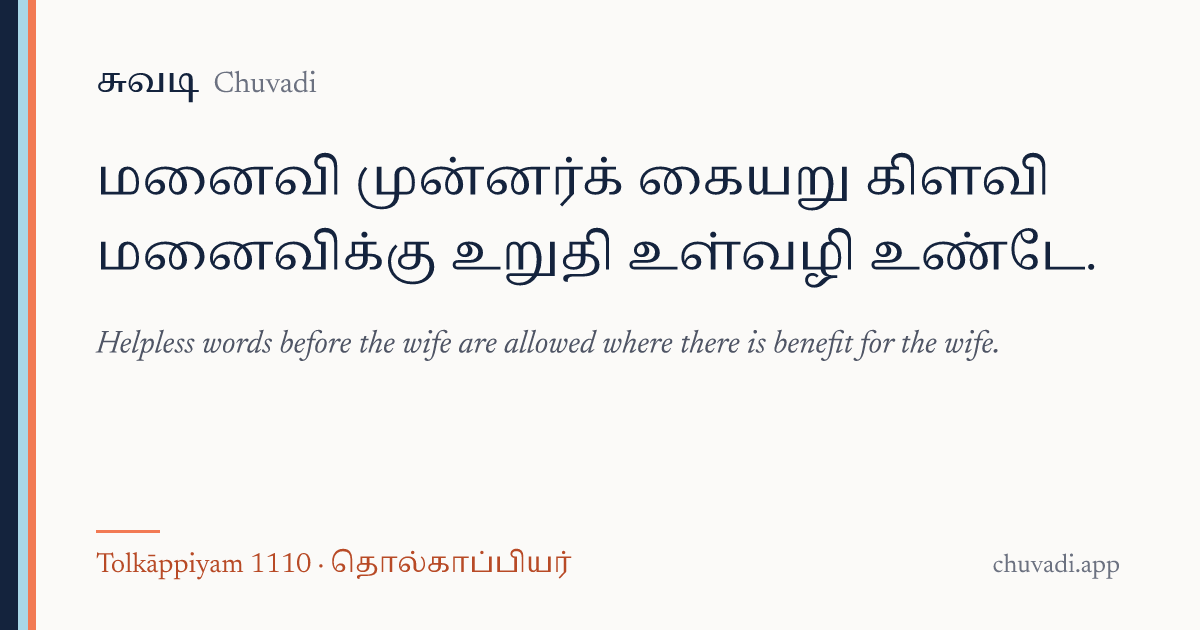
மனைவியின் முன்னிலையில் செயலற்ற நிலையைக் காட்டும் இரங்கல் மொழியைக் கூறுதல், அது மனைவிக்கு நன்மை தரும் இடத்தில் வாயில்களுக்கு உண்டு.
இளம்பூரணர்
இவ்வாறே பொருள் கொள்வார்.
நச்சினார்க்கினியர்
"தலைவன் காம மிகுதியால் நம் கையை மீறிவிட்டான்" எனக் கையற்றுக் கூறும் சொல், புலந்து வருந்தும் தலைவிக்கு மருந்தாகி அவன் வருகை உறுதி என்ற துணிவைத் தருமாயின் அது உண்டு என்று விளக்குவார்.
ஆங்கிலம் · English translationAI
Translation
- Helpless words before the wife
- are allowed where there is benefit for the wife.
What the poem says
A qualification of the previous rule. Kaiyaṟu kiḷavi, "words of helplessness", in which the go-between confesses that nothing can be done, may be spoken before the wife when they do her good.
Iḷampūraṇar says that such words are permitted to the go-betweens where there is benefit to the wife. Nacciṉārkkiṉiyar specifies the words: that the hero, through excess of desire, has slipped beyond them, so that they can neither bow to him nor help; such words are allowed when they act as medicine for the sulking wife, giving her the resolve that the hero's return is certain. He cites Naṟṟiṇai 50, where the friend speaks so before the heroine.
உரை · Commentary
இளம்பூரணர்
என்-எனின், இதுவுமது.
(இ—ள்) மனைவி முன்னர்ச் செயலற்றுக் கூறுஞ் சொல் மனைவிக்கு உறுதியுள்வழி வாயில்கட்கு உண்டு என்றவாறு.
“இனியவர், வரினும் நோய்மருந் தல்லாய் வாரா தவணர் ஆகுக காதலர் இவண் நம் காமம் படர்பட வருத்திய நோய்மலி வருத்தங் காணன்மா ரவரே.”
என வரும்.
நச்சினார்க்கினியர்
இஃது எய்தியது இகந்துபடாமற் காத்தது; இல்லுழி யாயிற் பெறுமென்றலின்.
(இ—ள்) மனைவி முன்னர்க் கையறு கிளவி - தலைவி முன்னர்த் தலைவன் காமக்கடப்பினாற் பணியுந் துணையன்றி நம்மைக் கையிகந்தானெனக் கையற்றுக் கூறுங்கூற்று: மனைவிக்கு உறுதி உள்வழி உண்டே — புலந்துவருந் தலைவிக்கு மருந்தாய் அவன் கூடுவதோர் ஆற்றல் உறுதி பயக்குமாயின் அவ்வாயில்கட்கு உளதாம் (எ—று.)
“அறியா மையின் அன்னை யஞ்சி” (நற்றிணை. 50)
இதனுள், என்னறியாமையாலே அன்னாய் நின்னையஞ்சி யாங் கள்வன் துணங்கையாடுங் களவைக் கையகப் படுப்பேயாகச் செல்லாநிற்க, அவன் குழை முதலியவற்றை உடையனாய்த் தெருவு முடிந்த இடத்தே எதிர்ப்பட்டானாக, அவ்வருளாமையின் யாண்டையது என்கட் பசலையென்றானாக, அவனெதிரே என்சிறுமை பெரிதாகலான் ஆராயாதே துணிந்து நாணிலை எலுவ வந்தேனெனத் தோழி மெய்யானும் பொய்யானும் புனைந்துரைத்தவாறு காண்க. ஏனைய வாயில்கள் கூற்றுவந்துழிக் காண்க.
இங்ஙனந் தலைவன் சிறைப்புறமாகக் கூறுவன ‘அன்புதலைப் பிரிந்த கிளவி தோன்றின்’ (தொல், பொ. 179) என்புழிக் கூறுதும்.