



தொல்காப்பியம் 1140 · பொருள் 5.2
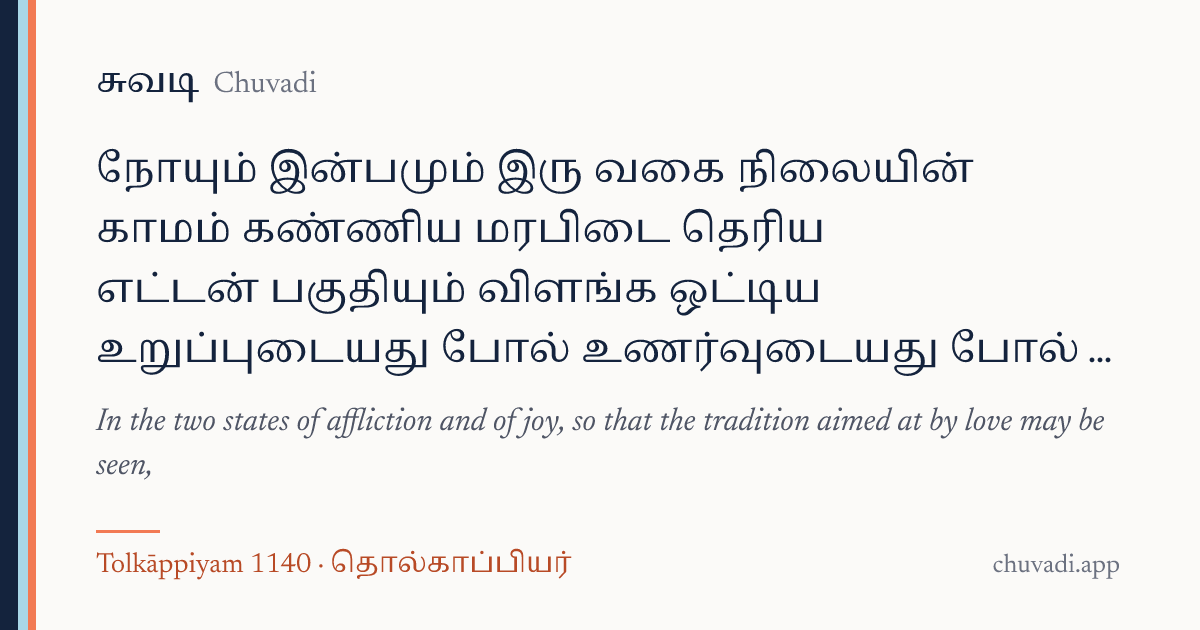
பாடல் · The poem
Tap a word to see where else it occurs.
பொருள் · Meaning in TamilAI
காமத்தால் வரும் துன்பம், இன்பம் என்னும் இரு நிலைகளிலும், காதலின் மரபு தெரியும்படி, தலைவனும் தலைவியும் தம் நெஞ்சை உறுப்புடையது போலவும், உணர்வுடையது போலவும், மறுமொழி கூறுவது போலவும் பேசுவர். பேச இயலாத கடல், நாரை, நிலவு போன்றவற்றோடும் உரையாடுவர்; செயல்பட இயலாதவற்றைத் தூது செல்லும்படி ஏவுவர்; தம்முடைய காமநோய் அவற்றுக்கும் உண்டு என்பது போலக் கூறுவர்; அறிவையும் புலன்களையும் தனித்தனியாகப் பிரித்துப் பேசுவர்; உவமை வழியாகவும் பொருளை அமைப்பர். இவ்வாறு பேசுதல் இருவருக்கும் உரியது.
இளம்பூரணர்
இளம்பூரணர் இந்நூற்பாவை, நெஞ்சோடு பேசுதல், பேசா மரபினவாகிய பொருள்களோடு பேசுதல், செய்யா மரபினவற்றைத் தொழிற்படுத்துதல், தம் பிணியை அவற்றுக்கு ஏற்றுதல், அறிவையும் புலனையும் வேறுபடுத்துதல், உவமை வழியாகக் கூறுதல் எனப் பகுதி பகுதியாகப் பிரித்து, இவை தலைவன் தலைவி இருவர்க்கும் உரிய செய்யுள் வழக்கு எனப் பொருள் கொள்வார். எட்டன் பகுதி, இரு பெயர் மூன்றும் என்னும் தொடர்களுக்கு இவர் தரும் விளக்கமும் எடுத்துக்காட்டுகளும் இங்கு சரிபார்க்கப்படவில்லை.
நச்சினார்க்கினியர்
நச்சினார்க்கினியரும் இதனை அதே வகையில் பல கூறுகளாகப் பிரித்து, இவை இருவர்க்கும் உரியவை என்றே கொள்வார். எட்டன் பகுதி முதலிய ஐயத்துக்குரிய தொடர்களை இவர் எவ்வாறு விளக்குகிறார், அவற்றில் இளம்பூரணரிடமிருந்து எவ்வாறு வேறுபடுகிறார் என்பது இங்கு சரிபார்க்கப்படவில்லை.
மூன்றாம் அடியில் வரும் எட்டன் பகுதி என்பதையும், இரு பெயர் மூன்றும் என்பதையும் உரையாசிரியர்கள் வெவ்வேறு வகையாக விளக்குவர்; அவற்றின் சரியான பொருள் இங்கு உறுதியாகச் சொல்ல இயலவில்லை.
ஆங்கிலம் · English translationAI
Translation
- In the two states of affliction and of joy,
- so that the tradition aimed at by love may be seen,
- and so that the portions of the eight may shine clear, joining
- to the heart as if it had limbs, as if it had feeling,
- as if it spoke back in reply, the lovers address it;
- they mingle with those of a nature that cannot speak,
- set to work and bring under them those of a nature that cannot act,
- attribute to each of them the sickness that grips oneself, as if it were theirs,
- set intelligence and the senses apart from one another,
- so that the two names and the three are fitting,
- and bring things in by the gateway of simile; this licence of simile
- in one setting is a word of division that belongs to both.
What the poem says
A long licence for the speech of the lovers. In both suffering (nōy, the pain of separation) and happiness, the hero and heroine may treat what has no speech or feeling as though it had them: they talk to their own heart (neñcu) as if it had a body, could feel and could answer back; they speak to things that cannot speak, such as a heron, the sea or the moon; they make things that cannot act do errands for them ("go and tell him"); they assume that others suffer their own love-sickness; and they may split mind and senses apart, as in "my eyes would not obey me".
Several phrases are obscure. The "eight" of line 3 is explained in different ways by the commentators, and I am not certain which reading is meant; "the two names and the three" in line 10 is likewise unclear to me and is translated literally. The last line says that this mode of speech belongs to both hero and heroine alike.