



தொல்காப்பியம் 1146 · பொருள் 5.8
பாடல் · The poem
Tap a word to see where else it occurs.
பொருள் · Meaning in TamilAI
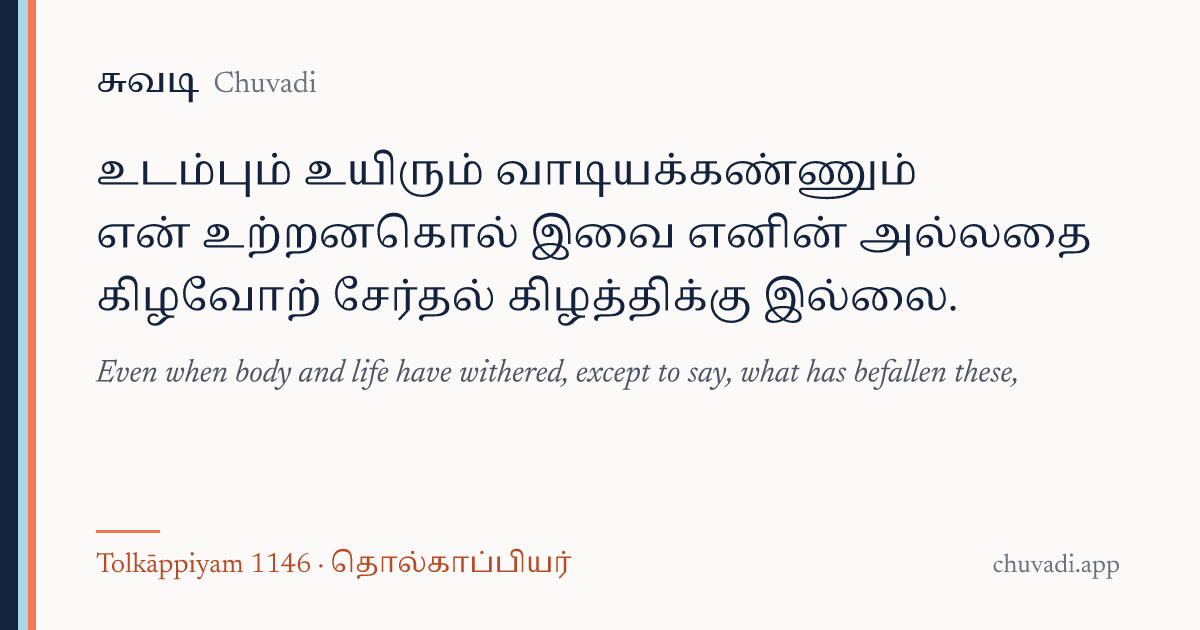
உடலும் உயிரும் வாடிய நிலையிலும், இவற்றுக்கு என்ன நேர்ந்தது என்று கூறுவதல்லாமல், தலைவி தானே தலைவனிடம் சென்று சேர்தல் இல்லை.
இளம்பூரணர்
இளம்பூரணர் உடம்பும் உயிரும் வாடிய நிலையிலும் இவை என் உற்றன என்று வருந்திக் கூறுவதல்லாமல் தலைவி தானே தலைவனைச் சென்று சேர்தல் இல்லை எனப் பொருள் கொள்வார்.
நச்சினார்க்கினியர்
நச்சினார்க்கினியரும் இதனைத் தலைவியின் ஒழுக்க வரம்பைக் கூறும் நூற்பாவாகவே கொள்வார்; இதனை அடுத்த நூற்பாவோடு இவர் இயைக்கும் முறை இங்கு சரிபார்க்கப்படவில்லை.
தலைவியின் துயரம் வெளிப்படலாம்; ஆனால் தேடிச் செல்லும் செயல் அவளுக்கு உரியதன்று என்பது இதன் கருத்து. அடுத்த நூற்பா இதற்கு ஒரு விலக்கைச் சொல்கிறது.
ஆங்கிலம் · English translationAI
Translation
- Even when body and life have withered,
- except to say, what has befallen these,
- there is no going to the hero for the heroine.
What the poem says
A rule of decorum. However much she wastes away in love, the heroine does not herself go to the hero to seek him out; the most she may do is wonder aloud, "what has come over my body and my life?". Her suffering is shown, but the initiative of going belongs to him. This is the background to the next nūṟpā, which gives the one place where talk of going is allowed.