



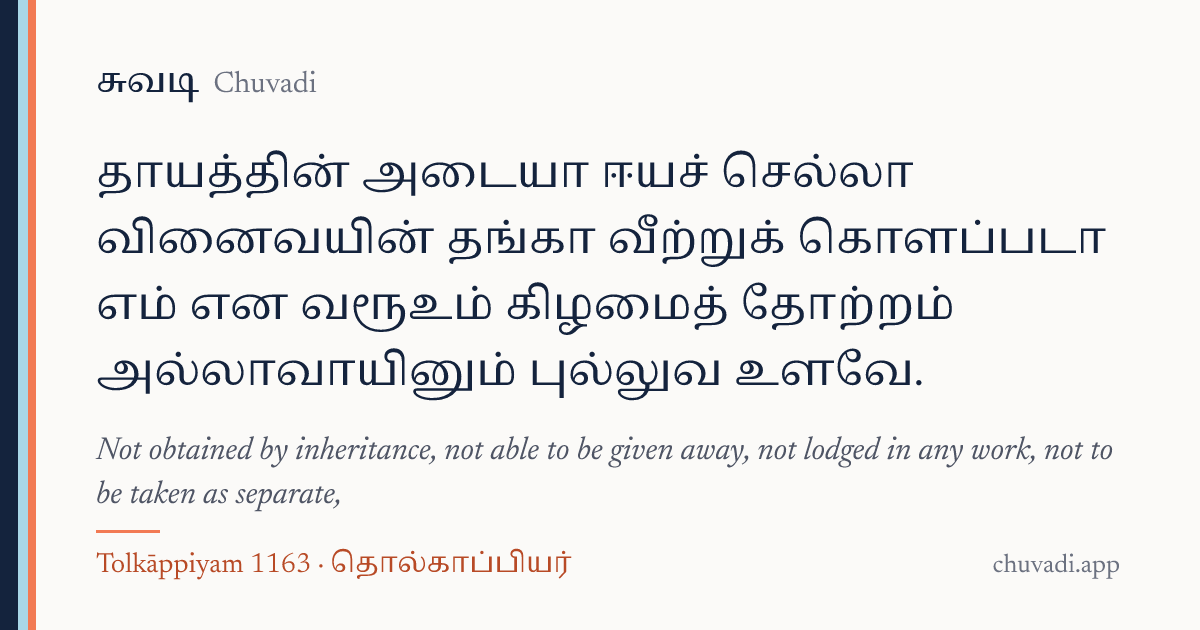
தொல்காப்பியம் 1163 · பொருள் 5.25
பாடல் · The poem
Tap a word to see where else it occurs.
பொருள் · Meaning in TamilAI
மரபுரிமையால் அடையப்படாதவை, பிறருக்குக் கொடுக்க இயலாதவை, உழைப்பால் உண்டாகாதவை, தனியாகப் பிரித்துக் கொள்ள இயலாதவை ஆகியவற்றுக்கும், உடைமைப் பொருள் இல்லாவிட்டாலும், எம் என்னும் சொல் பொருந்துவது உண்டு. எம் தோள், எம் ஊர் என்பது போன்ற தொடர்கள் இதற்குச் சான்று.
இளம்பூரணர்
இளம்பூரணர் இதனை, உடைமையாக அடையப்படாத பொருள்களுக்கும் எம் என்ற கிழமைச் சொல் பொருந்தி வருவது பற்றிய விதியாகக் கொள்வதாகத் தெரிகிறது; இவர் தரும் எடுத்துக்காட்டுகள் இங்கு சரிபார்க்கப்படவில்லை.
நச்சினார்க்கினியர்
நச்சினார்க்கினியர் இந்நூற்பாவுக்குத் தரும் விளக்கமும் எடுத்துக்காட்டுகளும் இங்கு சரிபார்க்கப்படவில்லை; இவர் உரையும் மேற்கூறிய பொதுப் பொருளையே தருவதாகக் கொள்ளலாம்.
இது நூற்பாவின் இயல்பான பொருளாகக் கொள்ளப்பட்டது; உரையாசிரியர்கள் தரும் எடுத்துக்காட்டுகளோடு இது முழுதும் ஒத்துப் போகிறதா என்பது உறுதியில்லை.
ஆங்கிலம் · English translationAI
Translation
- Not obtained by inheritance, not able to be given away,
- not lodged in any work, not to be taken as separate,
- though not the sense of ownership that comes as ours,
- still there are things that fit with it.
What the poem says
This appears to concern the possessive "our" or "my" (em). Proper ownership covers things that come by inheritance, can be given away, are produced by labour, or can be held apart from the owner. Yet there are things that fit none of these and still take "our": a heroine's own eyes, shoulders or beauty, her home town, her people. The rule accepts such phrases as "our shoulders" though the relation is not one of property.
This explanation follows the most natural reading of the lines; I am not certain that it reproduces the commentators' examples.