



தொல்காப்பியம் 1167 · பொருள் 5.29
பாடல் · The poem
Tap a word to see where else it occurs.
பொருள் · Meaning in TamilAI
தலைவனிடமிருந்து பிரிய நேருமோ என்ற அச்சம், அம்பலும் அலரும் களவை வெளிப்படுத்திவிடும் என்ற இருவகை அச்சம், காவலால் வரும் இடையூறுகள் ஆகியவை காரணமாக, உடன்போக்கும் வரைவும் தலைவியிடத்தில் தோன்றும்.
இளம்பூரணர்
இளம்பூரணர் பிரிவு அச்சம், அம்பல் அலர் பற்றிய அச்சம், காவலால் வரும் இடையூறு ஆகியவை காரணமாக உடன்போக்கும் வரைவும் தலைவியிடத்துத் தோன்றும் எனப் பொருள் கொள்வார்; ஒருதலை உரிமை என்ற தொடருக்கு இவர் தரும் விளக்கம் இங்கு சரிபார்க்கப்படவில்லை.
நச்சினார்க்கினியர்
நச்சினார்க்கினியரும் இதனைக் களவு உடன்போக்கிலோ வரைவிலோ முடிவதற்கான காரணங்களைக் கூறும் நூற்பாவாகக் கொள்வார்; முதல் அடியை இவர் எவ்வாறு அமைக்கிறார் என்பது இங்கு சரிபார்க்கப்படவில்லை.
அம்பல் என்பது மெல்லிய ஊர்ப்பேச்சு, அலர் என்பது வெளிப்படையான பழிச்சொல். முதல் அடியில் வரும் ஒருதலை உரிமை என்ற தொடரின் சரியான பொருள் தெளிவாக இல்லை.
ஆங்கிலம் · English translationAI
Translation
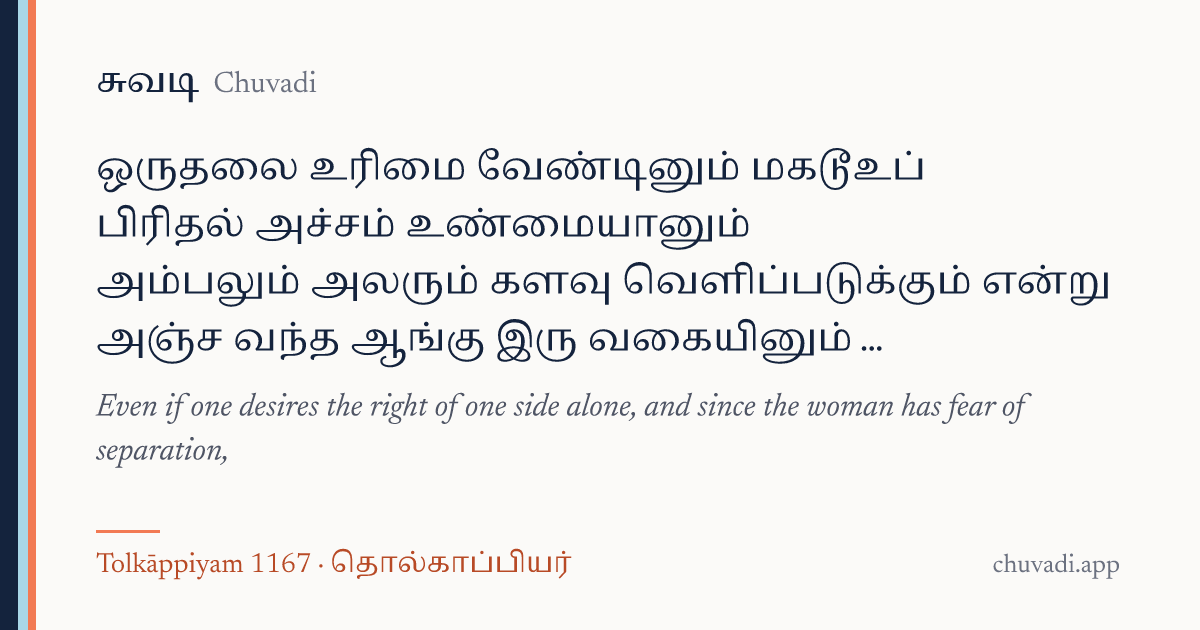
- Even if one desires the right of one side alone, and since the woman
- has fear of separation,
- and in both kinds that come from fearing that
- whisper and open gossip will lay bare the secret love,
- and from the obstacles that come with watching,
- elopement and marriage appear in the one who is to be wife.
What the poem says
The causes that lead to the ending of the secret love, either by the couple going away together (pōkku, elopement) or by formal marriage (varaivu). They include the heroine's fear of being separated from the hero; the fear of ampal, the first whispers, and alar, open scandal, which would expose the affair; and the obstacles created by the family's close watch. These pressures arise in the heroine, the future wife (maṉaivi), and so the decision to elope or marry is presented as springing from her situation.
The opening phrase, oru talai urimai, is hard; I take it as a wish to assert a claim from one side only, but the commentators' construction of the first line is not certain to me.