



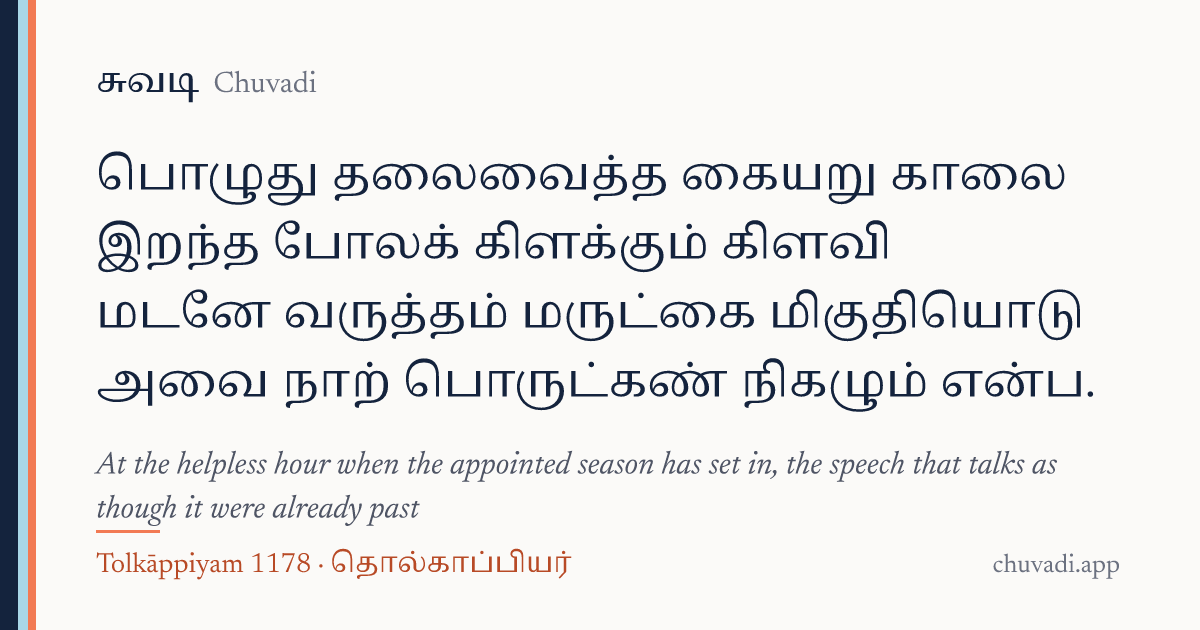
தொல்காப்பியம் 1178 · பொருள் 5.40
பாடல் · The poem
Tap a word to see where else it occurs.
பொருள் · Meaning in TamilAI
தலைவன் வருவதாகச் சொன்ன பருவம் வந்துவிட்ட செயலற்ற நிலையில், அப்பருவம் கடந்துவிட்டது போலவோ, இன்னும் வரவில்லை என்பது போலவோ பேசும் கூற்று, மடம், வருத்தம், மருட்கை, மிகுதி ஆகிய நான்கு காரணங்களால் நிகழும் என்பர்.
இளம்பூரணர்
இளம்பூரணர் தலைவன் குறித்த பருவம் வந்த கையறு நிலையில், அது கடந்தது போலவோ வாராதது போலவோ கூறும் கூற்று மடன், வருத்தம், மருட்கை, மிகுதி ஆகிய நான்கு காரணத்தால் நிகழும் எனப் பொருள் கொள்வார்; இவர் தரும் எடுத்துக்காட்டுகள் இங்கு சரிபார்க்கப்படவில்லை.
நச்சினார்க்கினியர்
நச்சினார்க்கினியரும் இந்நான்கையும் அக்கூற்று நிகழும் காரணங்களாகவே கொள்வார்; இவர் காட்டும் பாடல்கள் இங்கு சரிபார்க்கப்படவில்லை.
இவை கார்ப்பருவ மேகம் அல்ல, பருவம் தவறிப் பெய்த மழை என்று சொல்லுதல் போன்ற முல்லைப் பாடல்களின் கூற்று இதற்குச் சான்று.
ஆங்கிலம் · English translationAI
Translation
- At the helpless hour when the appointed season has set in,
- the speech that talks as though it were already past
- occurs, with innocence, distress, bewilderment and excess,
- in these four matters, they say.
What the poem says
The hero promised to return by a certain season, and the season has arrived without him. In her helplessness the heroine (or her friend) may speak as though the season had already gone by, or deny that it has really come: "these are not the monsoon clouds; they are only untimely rain". Such speech arises from four states: maṭaṉ, innocent misjudgement; varuttam, distress; maruṭkai, bewilderment; and mikuti, the excess of feeling. The theme of "this is not the season" is a well-known one in the mullai poems.