



தொல்காப்பியம் 1193 · பொருள் 6.3
பாடல் · The poem
Tap a word to see where else it occurs.
பொருள் · Meaning in TamilAI
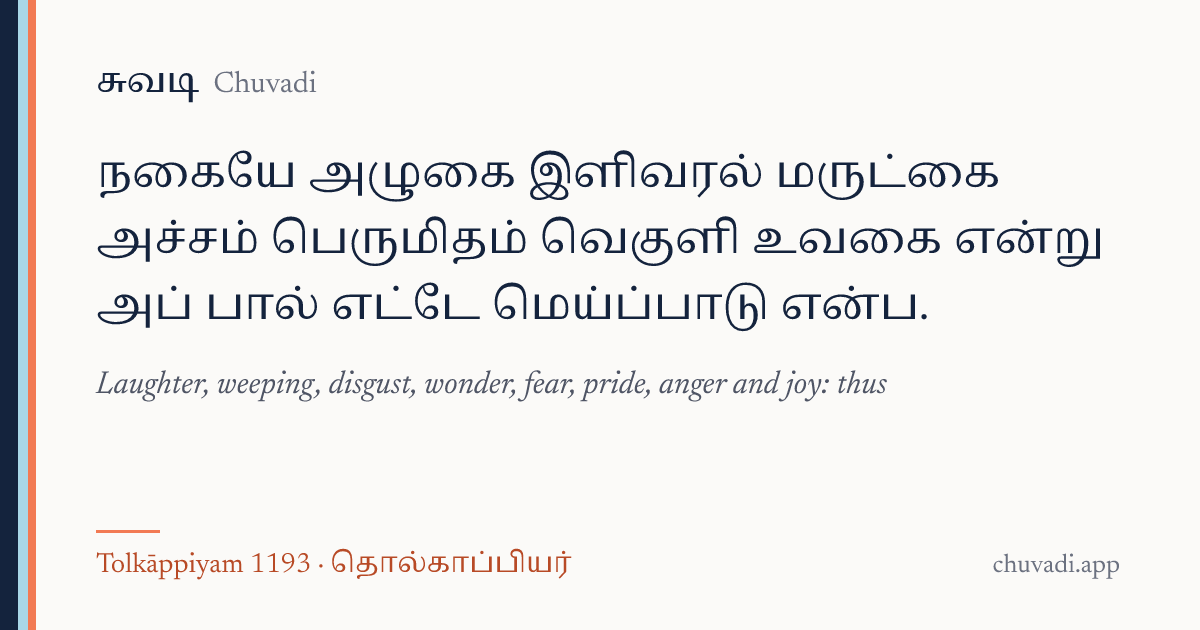
நகை, அழுகை, இளிவரல், மருட்கை, அச்சம், பெருமிதம், வெகுளி, உவகை என்ற அந்த எட்டும் மெய்ப்பாடு என்பர்.
இளம்பூரணர்
இளம்பூரணர் நகை முதலிய எட்டையும் மெய்ப்பாடுகளாகக் கொண்டு, இளிவரலை இழிவு உணர்தல் என்றும் மருட்கையை வியப்பு என்றும் பொருள் கொள்வார்; இவற்றுக்கு இவர் தரும் விரிவான விளக்கம் இங்கு சரிபார்க்கப்படவில்லை.
இளிவரல் என்பது இழிவாக உணர்தல், மருட்கை என்பது வியப்பு, பெருமிதம் என்பது பெருமை உணர்வு. அடுத்து வரும் எட்டு நூற்பாக்கள் இவை ஒவ்வொன்றும் தோன்றும் நான்கு நிலைக்களன்களைக் கூறுகின்றன.
ஆங்கிலம் · English translationAI
Translation
- Laughter, weeping, disgust, wonder,
- fear, pride, anger and joy: thus
- that division of eight is meyppāṭu, they say.
What the poem says
The eight meyppāṭus, the basic emotional states that show themselves in the body: nakai, laughter or mirth; aḻukai, weeping or grief; iḷivaral, disgust or contempt; maruṭkai, wonder or amazement; accam, fear; perumitam, pride or heroic elation; vekuḷi, anger; and uvakai, joy. The following eight nūṟpās give four sources (nilaikkaḷam) for each.
Readers will notice the closeness of this list to the eight rasas of Sanskrit dramaturgy; the Tamil list has its own names and its own account of their causes.