



தொல்காப்பியம் 1213 · பொருள் 6.23
பாடல் · The poem
Tap a word to see where else it occurs.
பொருள் · Meaning in TamilAI
தடை வந்த இடத்தில் கடிந்து பேசுதல், சினத்தை உடலில் வெளிப்பட நிறுத்துதல், அச்சத்தால் விலகுதல், அவனுடைய தழுவலை மறுத்தல், தூதர்மீது சினம் கொள்ளாமை, உறங்கியவாறு சேர்தல், காதல் அளவு கடத்தல், நிலையான சொல் இல்லாமை ஆகிய எட்டும் அழிவில்லாத கூட்டத்துக்கு உரியவை.
இளம்பூரணர்
இளம்பூரணர் முட்டுவயின் கழறல் முதலிய எட்டையும் அழிவில் கூட்டத்துக்கு உரிய மெய்ப்பாடுகளாகக் கொள்வார்; அழிவில் கூட்டம் என்பதை இவர் எந்நிலையாகக் கொள்கிறார், துஞ்சிச் சேர்தல் என்பதற்கு என்ன பொருள் தருகிறார் என்பது இங்கு சரிபார்க்கப்படவில்லை.
இவற்றைக் கற்பு வாழ்க்கையில் ஊடலோடு தொடர்புடைய மனைவியின் மெய்ப்பாடுகளாக உரையாசிரியர்கள் இணைப்பர். துஞ்சிச் சேர்தல் என்பதன் பொருளும் இவை உரிய சூழலும் இங்கு எச்சரிக்கையுடன் தரப்பட்டுள்ளன.
ஆங்கிலம் · English translationAI
Translation
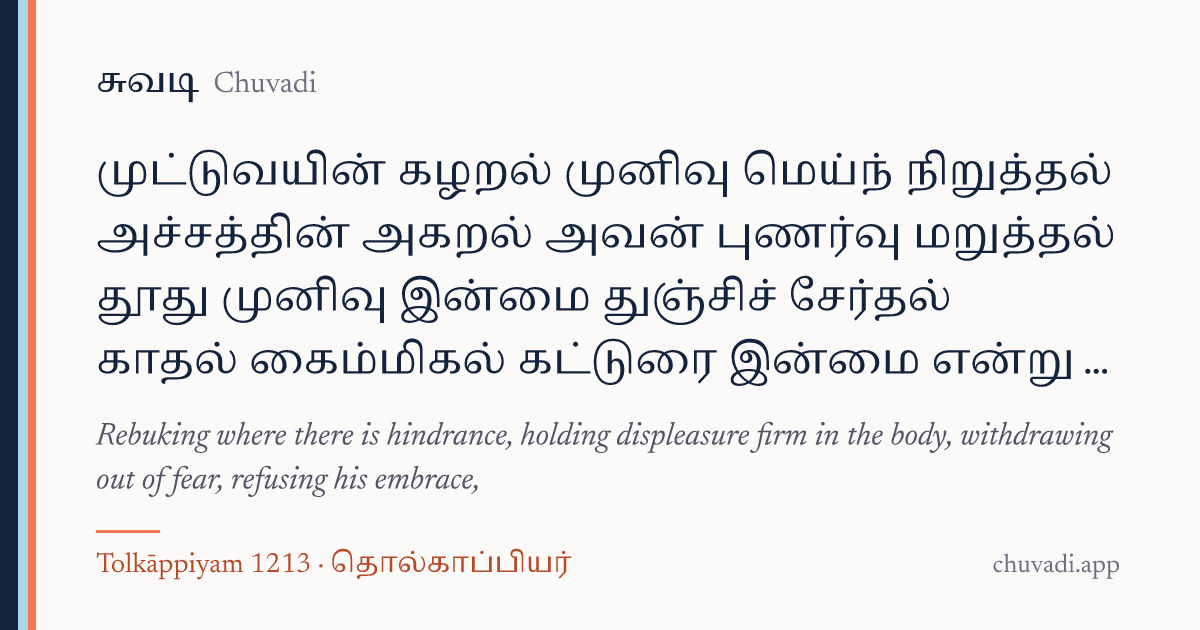
- Rebuking where there is hindrance, holding displeasure firm in the body,
- withdrawing out of fear, refusing his embrace,
- no resentment at the messengers, joining while asleep,
- love overflowing, absence of composed speech: thus
- those eight are the union that knows no ruin.
What the poem says
Eight signs belonging to aḻivu il kūṭṭam, the lasting union, which the commentators connect with the wife's conduct in married life, especially around the husband's lapses and her sulking: muṭṭuvayiṉ kaḻaṟal, chiding when something stands in the way; muṉivu mey niṟuttal, letting her displeasure show; accattiṉ akaṟal, keeping away out of apprehension; avaṉ puṇarvu maṟuttal, refusing his embrace; tūtu muṉivu iṉmai, not being angry with the go-betweens he sends; tuñcic cērtal, coming to him in sleep or as if asleep; kātal kaimmikal, love overflowing its bounds; and kaṭṭurai iṉmai, being unable to speak with composure.
The situation to which these belong, and the sense of tuñcic cērtal, are explained by the commentators; my account of both is cautious.