



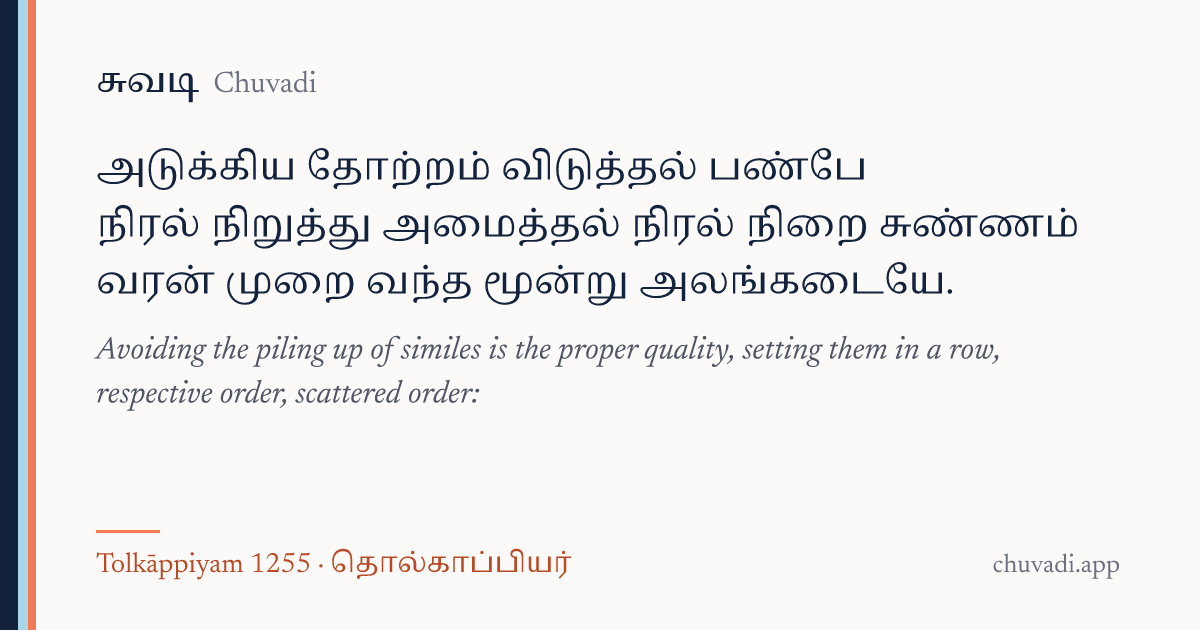
தொல்காப்பியம் 1255 · பொருள் 7.38
பாடல் · The poem
Tap a word to see where else it occurs.
பொருள் · Meaning in TamilAI
ஒரே பொருளுக்குப் பல உவமைகளை அடுக்கிக் கூறுதலைத் தவிர்ப்பதே பண்பு. ஆனால் வரிசையாக நிறுத்தி அமைத்தல், நிரல்நிறை, சுண்ணம் என்று முறைப்படி வரும் மூன்றும் இதற்கு விலக்கு.
இளம்பூரணர்
இளம்பூரணர் ஒரு பொருளுக்கு உவமைகளை அடுக்கிக் கூறுதலை விடுத்தலே பண்பு என்றும், நிரல் நிறுத்து அமைத்தல், நிரல்நிறை, சுண்ணம் என்ற மூன்றும் இதற்கு விலக்கு என்றும் பொருள் கொள்வதாகக் கொள்ளலாம்; இம்மூன்றையும் இவர் பிரித்து விளக்கும் முறை இங்கு சரிபார்க்கப்படவில்லை.
நிரல்நிறை என்பது பொருள்களை ஒரு வரிசையிலும் உவமைகளை அதே வரிசையிலும் நிறுத்திப் பொருத்துதல்; சுண்ணம் என்பது சிதறிக் கிடக்கும் சொற்களைக் கூட்டிப் பொருள் கொள்ளுதல். மூன்றையும் பிரிக்கும் முறை உரையாசிரியர்களிடம் சற்று வேறுபடலாம். இத்துடன் உவமவியல் முடிகிறது.
ஆங்கிலம் · English translationAI
Translation
- Avoiding the piling up of similes is the proper quality,
- setting them in a row, respective order, scattered order:
- except for the three that come in due sequence.
What the poem says
Stacking several similes on one subject (aṭukkiya tōṟṟam) is generally to be avoided, except in three arrangements that follow a recognised order: niral niṟuttu amaittal, setting the similes in a row; niral niṟai, the respective arrangement in which a list of subjects is matched in order by a list of standards; and cuṇṇam, the scattered arrangement in which the matching items are dispersed and must be gathered by the reader. Niral niṟai and cuṇṇam are also known as methods of construing verse.
This closes the Uvamaviyal. How the three are told apart is my reading: the first phrase may instead be a description of niral niṟai itself, and the commentators may divide the line differently.