



தொல்காப்பியம் 1259 · பொருள் 8.4
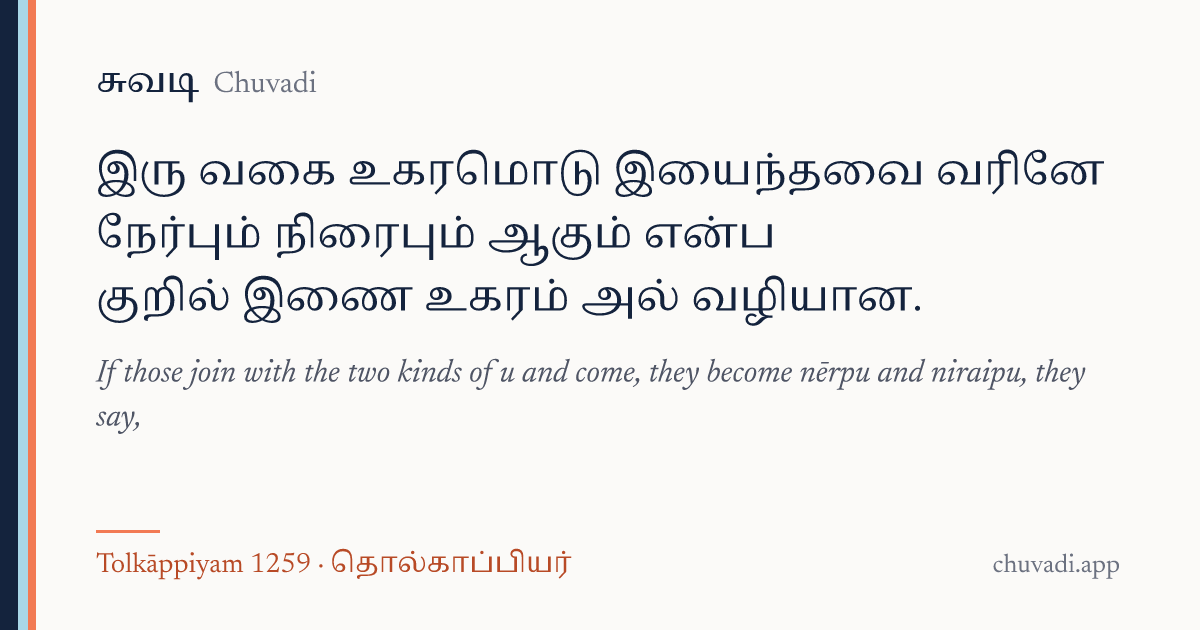
பாடல் · The poem
Tap a word to see where else it occurs.
பொருள் · Meaning in TamilAI
நேரசையும் நிரையசையும் குற்றியலுகரத்தோடோ முற்றியலுகரத்தோடோ சேர்ந்து வந்தால் அவை நேர்பு, நிரைபு என்னும் அசைகள் ஆகும். ஆனால் தனிக் குறிலைத் தொடர்ந்து வரும் உகரம் குறிலிணையாக (நிரையாக) அமையும் இடத்தில் அப்படி ஆகாது. எடுத்துக்காட்டு: காது, கண்டு நேர்பு; வரகு, களிறு நிரைபு; பசு என்பது நிரையே.
இளம்பூரணர்
இளம்பூரணர் இரு வகை உகரம் என்பதைக் குற்றியலுகரமும் முற்றியலுகரமும் எனக் கொண்டு, அவற்றோடு கூடிய நேரும் நிரையும் நேர்பு, நிரைபு என்னும் தனி அசைகள் ஆகும் என்பார்; குறிலிணையாக வரும் உகரம் இதில் அடங்காது என்ற விலக்கையும் ஏற்பார்.
நச்சினார்க்கினியர்
நச்சினார்க்கினியரும் நேர்பு, நிரைபு என்னும் இரண்டு அசைகளையும் தொல்காப்பிய முறைப்படியே ஏற்று விளக்குவார். குறில் இணை உகரம் அல்வழி என்ற விலக்கை இவர் எவ்வளவு விரித்து எடுத்துக்காட்டுகிறார் என்பது இங்கு சரிபார்க்கப்படவில்லை.
நேர்பு, நிரைபு என்னும் இரண்டு அசைகள் தொல்காப்பியத்துக்கே உரியவை; பிற்கால யாப்பு நூல்கள் இவற்றை விட்டுவிட்டன. உரையாசிரியர்கள் தொல்காப்பிய முறைப்படியே இவற்றை விளக்குகின்றனர்.
ஆங்கிலம் · English translationAI
Translation
- If those join with the two kinds of u and come,
- they become nērpu and niraipu, they say,
- where it is not a u that forms two shorts.
What the poem says
Tolkāppiyam recognises two further acais beyond nēr and nirai. When a nēr or a nirai is followed by one of the two kinds of u, kuṟṟiyalukaram ("shortened u") or muṟṟiyalukaram ("full u"), the whole is counted as one unit: nēr plus u gives nērpu, nirai plus u gives niraipu. Examples: kātu, kaṇṭu are taken as nērpu; varaku, kaḷiṟu as niraipu.
The last line makes an exception: where the u, after a single short syllable, simply forms a pair of shorts (as in a word like pacu), it is an ordinary nirai, not a nērpu. These two extra acais are a feature of Tolkāppiyam's system that the later manuals such as the Yāpparuṅkalam drop, treating such endings as nēr or nirai; the commentators explain the older scheme on its own terms.