



தொல்காப்பியம் 1264 · பொருள் 8.9
பாடல் · The poem
Tap a word to see where else it occurs.
பொருள் · Meaning in TamilAI
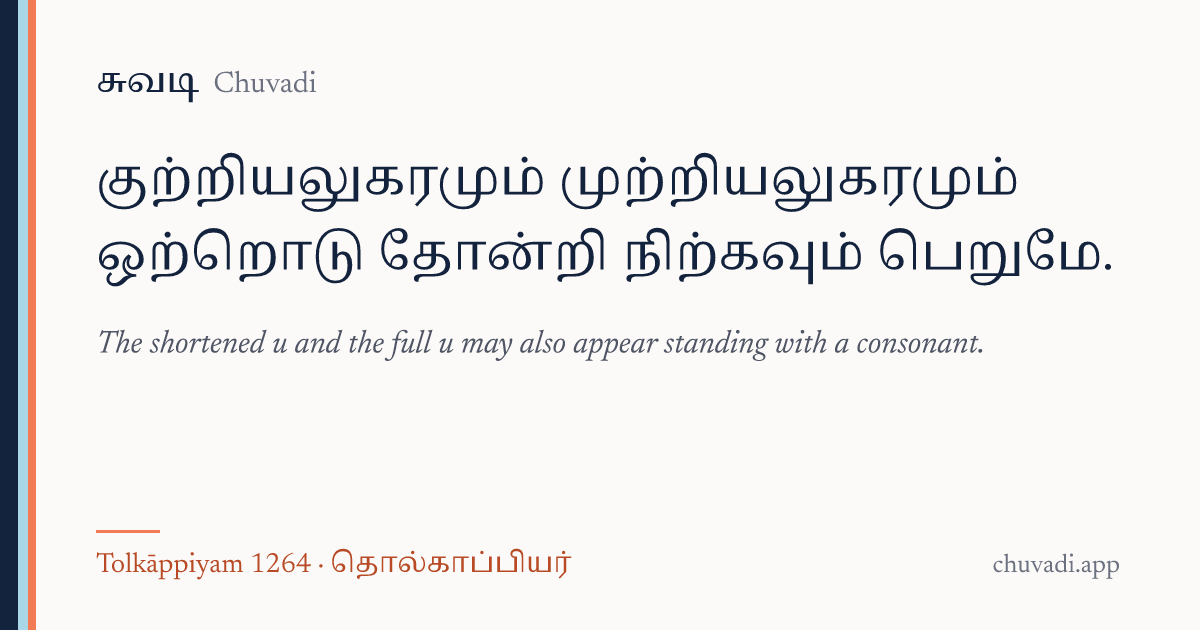
குற்றியலுகரமும் முற்றியலுகரமும் ஒற்றெழுத்தோடு கூடியும் நின்று நேர்பு, நிரைபு அசைகளை உண்டாக்கும்.
இளம்பூரணர்
இளம்பூரணர் இருவகை உகரமும் ஒற்றடுத்து வரும்போதும் நேர்பு, நிரைபு அசைகள் ஆகும் என்ற பொருளில் இதனைக் கொள்வார்.
நச்சினார்க்கினியர்
நச்சினார்க்கினியரும் உரியசைகள் ஒற்றோடு முடியும் வடிவங்களை இந்நூற்பாவால் கொள்வார்; இவர் காட்டும் எடுத்துக்காட்டுச் சொற்கள் இங்கு சரிபார்க்கப்படவில்லை.
நேர், நிரை ஒற்றோடு வருவதுபோல் உரியசைகளும் ஒற்றோடு முடியலாம் என்பது இதன் கருத்து. உகரத்தின் பின் மகர, னகர ஒற்று வரும் வடிவங்களை உரையாசிரியர்கள் காட்டுவர்.
ஆங்கிலம் · English translationAI
Translation
- The shortened u and the full u
- may also appear standing with a consonant.
What the poem says
The u that forms a nērpu or niraipu need not be the very last sound: both the kuṟṟiyalukaram ("shortened u") and the muṟṟiyalukaram ("full u") may be followed by an oṟṟu ("consonant") and still make the special acai. The acai is then closed by the consonant, as the basic nēr and nirai may be (tol.1258). The commentators cite forms in which the u is followed by a closing m or ṉ. This completes the description of the four acais.