



தொல்காப்பியம் 1266 · பொருள் 8.11
பாடல் · The poem
Tap a word to see where else it occurs.
பொருள் · Meaning in TamilAI
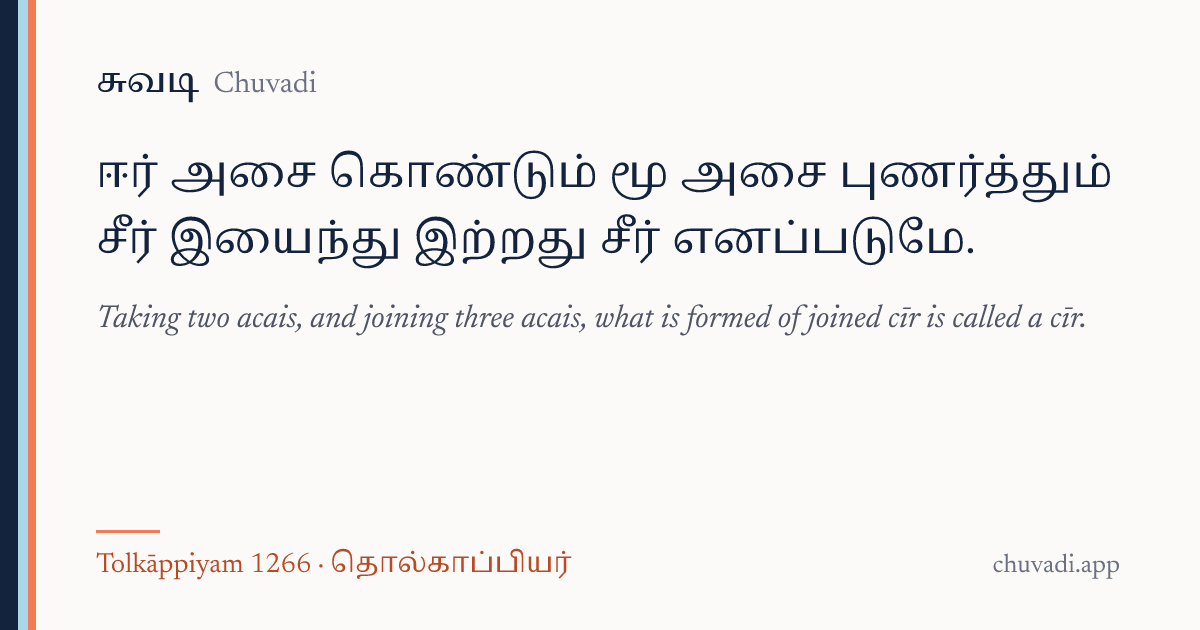
இரண்டு அசைகளைக் கொண்டும் மூன்று அசைகளைச் சேர்த்தும் பொருந்தி அமைவது சீர் எனப்படும்.
இளம்பூரணர்
இளம்பூரணர் ஈரசையாலும் மூவசையாலும் அமைவது சீர் என்று இதனைக் கொண்டு, சீர் ஈரசைச்சீர், மூவசைச்சீர் என இருவகைப்படும் என்பார்.
நச்சினார்க்கினியர்
நச்சினார்க்கினியரும் சீருக்கு இதனையே பொது வரையறையாகக் கொள்வார்; ஓரசை சீராக நிற்பது பின்னர் வரும் தனி விதியால் கொள்ளப்படும் என்பது இவர் விளக்கத்திலும் காணப்படுவதாகத் தெரிகிறது.
ஈரசைச் சீர், மூவசைச் சீர் என இரண்டு வகை என்பது கருத்து. நான்கசைச் சீரைப் பிற்கால நூல்கள் கொண்டாலும் இங்கு அது சொல்லப்படவில்லை. ஓரசை சீராக நிற்கும் இடம் பின்னர் கூறப்படுகிறது.
ஆங்கிலம் · English translationAI
Translation
- Taking two acais, and joining three acais,
- what is formed of joined cīr is called a cīr.
What the poem says
A cīr ("foot") is made by combining acais: either two acais or three. Single acais do not normally make a foot (an exception follows in tol.1281), and four-acai feet, which later manuals admit, are not part of this definition. The second line plays on the word cīr itself: what is put together fittingly is called cīr. Two-acai feet will be called iyaṟcīr or āciriya uriccīr; three-acai feet are veṇcīr or vañcicīr.