



தொல்காப்பியம் 1273 · பொருள் 8.18
பாடல் · The poem
Tap a word to see where else it occurs.
பொருள் · Meaning in TamilAI
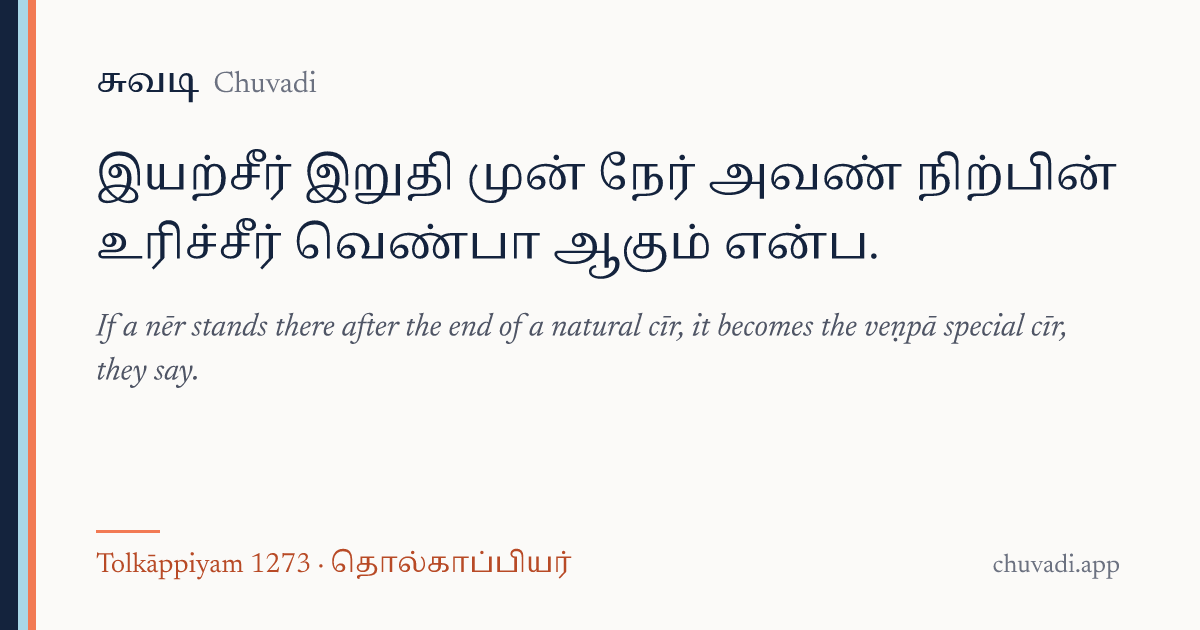
இயற்சீரின் இறுதியில் நேரசை சேர்ந்து நின்றால் அது வெண்பா உரிச்சீர் (வெண்சீர்) ஆகும் என்பர்.
இளம்பூரணர்
இளம்பூரணர் நான்கு இயற்சீர்களின் பின் நேரசை சேர்ந்து வரும் மூவசைச் சீர்களை வெண்பா உரிச்சீர் எனக் கொண்டு, அவை வெண்பாவுக்குச் சிறப்பாக உரியவை என்பார்.
நச்சினார்க்கினியர்
நச்சினார்க்கினியரும் இவற்றை வெண்சீர் என்றே விளக்கி, வெண்பாவின் ஓசைக்கு இவை சிறப்புடையவை என்ற கருத்தில் கொள்வதாகத் தெரிகிறது.
தேமாங்காய், புளிமாங்காய், கருவிளங்காய், கூவிளங்காய் என்று பிற்காலத்தில் பெயர் பெற்ற நான்கு மூவசைச் சீர்களும் இவையே. இவை வெண்பாவுக்குச் சிறப்பாக உரியவை.
ஆங்கிலம் · English translationAI
Translation
- If a nēr stands there after the end of a natural cīr,
- it becomes the veṇpā special cīr, they say.
What the poem says
Three-acai feet are now defined. When a nēr is added after any of the four iyaṟcīr ("natural feet"), the result is a veṇpā uriccīr ("special foot of the veṇpā"), also called veṇcīr. These are the four feet later named tēmāṅkāy, puḷimāṅkāy, karuviḷaṅkāy and kūviḷaṅkāy (nēr nēr nēr, nirai nēr nēr, nirai nirai nēr, nēr nirai nēr). They are characteristic of veṇpā verse, which is why they bear its name.