



தொல்காப்பியம் 1325 · பொருள் 8.70
பாடல் · The poem
Tap a word to see where else it occurs.
பொருள் · Meaning in TamilAI
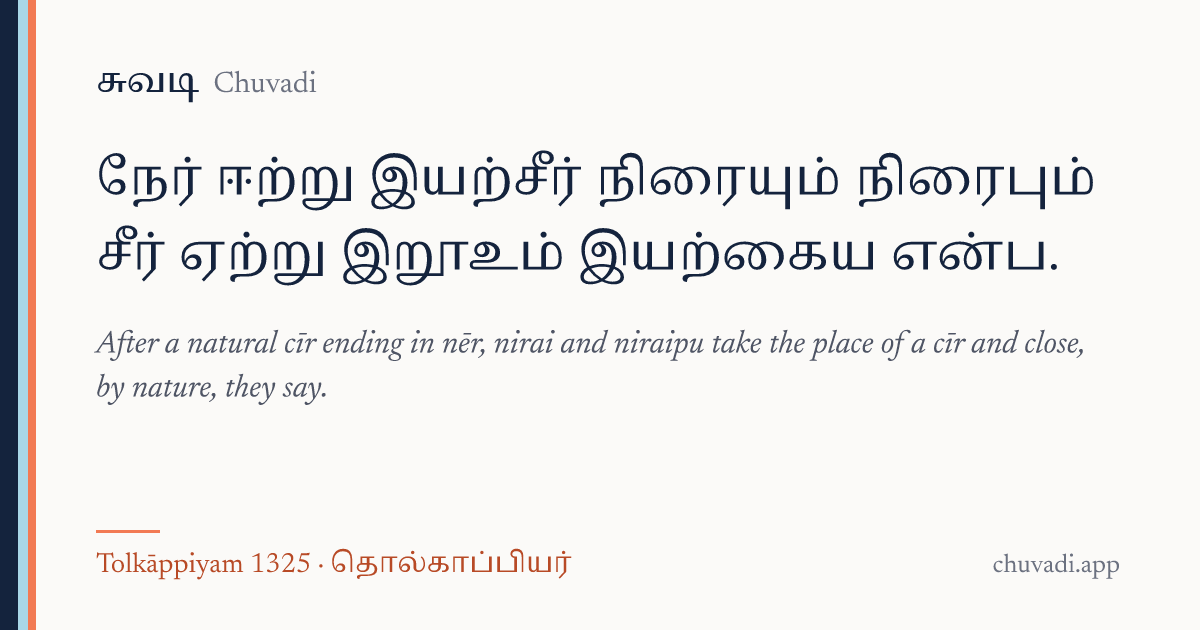
நேரீற்று இயற்சீரின் பின் நிரையும் நிரைபும் சீரின் இடத்தைப் பெற்று வெண்பாவை முடிக்கும் இயல்பின என்பர்.
இளம்பூரணர்
இளம்பூரணர் நேரீற்று இயற்சீரின் பின் நிரையும் நிரைபும் இறுதிச்சீராக நின்று வெண்பாவை முடிக்கும் என்று இதனைக் கொள்வார்.
நச்சினார்க்கினியர்
நச்சினார்க்கினியரும் இவ்வாறே பொருள் கொண்டு, நேர் முன் நிரை வருவதால் வெண்டளை பிழையாது என்ற கருத்தில் விளக்குவதாகத் தெரிகிறது.
நேர் முன் நிரை வருவதால் வெண்டளை பிழையாது. பிற்கால வாய்பாட்டில் இவை மலர், பிறப்பு எனப்படும்.
ஆங்கிலம் · English translationAI
Translation
- After a natural cīr ending in nēr, nirai and niraipu
- take the place of a cīr and close, by nature, they say.
What the poem says
After a nēr-ending iyaṟcīr (the feet later called tēmā and puḷimā), the final single-acai foot of a veṇpā is a nirai or a niraipu, the endings later called malar and piṟappu. So nēr is followed by nirai, keeping the veṇṭaḷai ("veṇpā linking", in which unlike acais meet at the boundary of two natural feet). The niraipu is the u-ended counterpart of nirai.