



தொல்காப்பியம் 1361 · பொருள் 8.106
பாடல் · The poem
Tap a word to see where else it occurs.
பொருள் · Meaning in TamilAI
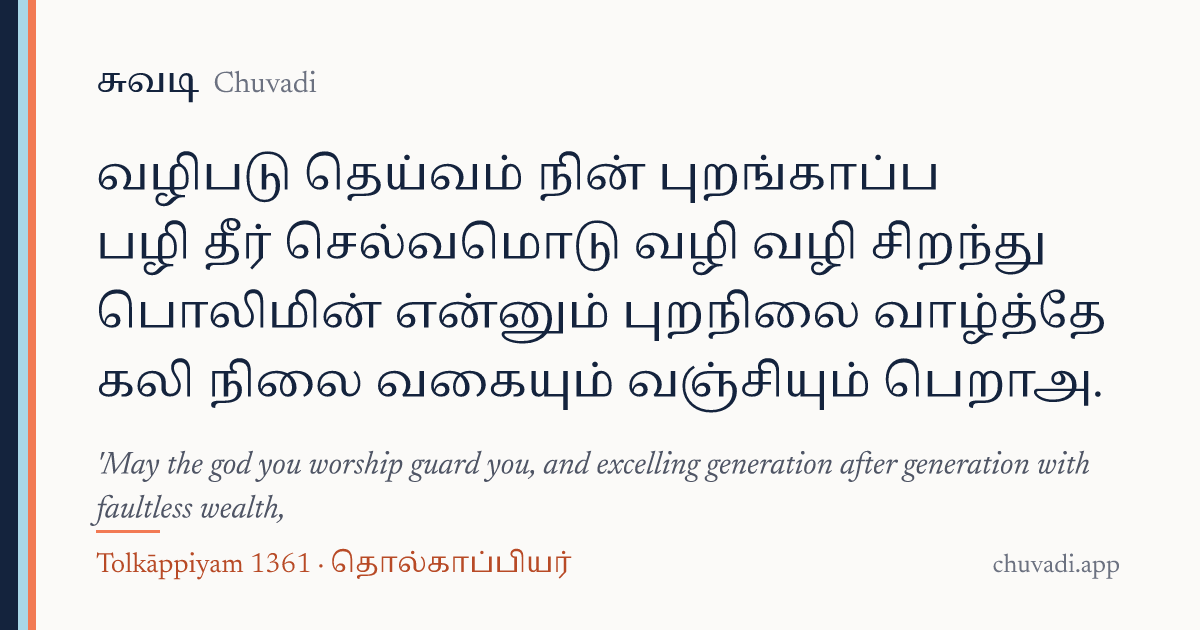
நீ வழிபடும் தெய்வம் உன்னைக் காப்பதாக, பழியில்லாத செல்வத்தோடு தலைமுறை தலைமுறையாகச் சிறந்து பொலிவீராக என்று வாழ்த்துவது புறநிலை வாழ்த்து; அது கலிப்பா வகைகளிலும் வஞ்சிப்பாவிலும் அமைவதில்லை.
இளம்பூரணர்
இளம்பூரணர் வழிபடு தெய்வம் நின்னைக் காப்பதாக, பழியற்ற செல்வத்தோடு வழிவழி சிறந்து பொலிமின் என வாழ்த்துவது புறநிலை வாழ்த்து என்றும், அது கலியிலும் வஞ்சியிலும் வாராது என்றும் இதனைக் கொள்வார்.
நச்சினார்க்கினியர்
நச்சினார்க்கினியரும் புறநிலை வாழ்த்தை இவ்வாறே வரையறுத்து, அது ஆசிரியத்திலோ வெண்பாவிலோ அமையும் என்ற கருத்தில் விளக்குவதாகத் தெரிகிறது. புறநிலை என்ற பெயருக்கு இவர் தரும் காரணமும் இவர் காட்டும் பாடல்களும் இங்கு சரிபார்க்கப்படவில்லை.
ஆகவே அது ஆசிரியத்திலோ வெண்பாவிலோ அமையும். புலவன் வாழ்த்தப்படுபவனின் தெய்வத்தை அவனுக்காக வேண்டுவதால் புறநிலை என்ற பெயர் வந்தது என்று உரையாசிரியர்கள் விளக்குவர்.
ஆங்கிலம் · English translationAI
Translation
- 'May the god you worship guard you,
- and excelling generation after generation with faultless wealth,
- may you flourish': the external-position benediction
- does not take the kinds of kali or the vañci.
What the poem says
Puṟanilai vāḻttu ("benediction from without") is the blessing in which the poet wishes that the god the addressee worships will protect him and that he and his line will flourish with blameless prosperity. The first three lines give its content in the form of the blessing itself. Such a benediction is not composed in kali or vañci; by implication it uses āciriyam or veṇpā. The commentators explain "puṟanilai" as the poet's standing outside the addressee and invoking his own god on his behalf.