



தொல்காப்பியம் 1387 · பொருள் 8.132
பாடல் · The poem
Tap a word to see where else it occurs.
பொருள் · Meaning in TamilAI
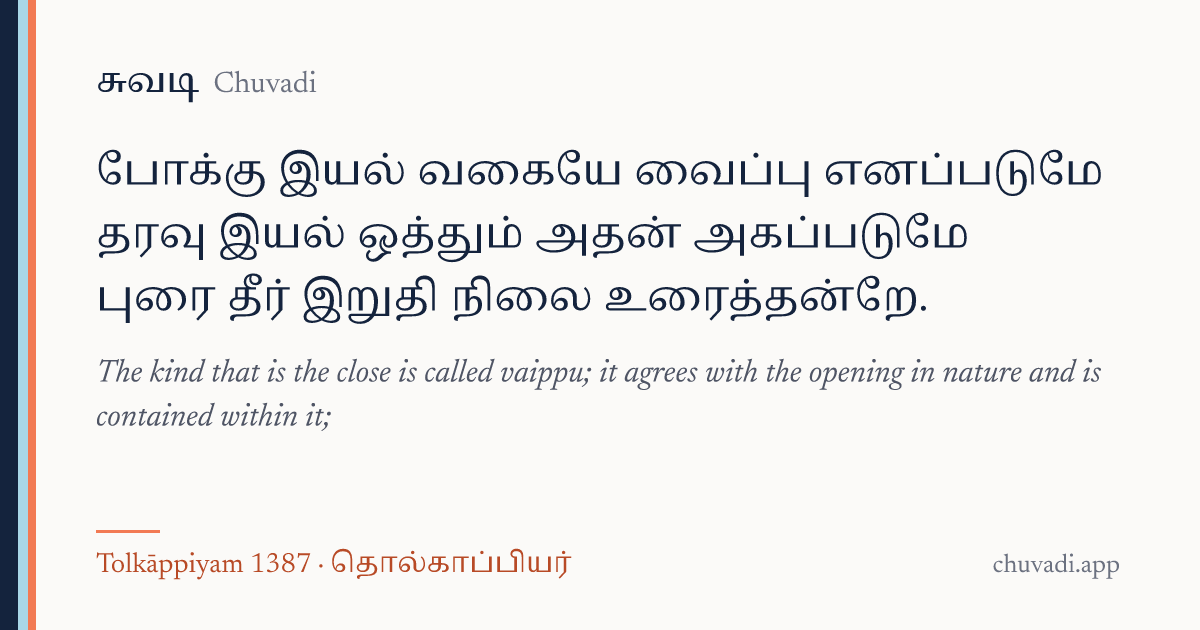
போக்கு எனப்படும் முடிவுப் பகுதி வைப்பு என்றும் சொல்லப்படும். அது தரவின் இயல்போடு ஒத்து, தரவின் அளவுக்குள் அடங்கி வரும்; பாடலின் குற்றமற்ற முடிந்த பொருளைக் கூறும்.
இளம்பூரணர்
இளம்பூரணர் போக்கே வைப்பு எனப்படும் எனக் கொண்டு, அது தரவோடு ஒத்தும் அதன் அளவுக்குள் அடங்கியும், பாடலின் முடிந்த பொருளைக் கூறும் பகுதி எனப் பொருள் கொள்வார்.
நச்சினார்க்கினியர்
நச்சினார்க்கினியரும் போக்கைப் பிற்காலத்துச் சுரிதகம் போன்ற முடிவுப் பகுதியாகக் கொண்டு, தரவோடு ஒத்தல், தரவின் அளவைக் கடவாமை என இரண்டு நிபந்தனைகளாக விளக்குவார்.
பிற்கால யாப்பில் இது சுரிதகம் எனப்படுகிறது. தரவோடு ஒத்தல், தரவின் அளவைக் கடவாமை என இரண்டு நிபந்தனைகளாக உரையாசிரியர்கள் இதனைப் பிரிக்கின்றனர்.
ஆங்கிலம் · English translationAI
Translation
- The kind that is the close is called vaippu;
- it agrees with the opening in nature and is contained within it;
- it states the final position, free of fault.
What the poem says
The pōkku, the closing part of ottāḻicaikkali, is also called vaippu, "placing, setting down". It is like the taravu in its form and lies within its length, that is, no longer than the opening. Its task is to set out the conclusion of the poem, the "final position free of fault": the point to which the whole poem was moving.
Later prosody calls this part curitakam or aṭakkiyal. The commentators read the second line as two conditions, likeness in form to the taravu and a length not exceeding it, as in the rule for the tāḻicai at tol.1385.