



தொல்காப்பியம் 1434 · பொருள் 8.179
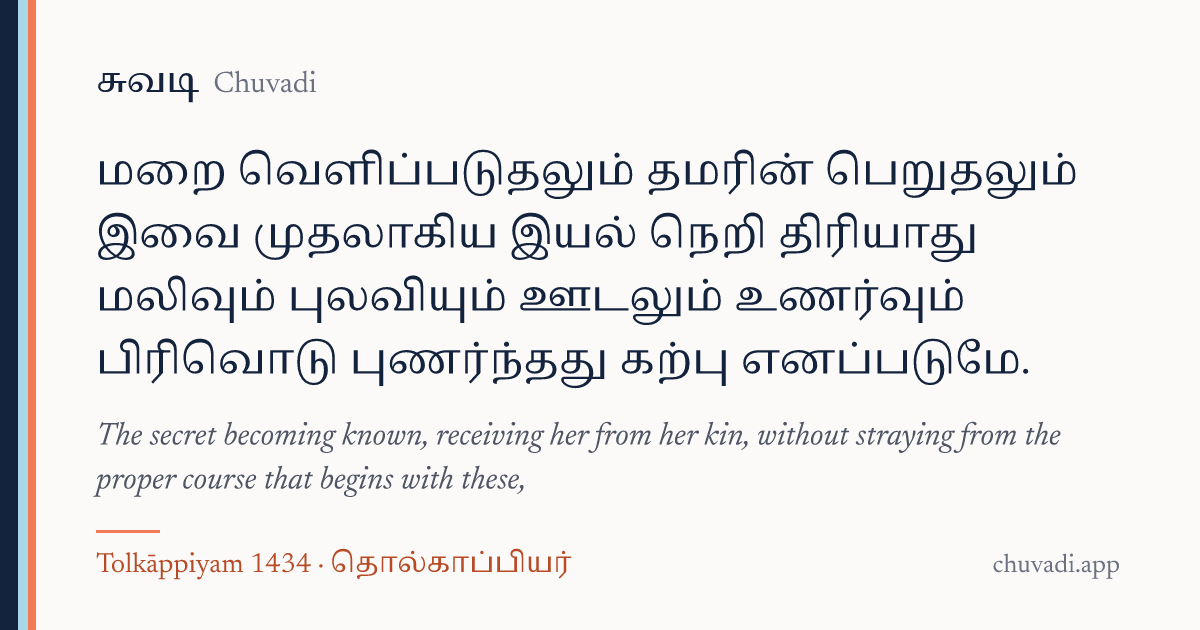
பாடல் · The poem
Tap a word to see where else it occurs.
பொருள் · Meaning in TamilAI
களவு வெளிப்படுதல், பெற்றோர் முதலிய உறவினர் தர மணந்துகொள்ளுதல் என்பன முதலாகிய முறையான நெறியிலிருந்து மாறாமல், மகிழ்ச்சி நிறைவு, புலவி, ஊடல், ஊடல் தீர்தல், பிரிவு ஆகியவற்றோடு கூடியது கற்பு எனப்படும்.
இளம்பூரணர்
இளம்பூரணர் களவு வெளிப்பட்ட பின்னும், தமர் கொடுக்க மணந்த பின்னும் நிகழும் மலிவு, புலவி, ஊடல், உணர்வு, பிரிவு ஆகியவற்றோடு கூடியது கற்பு எனப் பொருள் கொள்வார்.
நச்சினார்க்கினியர்
நச்சினார்க்கினியரும் இவற்றைக் கற்பியலில் கூறும் நிலைகளோடு இணைத்து, புலவியையும் ஊடலையும் ஒரே உணர்வின் மென்மையும் மிகுதியுமான நிலைகளாக வேறுபடுத்துவார்.
இவை கற்பியலில் பேசப்படும் நிலைகளோடு ஒத்தவை. புலவியும் ஊடலும் ஒரே உணர்வின் மென்மையும் மிகுதியுமான நிலைகள் என்று உரையாசிரியர்கள் வேறுபடுத்துவர்.
ஆங்கிலம் · English translationAI
Translation
- The secret becoming known, receiving her from her kin,
- without straying from the proper course that begins with these,
- fullness of joy, sulking, the lovers' quarrel and reconciliation,
- joined with separation: this is called kaṟpu.
What the poem says
Kaṟpu, wedded love, is the second kind of conduct. It begins when the secret love comes to light and the hero receives the heroine from her family in marriage, and proceeds along the proper course from there. Its situations are malivu, the fullness of shared joy; pulavi, sulking; ūṭal, the lovers' quarrel; uṇarvu, reconciliation; and, with these, separation (pirivu).
The list mirrors the themes of Kaṟpiyal. The commentators distinguish pulavi and ūṭal as degrees of the same feeling, the milder and the stronger, though the line between them is not drawn in the nūṟpā.