



தொல்காப்பியம் 1457 · பொருள் 8.202
பாடல் · The poem
Tap a word to see where else it occurs.
பொருள் · Meaning in TamilAI
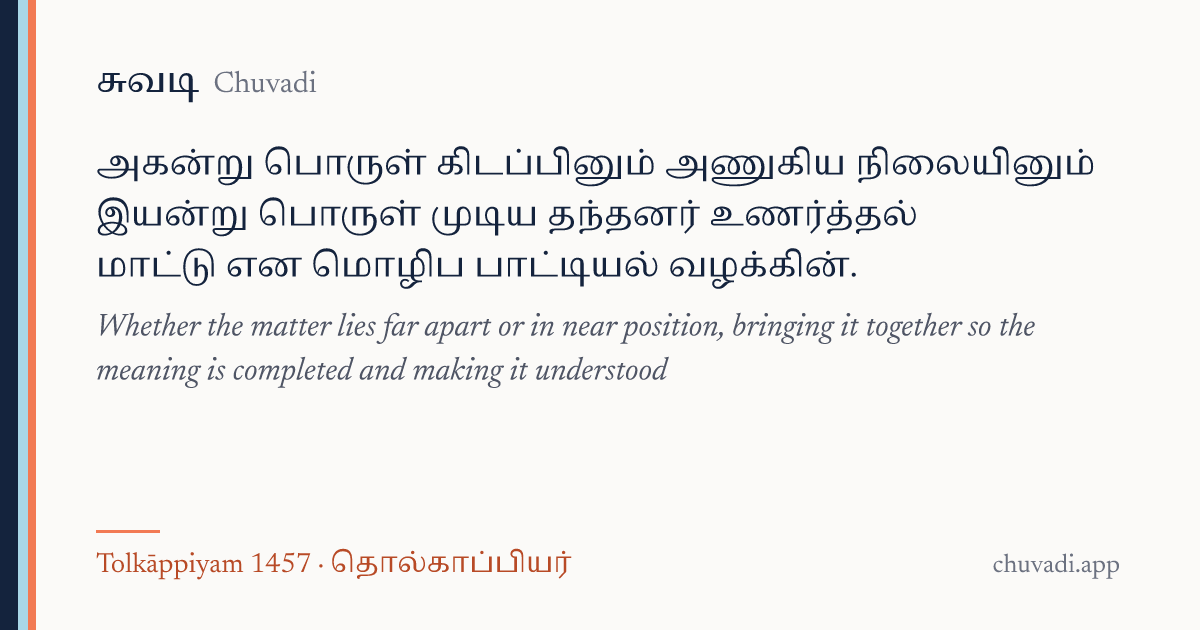
பொருள் தொலைவில் பிரிந்து கிடந்தாலும், அருகே இருந்தாலும், அவற்றைக் கொண்டுவந்து இணைத்துப் பொருள் முடியும்படி உணர்த்துவது மாட்டு என்று செய்யுள் வழக்கில் கூறுவர்.
இளம்பூரணர்
இளம்பூரணர் பொருள் தொலைவில் பிரிந்து கிடந்தாலும் அருகில் இருந்தாலும் அவற்றைக் கொண்டுவந்து இணைத்துப் பொருள் முடிக்குமாறு உணர்த்துவது மாட்டு எனப் பொருள் கொள்வார்.
நச்சினார்க்கினியர்
நச்சினார்க்கினியரும் மாட்டைப் பாடலில் பிரிந்து நிற்கும் சொற்களைக் கொண்டுகூட்டிப் பொருள் கொள்ளும் முறையாகக் கொண்டு, பாடல்களைக் கொண்டுகூட்டி உரைத்துக் காட்டுவார்; இவர் தரும் எடுத்துக்காட்டுப் பாடல்கள் இங்கு சரிபார்க்கப்படவில்லை.
எழுவாய் பாடலின் தொடக்கத்திலும் அதன் வினை பல அடிகளுக்குப் பின்னும் வருவது சங்கப் பாடல்களில் வழக்கம்; அவற்றைச் சேர்த்துப் பொருள் கொள்வதே மாட்டு.
ஆங்கிலம் · English translationAI
Translation
- Whether the matter lies far apart or in near position,
- bringing it together so the meaning is completed and making it understood
- is called māṭṭu, they say, in the usage of verse.
What the poem says
Māṭṭu, "linking", is the way verse connects words whose sense belongs together but which stand apart in the text, sometimes far apart, sometimes near. The hearer must bring them together to complete the meaning, and the poet so arranges them that this can be done.
Classical Tamil poems often hold a subject at the start and its verb or completing phrase many lines later, with descriptive matter in between; māṭṭu is the principle that licenses this. The commentators show it by construing a poem in prose order.