



தொல்காப்பியம் 1490 · பொருள் 8.235
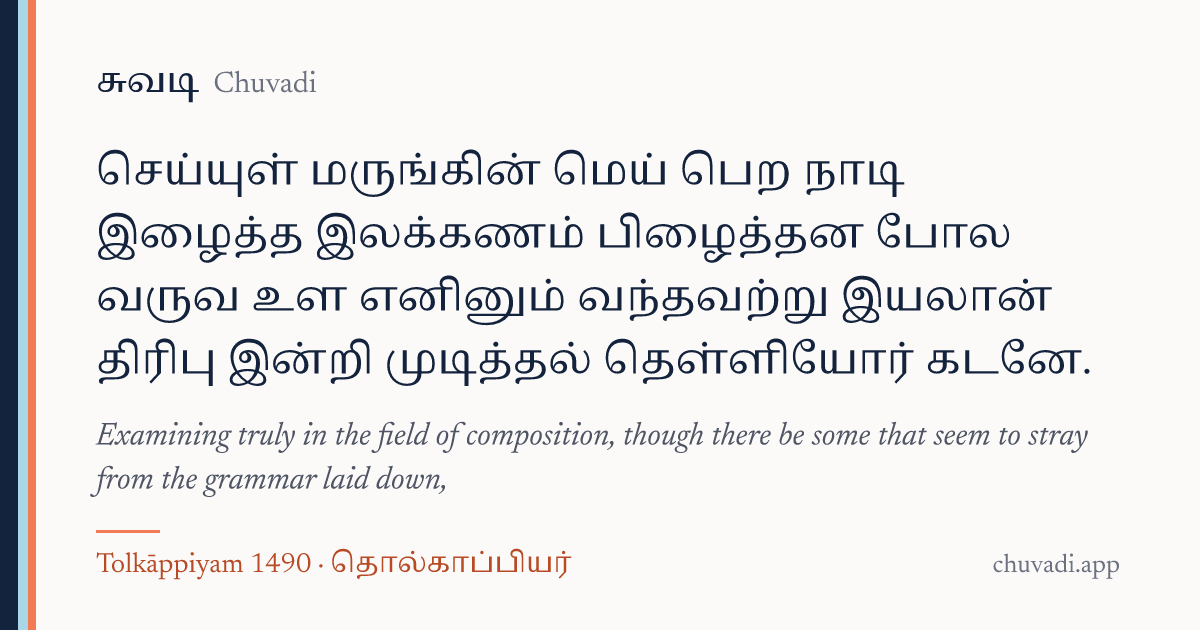
பாடல் · The poem
Tap a word to see where else it occurs.
பொருள் · Meaning in TamilAI
செய்யுள் பகுதியில் உண்மையாக ஆராய்ந்து பார்க்கும்போது, வகுத்துச் சொன்ன இலக்கணத்திலிருந்து தவறியவை போலத் தோன்றும் செய்யுள்கள் சில இருந்தாலும், அவை வந்த இயல்பின்படியே திரித்துக் கூறாமல் அமைத்து முடித்தல் அறிவுடையோரின் கடமை.
இளம்பூரணர்
இளம்பூரணர் வகுத்த இலக்கணத்தில் தவறியவை போலத் தோன்றும் செய்யுள்கள் வந்தாலும், அவற்றை வந்த இயல்பின்படியே திரிபின்றி அமைத்து முடித்தல் அறிவுடையோர் கடன் எனப் பொருள் கொள்வார்.
நச்சினார்க்கினியர்
நச்சினார்க்கினியரும் இதனை இயலின் முடிவில் வரும் புறனடையாகக் கொண்டு, இலக்கணத்தில் சொல்லப்படாத வடிவங்களையும் வழக்கின்படி ஏற்றுக்கொள்ள இதனைத் துணையாகக் கொள்வார்.
இலக்கணம் வழக்கை விவரிப்பதே; வழக்கு விதிகளைக் கடந்து சென்றால் பாடல்களைக் குறைகூறாமல் விதிகளை விரிக்க வேண்டும் என்பது இதன் கருத்து. பிற்கால வடிவங்களை ஏற்றுக்கொள்ள உரையாசிரியர்கள் இந்நூற்பாவைத் துணையாகக் கொள்வர்.
ஆங்கிலம் · English translationAI
Translation
- Examining truly in the field of composition,
- though there be some that seem to stray from the grammar laid down,
- to complete them according to the nature of what has come,
- without distortion, is the duty of the clear-minded.
What the poem says
The closing nūṟpā of Ceyyuḷiyal is a principle of interpretation. When, on careful examination, there are compositions that seem to break the rules set out, the wise do not reject them or force them, but account for them according to their own nature, as forms that have actually come into use, without distorting them.
It is a characteristic Tolkāppiyam caution: grammar describes usage, and where usage outruns the rules, the learned must extend the rules rather than condemn the poems. The old commentators rely on this nūṟpā to admit later forms and irregular verses.