



தொல்காப்பியம் 1517 · பொருள் 9.27
பாடல் · The poem
Tap a word to see where else it occurs.
பொருள் · Meaning in TamilAI
ஓரறிவு உயிர் என்பது உடம்பால் தொட்டு அறியும் அறிவு மட்டும் உடையது. ஈரறிவு உயிர் அதனோடு நாவால் சுவை அறிவதும் உடையது. மூவறிவு உயிர் அவற்றோடு மூக்கால் மணம் அறிவதும் உடையது. நாலறிவு உயிர் அவற்றோடு கண்ணால் காண்பதும் உடையது. ஐயறிவு உயிர் அவற்றோடு செவியால் கேட்பதும் உடையது. ஆறறிவு உயிர் அவற்றோடு மனத்தால் எண்ணி அறிவதும் உடையது. இவ்வாறு உண்மையை நேராக உணர்ந்த முன்னோர் முறைப்படுத்தினர்.
இளம்பூரணர்
இளம்பூரணர் இந்நூற்பாவை உயிர்களை அறிவின் எண்ணிக்கையால் ஆறு வகையாகப் பகுப்பதாகக் கொண்டு, "உற்று அறிவது" என்பதை உடம்பால் அறியும் ஊறு உணர்வாகவும், ஆறாவது அறிவை மனத்தால் அறிதலாகவும் பொருள் கொள்வார். ஒவ்வொரு படியிலும் முந்தைய அறிவுகளோடு ஒன்று கூடுகிறது என்பதையும், இப்பாகுபாடு முன்னோர் வகுத்தது என்பதையும் அவர் ஏற்பார்.
"உற்று அறிவது" என்பதை உடம்பால் அறியும் ஊறு உணர்வு என்று உரையாசிரியர்கள் விளக்குவர். ஒவ்வொரு படியிலும் முந்தைய அறிவுகளோடு ஒன்று கூடுகிறது; இந்த வகைப்பாட்டைத் தொல்காப்பியர் முன்னோர் வகுத்ததாகவே கூறுகிறார்.
ஆங்கிலம் · English translationAI
Translation
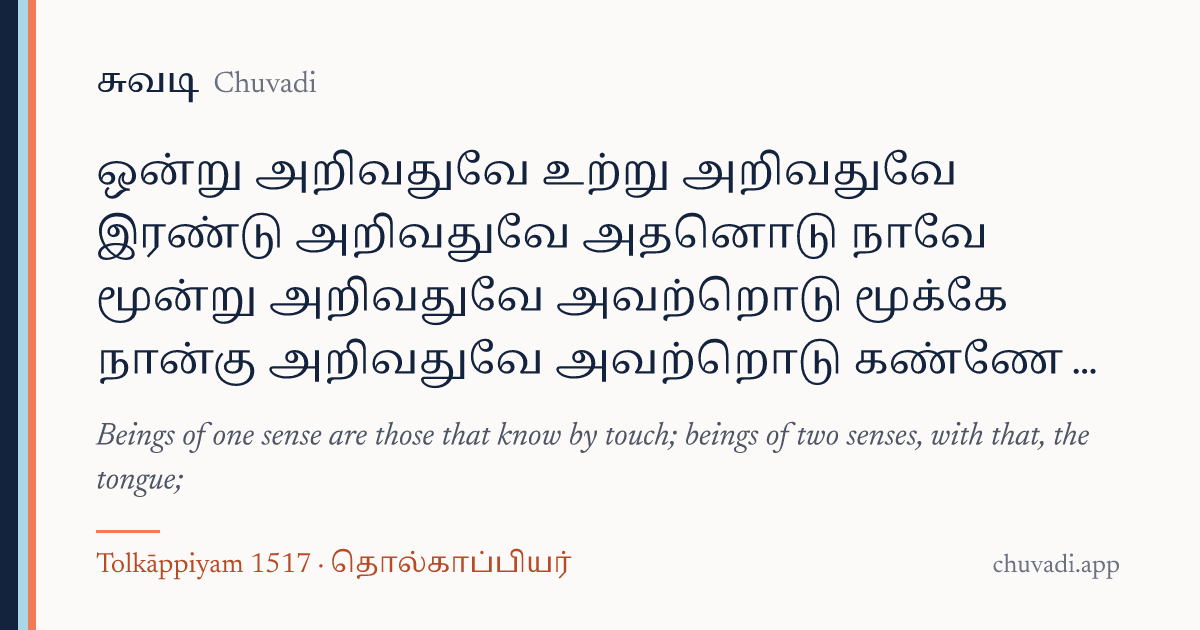
- Beings of one sense are those that know by touch;
- beings of two senses, with that, the tongue;
- beings of three senses, with those, the nose;
- beings of four senses, with those, the eye;
- beings of five senses, with those, the ear;
- beings of six senses, with those, the mind:
- so those who understood rightly have set it in order.
What the poem says
This is the best-known nūṟpā of the Marapiyal: a graded classification of living beings by the number of their senses (aṟivu, "knowing, faculty"). One-sensed beings know only by contact (uṟṟu aṟital, touch through the body); two-sensed add taste (the tongue); three add smell; four add sight; five add hearing; and six add the mind (maṉam), the faculty of reflection and judgement.
Each step is cumulative ("with that", "with those"). The final line attributes the scheme to earlier sages "who understood rightly", so Tolkāppiyar presents it as received doctrine, not his own invention. The commentators gloss uṟṟu aṟital as knowing through the body (mey) and take the six as the five senses plus mind. The next six nūṟpās give examples of each class.