



தொல்காப்பியம் 1559 · பொருள் 9.69
பாடல் · The poem
Tap a word to see where else it occurs.
பொருள் · Meaning in TamilAI
ஆண் குரங்கைக் கடுவன் என்றும், மரத்தில் வாழும் கூகையைக் கோட்டான் என்றும், சிவந்த வாயை உடைய கிளியைத் தத்தை என்றும், கொடிய வாயை உடைய காட்டுப் பூனையைப் பூசை என்றும், ஆண் குதிரையைச் சேவல் என்றும், கரிய நிறமுடைய பன்றியை ஏனம் என்றும், ஆண் எருமையைக் கண்டி என்றும் சொல்வது முழுமையாக நிலைபெற்ற வழக்கு. ஆதலால் இலக்கணக் கடமை அறிந்தவர்கள் அவற்றை விலக்கக் கூடாது.
இளம்பூரணர்
இளம்பூரணர் இங்குச் சொல்லப்பட்ட கடுவன், கோட்டான், தத்தை, பூசை, சேவல், ஏனம், கண்டி என்னும் பெயர்கள் முடிந்த வழக்காக நிலைபெற்றவை என்பதால் இலக்கணம் அறிந்தோர் அவற்றை நீக்கலாகாது எனப் பொருள் கொள்வார். குதிரையின் ஆணைச் சேவல் என்பது முன் சொன்ன விதிக்கு மாறாயினும் வழக்கு உண்மையால் ஏற்கப்படும் என்பது இதன் கருத்து.
சேவல் பறவைக்கே உரியது என்று முன்பு சொல்லப்பட்டாலும் குதிரைக்கும் அது வழங்குவதால் ஏற்க வேண்டும். நிலைபெற்ற வழக்கே இலக்கண விதியினும் வலியது என்பதை இந்நூற்பா தெளிவாகக் காட்டுகிறது.
ஆங்கிலம் · English translationAI
Translation
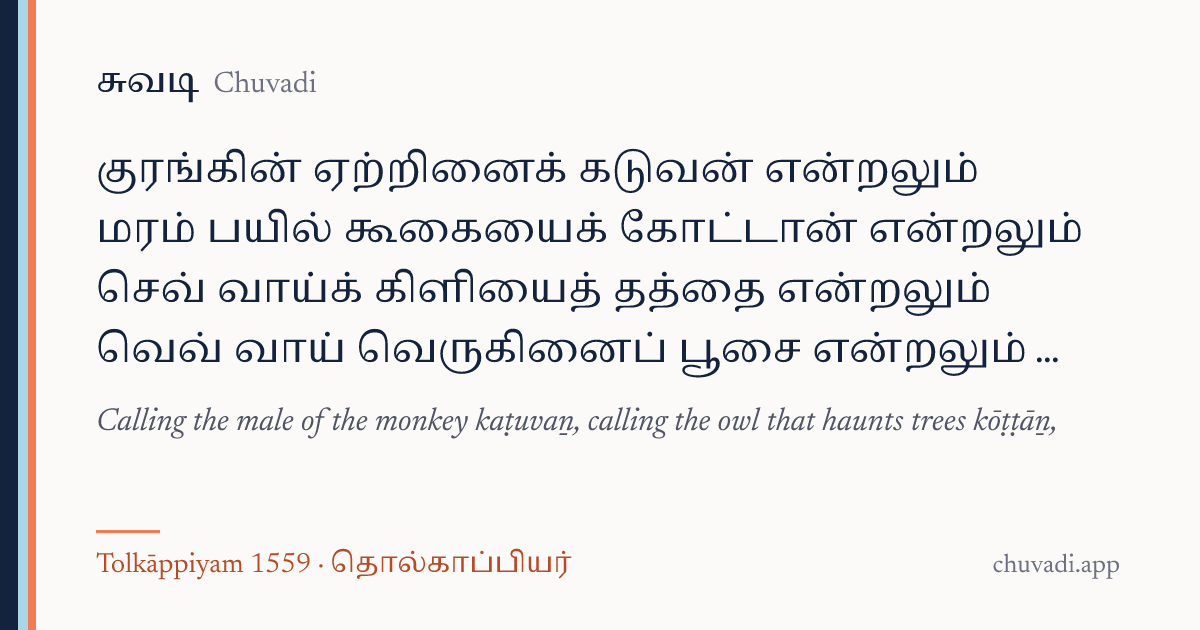
- Calling the male of the monkey kaṭuvaṉ,
- calling the owl that haunts trees kōṭṭāṉ,
- calling the red-beaked parrot tattai,
- calling the fierce-mouthed wild cat pūcai,
- calling the male among horses cēval,
- calling the dark-coloured pig ēṉam,
- calling the male among buffaloes kaṇṭi,
- since that usage exists, come down complete,
- they cannot be rejected by those who know what is due.
What the poem says
A list of special names accepted from usage: kaṭuvaṉ for the male monkey, kōṭṭāṉ for the tree-dwelling owl, tattai for the red-beaked parrot, pūcai for the wild cat, cēval for the stallion, ēṉam for the dark pig, and kaṇṭi for the male buffalo. Some of these break rules given earlier (cēval was for birds, 1539), and the nūṟpā says that, because these usages are fully established, those who know their duty as grammarians must not reject them.
The rule thus states plainly the principle behind the whole chapter: settled usage outranks system. Kaṭuvaṉ and kaṇṭi were already in the male list (1492), and here they are tied to their animals.