



தொல்காப்பியம் 1564 · பொருள் 9.74
பாடல் · The poem
Tap a word to see where else it occurs.
பொருள் · Meaning in TamilAI
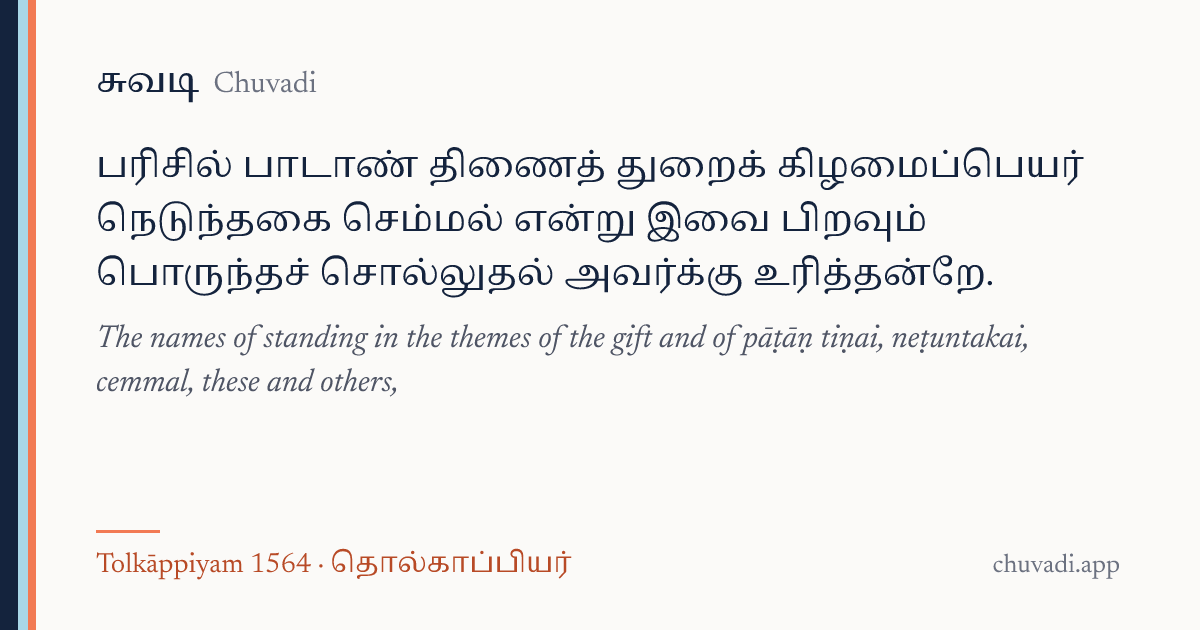
பரிசில் துறை, பாடாண் திணைத் துறை ஆகியவற்றில் தலைவனைச் சுட்டி வரும் நெடுந்தகை, செம்மல் முதலிய சிறப்புப் பெயர்களையும் இவை போன்ற பிறவற்றையும் அவர்க்குப் பொருந்தச் சொல்லுதல் உரியதன்றோ.
இளம்பூரணர்
இளம்பூரணர் உரையும் இந்நூற்பாவைப் பரிசில், பாடாண் துறைகளில் வரும் நெடுந்தகை, செம்மல் முதலிய சிறப்புப் பெயர்களின் வழக்கைப் பற்றியதாகவே கொள்வதாகத் தெரிகிறது; "அவர்" என்பதை இவர் யாராகக் கொள்கிறார் என்பதும், "உரித்தன்றே" என்பதை உடன்பாடாகவோ மறுப்பாகவோ கொள்கிறார் என்பதும் இங்கு சரிபார்க்கப்படவில்லை.
"உரித்தன்றே" என்பதை மறுப்பாகவும் கொள்ளலாம், "உரியதன்றோ" என்னும் வினாவால் உடன்பாடாகவும் கொள்ளலாம். முன் நூற்பாவோடு சேர்த்துப் பார்க்கும்போது இப்பெயர்கள் அந்தணர்க்கும் பொருந்தும் என்பது பொருத்தமான பொருளாகத் தோன்றுகிறது; ஆயினும் "அவர்" யார் என்பதும் பொருளும் உறுதியானவை அல்ல.
ஆங்கிலம் · English translationAI
Translation
- The names of standing in the themes of the gift and of pāṭāṇ tiṇai,
- neṭuntakai, cemmal, these and others,
- to say them fittingly is it not proper to them?
What the poem says
This nūṟpā is hard. Pāṭāṇ tiṇai is the puṟam theme of praising a patron, and parical is the gift sought by poets. Titles used of the praised hero in those themes, such as neṭuntakai "the great one" and cemmal "the noble one", are discussed here as to whom they may be applied.
The final "uritt-aṉṟē" can be read as a negative ("it is not proper to them") or, with the emphatic ē, as a rhetorical affirmative ("is it not proper?"). Taken with 1563, the more likely sense is that such titles may fittingly be used of the antaṇar too, not only of kings; but the reading is genuinely uncertain, and who "avar", "they", are is not stated.