



தொல்காப்பியம் 1581 · பொருள் 9.91
பாடல் · The poem
Tap a word to see where else it occurs.
பொருள் · Meaning in TamilAI
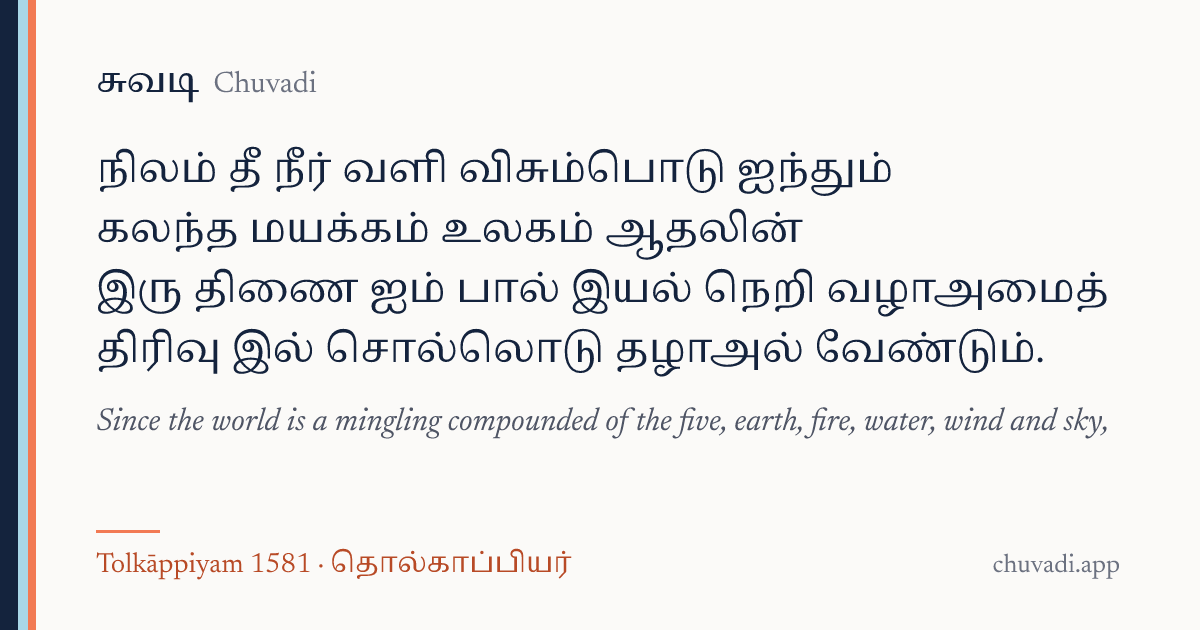
நிலம், தீ, நீர், காற்று, வானம் என்னும் ஐந்தும் கலந்த கலவையே உலகம். ஆதலால் உலகப் பொருள்களைச் சொல்லும்போது உயர்திணை, அஃறிணை என்னும் இரு திணைகளும் ஐந்து பால்களும் இயல்பாக அமையும் நெறியிலிருந்து தவறாமல், மரபில் திரியாத சொற்களைக் கொண்டே சொல்ல வேண்டும்.
இளம்பூரணர்
இளம்பூரணர் நிலம், தீ, நீர், வளி, விசும்பு என்னும் ஐம்பூதங்களும் கலந்த கலவையே உலகம் ஆதலால், உலகப் பொருள்களைச் சொல்லும்போது இரு திணையும் ஐம்பாலும் இயலும் நெறி தவறாமல், மரபில் திரியாத சொற்களால் சொல்ல வேண்டும் எனப் பொருள் கொள்வார்.
ஐம்பூதக் கொள்கையையும் சொல்லதிகாரத்தில் வந்த திணை, பால் பாகுபாட்டையும் இந்நூற்பா இணைக்கிறது. இதுவரை சொன்ன மரபுகளுக்கு அடிப்படை இதுவே.
ஆங்கிலம் · English translationAI
Translation
- Since the world is a mingling compounded
- of the five, earth, fire, water, wind and sky,
- without swerving from the proper course of the two tiṇai and five pāl,
- one must hold to words that do not change.
What the poem says
Having listed the specific usages, the chapter gives their ground. The world is a mixture of the five elements (earth, fire, water, wind, space), and so beings are endlessly varied; to describe them truly one must keep the grammar of the two tiṇai (tiṇai, "class": the rational and the non-rational) and the five pāl (pāl, "gender-number": masculine, feminine, rational plural, non-rational singular and plural) and use words that do not depart from usage.
The nūṟpā links the cosmology of the elements to the grammatical categories of the Collatikāram, and makes marapu a matter of describing the world correctly.