



தொல்காப்பியம் 1602 · பொருள் 9.112
பாடல் · The poem
Tap a word to see where else it occurs.
பொருள் · Meaning in TamilAI
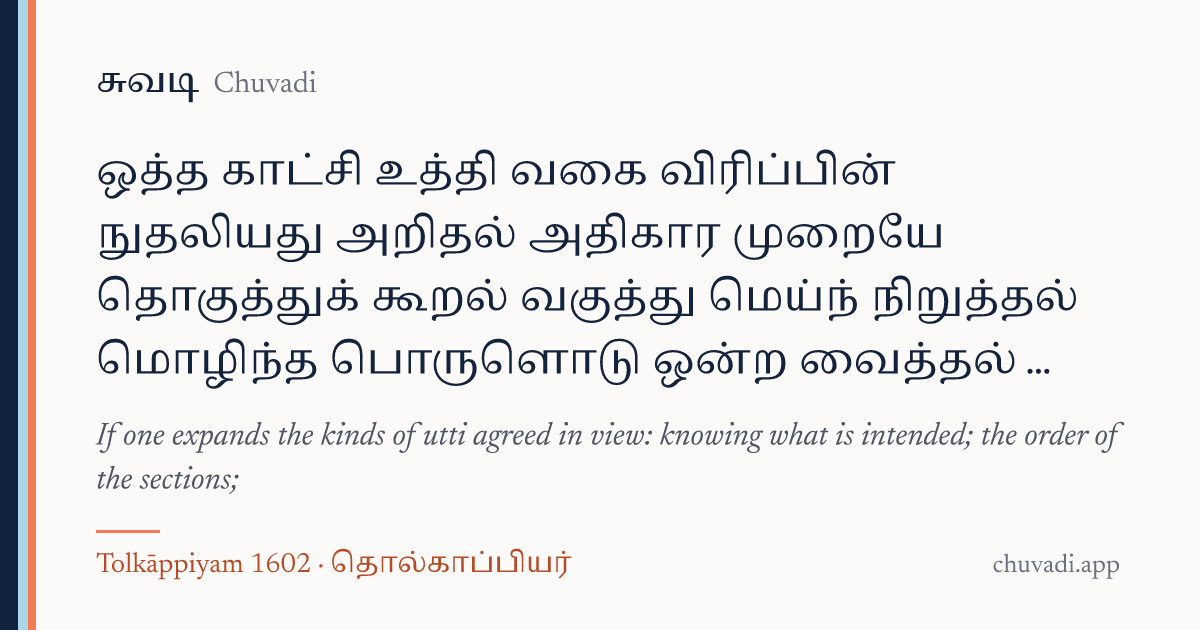
ஒத்த கருத்துடைய உத்தி வகைகளை விரித்துச் சொன்னால் அவை: நூல் கருதியதை அறிதல், அதிகார முறை, தொகுத்துக் கூறல், வகுத்து உண்மை நிறுத்தல், சொன்ன பொருளோடு பொருந்த வைத்தல், சொல்லாததைத் தடையின்றி முடித்தல், வாராததனால் வந்ததை முடித்தல், வந்ததைக் கொண்டு வாராததை உணர்த்தல், முன் சொன்னதன் முறை மாற்றுதல், ஒப்பக் கூறல், ஒருதலையாகத் துணிந்து சொல்லுதல், தன் கொள்கை கூறல், முறை பிறழாமை, பிறர் உடன்பட்டதைத் தானும் ஏற்றல், கடந்ததைக் காத்தல், வருவதைப் போற்றல், "சொல்வோம்" என்றல், "சொன்னோம்" என்றல், தானே குறியீடு இடுதல், ஒருதலை அன்மை, முடிந்ததைக் காட்டல், ஆணை கூறல், பல பொருளுக்கு ஏற்குமிடத்து நல்லதைக் கொள்ளல், தொகுத்த சொல்லால் வகுத்துக் கொள்ளல், மாறுபட்ட கொள்கையை மறுத்துத் தன் துணிபைச் சொல்லுதல், பிறர் கொள்கை கூறல், அறியாது உடன்படல், பொருள் இடையிடுதல், எதிர்ப் பொருள் உணர்த்தல், சொல்லின் எச்சத்தைச் சொல்லியவாறே உணர்த்தல், தந்து புணர்த்து உரைத்தல், ஞாபகம் கூறல், உய்த்துணர வைத்தல் என்பன. இவற்றை உண்மை விளங்க ஆராய்ந்து, இங்குச் சொல்லாத பிற உத்திகள் வந்தாலும் சொன்ன முறையிலேயே சுருக்கமாக ஆராய்ந்து, மனத்தில் எண்ணிக் குற்றமறத் தெரிந்து, அவற்றின் இனத்தோடு சேர்த்து உணர்த்த வேண்டும்; கூர்த்த அறிவுடைய புலவர் கூறிய நூல் இத்தகையது.
இளம்பூரணர்
இளம்பூரணர் இந்நூற்பாவில் சொல்லப்பட்டவற்றை முப்பத்திரண்டு உத்திகளாகக் கொண்டு, இங்குச் சொல்லாத பிற உத்திகள் வரினும் சொன்ன முறையிலேயே ஆராய்ந்து அவற்றின் இனத்தோடு சேர்த்துக் கொள்ள வேண்டும் எனப் பொருள் கொள்வார். உத்திகளை இவர் எவ்வாறு எண்ணிப் பிரிக்கிறார் என்பதும், ஒவ்வொன்றுக்கும் தரும் எடுத்துக்காட்டுகளும் இங்கு சரிபார்க்கப்படவில்லை.
இது தொல்காப்பியத்தின் இறுதி நூற்பா. இதில் வரும் உத்திகளை முப்பத்திரண்டாக எண்ணும் முறையில் உரையாசிரியர்களிடையே வேறுபாடு உண்டு; சில தொடர்களை ஒன்றாகவோ இரண்டாகவோ கொள்வதால் அது நேர்கிறது. "நூலே" என்னும் சொல்லோடு நூல் முழுவதும் நிறைவுறுகிறது.
ஆங்கிலம் · English translationAI
Translation
- If one expands the kinds of utti agreed in view:
- knowing what is intended; the order of the sections;
- stating in summary; dividing and setting out truly;
- placing in accord with the matter stated;
- completing without hindrance what was not stated;
- completing what has come by what has not come;
- making known what has not come by what has come;
- the reversal of what was said before;
- saying alike; stating one side decisively;
- stating one's own view; not departing from order;
- agreeing oneself to what another agreed to;
- guarding what has passed; protecting what is to come;
- saying 'we shall tell'; saying 'it has been told';
- giving one's own technical terms; not being one-sided;
- showing what has been settled; stating the authority;
- where there are many meanings, taking the good one;
- taking the division from the summarised word;
- refuting the opposite and stating one's own conclusion;
- stating another's view; agreeing without knowing;
- interposing matter; making known the opposite meaning;
- making known the rest of a word as it was said;
- bringing in and joining; stating by implication;
- with making known by inference, examining truly,
- even if things other than those told come there,
- examining briefly in the way that was told,
- reckoning in the mind and discerning without stain,
- one must make them known by joining them to their kind:
- so in the book told by poets of keen insight.
What the poem says
The final nūṟpā of the Tolkāppiyam lists the thirty-two uttis (utti, "devices of exposition") by which a treatise is composed and read. They include: knowing the topic intended; the order of chapters; summarising; analysing; keeping to the topic; completing what is unstated; explaining the stated by the unstated and the unstated by the stated; reversing an earlier order; stating parallels; stating a view decisively; stating one's own view; keeping order; accepting what another accepted; anticipating and recalling (guarding what has gone, preparing what is to come, "we shall say", "it has been said"); coining one's own technical terms; refuting and concluding; reporting others' views; choosing the best of several meanings; supplying an ellipsis; indicating a rule by implication (ñāpakam); and drawing inferences.
The closing lines say that any further devices not listed should be examined in the same manner and grouped with their kind. The list resembles the tantrayukti of Sanskrit śāstra, and the counting into exactly thirty-two is done differently by different readers. The last line, ending on "nūlē", "the book", closes the whole work.