



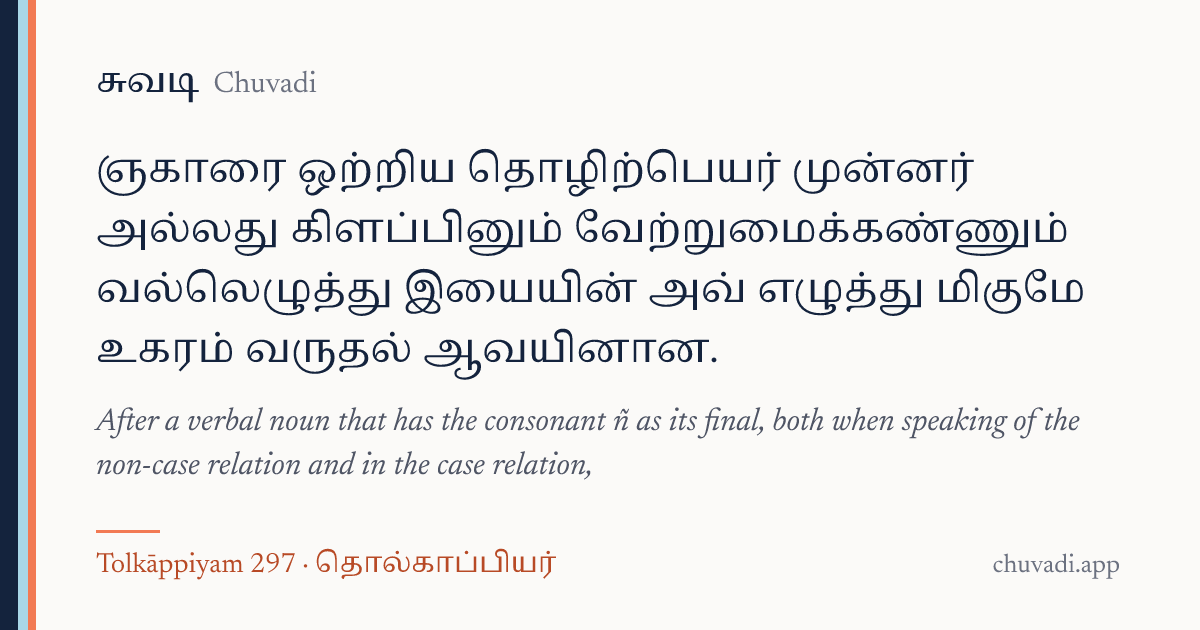
தொல்காப்பியம் 297 · எழுத்து 8.1
பாடல் · The poem
Tap a word to see where else it occurs.
பொருள் · Meaning in TamilAI
ஞகர மெய்யை இறுதியாகக் கொண்ட தொழிற்பெயருக்குப் பின் வல்லெழுத்தில் தொடங்கும் சொல் வந்தால், அல்வழியிலும் வேற்றுமையிலும் அந்த வல்லெழுத்து மிகும்; அதோடு நிலைமொழியின் இறுதியில் உகரமும் வந்து சேரும். எடுத்துக்காட்டாக, உரிஞ் என்பதோடு கடிது சேர்ந்தால் உரிஞுக்கடிது என்றும், கடுமை சேர்ந்தால் உரிஞுக்கடுமை என்றும் ஆகும்.
இளம்பூரணர்
இவர் உரையும் இந்நூற்பா ஞகர ஈற்றுத் தொழிற்பெயர் இருவழியிலும் உகரம் பெற்று வல்லெழுத்து மிகுவதைக் கூறுகிறது எனக் கொண்டு, மேற்கூறிய பொருளையே தருவதாகக் கொள்ளலாம்; இவர் தரும் எடுத்துக்காட்டுகள் இங்கு சரிபார்க்கப்படவில்லை.
நச்சினார்க்கினியர்
உயிரீற்றுப் புணர்ச்சியைச் சொன்ன பின் மெய்யீற்றுச் சொற்கள் வல்லினத்தோடும் பிற இனங்களோடும் புணரும் முறையைச் சொல்வதால் இவ்வியலுக்கு இப்பெயர் வந்தது என்று விளக்குகிறார்.
இதுவே புள்ளிமயங்கியலின் முதல் நூற்பா.
ஆங்கிலம் · English translationAI
Translation
- After a verbal noun that has the consonant ñ as its final,
- both when speaking of the non-case relation and in the case relation,
- if a hard consonant joins, that consonant is doubled;
- and u comes in at that place.
What the poem says
This nūṟpā opens the Puḷḷimayaṅkiyal, the chapter on how words ending in a consonant (puḷḷi, "dot", since consonants are written with a dot) join with what follows. It starts with ñ. A verbal noun (toḻiṟpeyar) ending in ñ, such as uriñ "stripping, rubbing", takes an enabling u after it, and the hard consonant (val-eḻuttu: k, c, t, p) that begins the next word is doubled. This holds both in the non-case relation (allvaḻi) and in the case relation (vēṟṟumai).
So uriñ + kaṭitu "is quick" gives uriñukkaṭitu, and uriñ + kaṭumai "quickness" gives uriñukkaṭumai. Nacciṉārkkiṉiyar explains the chapter's name: after the vowel-final words of the previous chapter, it treats consonant-final words joining with the hard group and, to a lesser extent, with the other groups.
உரை · Commentary
நச்சினார்க்கினியர்
என்பது சூத்திரம்.
நிறுத்த முறையானே உயிரீறு புணர்த்துப் புள்ளியீறு வன்கணத்தோடுஞ் சிறுபான்மை ஏனைக் கணத்தோடும் புணருமாறு கூறலின் இவ்வோத்துப் புள்ளிமயங்கியலென்னும் பெயர்த்தாயிற்று.
இச் சூத்திரம் ஞகார ஈறு வன்கணத்தோடு இருவழியும் புணருமாறு கூறுகின்றது.
(இ-ள்.) ஞகாரை ஒற்றிய தொழிற்பெயர் முன்னர்—ஞகாரம் ஈற்றின்கண் ஒற்றாகநின்ற தொழிற்பெயரின் முன்னர், அல்லது கிளப்பினும் வேற்றுமைக்கண்ணும்—அல்வழியைச் சொல்லுமிடத்தும் வேற்றுமையைச் சொல்லுமிடத்தும், வல்லெழுத்து இயையின் அவ்வெழுத்து மிகும்—வல்லெழுத்து முதன்மொழி வருமொழியாய் வரின் அவ்வல்லெழுத்து வருமொழிக்கண் மிக்கு முடியும், ஆவயின் ஆன உகரம் வருதல்—அவ்விடத்து உகரம் வரும்; எ-று.
(எ-டு.) உரிஞுக்கடிது சிறிது தீது பெரிது எனவும், உரிஞுக் கடுமை சிறுமை தீமை பெருமை எனவும் வரும்.