



தொல்காப்பியம் 316 · எழுத்து 8.20
பாடல் · The poem
Tap a word to see where else it occurs.
பொருள் · Meaning in TamilAI
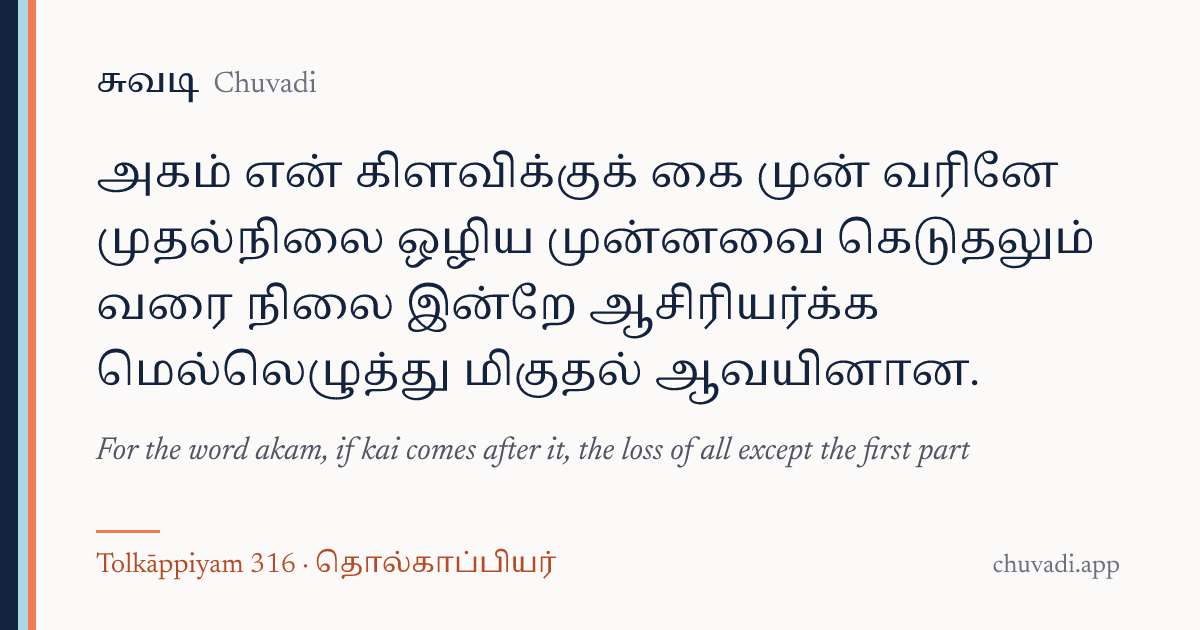
அகம் என்னும் சொல்லுக்குப் பின் கை என்னும் சொல் வந்தால், முதலில் உள்ள அகரம் ஒன்றைத் தவிர மற்றவை கெட்டுப்போவதை ஆசிரியர்கள் தடுக்கவில்லை; அப்படிக் கெட்ட இடத்தில் மெல்லெழுத்து மிகும். ஆகவே அகம் என்பதும் கை என்பதும் சேர்ந்து அங்கை (உள்ளங்கை) என வரும்.
இளம்பூரணர்
இவர் உரையும் இந்நூற்பா அகம் என்பதன் முன் கை வந்தால் முதல் அகரம் ஒழிய மற்றவை கெட்டு மெல்லெழுத்து மிகுவதைக் கூறுகிறது எனக் கொண்டு, மேற்கூறிய பொருளையே தருவதாகக் கொள்ளலாம்; இவர் தரும் எடுத்துக்காட்டுகள் இங்கு சரிபார்க்கப்படவில்லை.
நச்சினார்க்கினியர்
கெடாமல் நின்றால் முந்தைய அல்வழி விதிப்படி அகங்கை என வரும் என்றும், இது பண்புத்தொகையே தவிர வேற்றுமைத்தொகை அன்று என்றும் கூறுகிறார்.
ஆங்கிலம் · English translationAI
Translation
- For the word akam, if kai comes after it,
- the loss of all except the first part
- is not forbidden, for the teachers;
- and the soft consonant is doubled there.
What the poem says
A special rule for akam "inside" + kai "hand", meaning the palm. Everything after the initial a may drop, leaving a, and then the nasal is doubled: the result is aṅkai "palm". The phrase "is not forbidden" (varai nilai iṉṟē) means this is permitted rather than required.
Nacciṉārkkiṉiyar explains that when the word does not shorten, it follows the general non-case rule just given, giving akaṅkai. He classes the compound as descriptive (paṇputtokai) and argues that it is not a case compound, both from the section it stands in and from its meaning.
உரை · Commentary
நச்சினார்க்கினியர்
இது மகர ஈற்று அல்வழிக்கண் இம்மொழி இம்முடிபு எய்தும் என்றலின் எய்தாத தெய்துவித்தது.
(இ-ள்.) அகம் என் கிளவிக்குக் கை முன்வரின்—அகமென்னுஞ் சொல்லிற்குக் கையென்னுஞ் சொல் முன்னே வருமாயின், முதனிலை ஒழிய முன்னவை கெடுதலும்—முன்னின்ற அகரங் கெடாது நிற்ப அதன் முன் நின்ற ககரமும் மகர வொற்றுங் கெட்டு முடிதலுங் கெடாது நின்று முடிதலும், வரை நிலை இன்றே யாசிரியர்க்க—நீக்கு நிலைமையின்று ஆசிரியர்க்கு, ஆவயின் ஆன மெல்லெழுத்து மிகுதல்—அவை கெட்டவழி மெல்லெழுத்து மிக்கு முடியும்; எ-று.
(எ-டு.) அங்கை என வரும். அகங்கை எனக் கெடாது முடிந்தவழி ‘அல்வழி எல்லாம்’ (எழு-௩௧௪) என்றதனால் மகரந்திரிந்து முடிதல் கொள்க. இது பண்புத்தொகை. அதிகாரத்தானும் பொருணோக்கானும் வேற்றுமைத் தொகையன்மை உணர்க.