



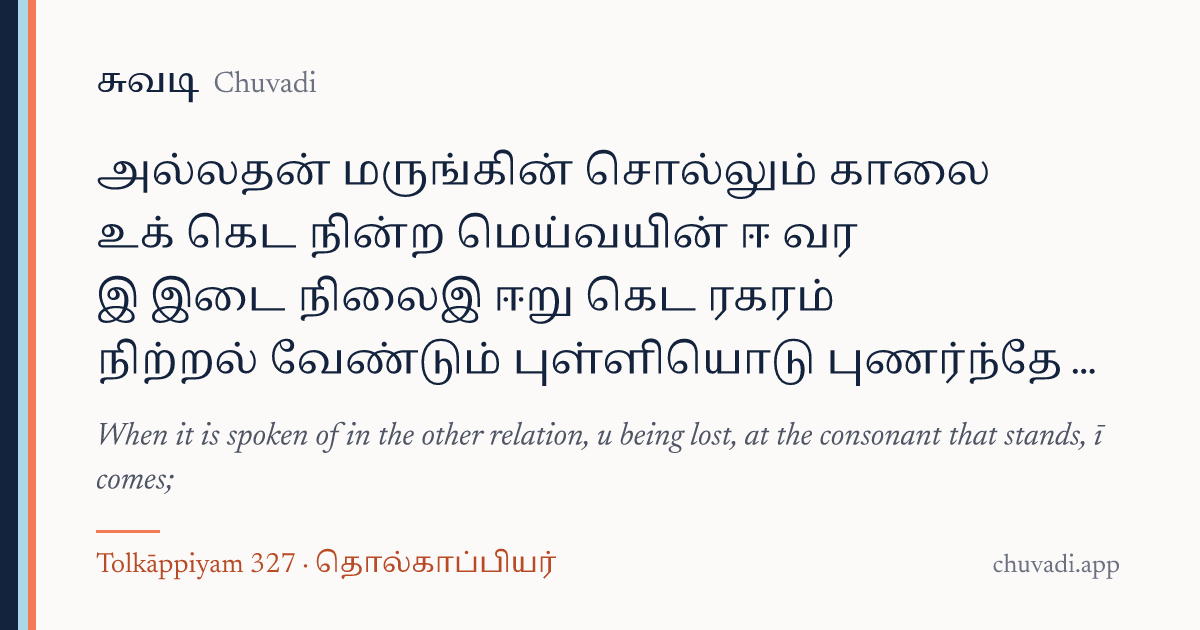
தொல்காப்பியம் 327 · எழுத்து 8.31
பாடல் · The poem
Tap a word to see where else it occurs.
பொருள் · Meaning in TamilAI
நும் என்னும் சொல் அல்வழியில் வரும்போது, அதன் உகரம் கெட்டு, நின்ற நகர மெய்யின் மேல் ஈகாரம் வந்து, அதன் பின் ஓர் இகரம் இடையில் நின்று, இறுதி மகரம் கெட்டு, புள்ளியுடைய ரகர மெய் வந்து நிற்கும். இவ்வாறு நீயிர் என்னும் வடிவம் உண்டாகும். அதன் பின் வரும் சொல் திரியாமல் இயல்பாகப் புணரும்: நீயிர் குறியீர், நீயிர் சிறியீர், நீயிர் பெரியீர்.
இளம்பூரணர்
இவர் உரையும் இந்நூற்பா நும் என்பது அல்வழியில் திரிந்து முடியும் முறையைக் கூறுகிறது எனக் கொண்டு, மேற்கூறிய பொருளையே தருவதாகக் கொள்ளலாம்; இவர் தரும் எடுத்துக்காட்டுகள் இங்கு சரிபார்க்கப்படவில்லை.
நச்சினார்க்கினியர்
சொல்லுங்காலை என்றதனால் நீயிர் ஞான்றீர், நீயிர் யாத்தீர், நீயிர் அடைந்தீர் எனப் பிற கணங்களிலும் இவ்வாறே வரும் என்று கூறுகிறார்.
ஆங்கிலம் · English translationAI
Translation
- When it is spoken of in the other relation,
- u being lost, at the consonant that stands, ī comes;
- i stands in the middle; the final being lost, an r
- must stand, joined with its dot;
- and in that kind of word, the following is natural.
What the poem says
This describes how num becomes the pronoun nīyir "you (plural)" in the non-case relation. Step by step: the u of num is lost, leaving the bare n; ī comes onto that n, giving nī; an i is inserted after it; the final m is lost; and an r with its dot (a pure consonant) stands at the end. The result is nīyir, and the following word then joins naturally, without change.
Nacciṉārkkiṉiyar's examples: nīyir kuṟiyīr "you are short", nīyir ciṟiyīr, nīyir tīyīr, nīyir periyīr, and by "when it is spoken" also nīyir ñāṉṟīr, nīyir yāttīr, nīyir aṭaintīr before the other groups. The derivation is the grammarian's way of relating two forms of the pronoun; it is not a claim about history.
உரை · Commentary
நச்சினார்க்கினியர்
இது நும்மென்பதற்கு அல்வழி முடிபு கூறுகின்றது.
(இ-ள்.) அல்லதன் மருங்கிற் சொல்லுங்காலை—நும்மென்பதனை அல்வழிக்கண் கூறுமிடத்து, உ கெட நின்ற மெய்வயின் ஈ வர—நகரத்துள உகரங்கெட்டுப் போக ஒழிந்து நின்ற நகர வொற்றிடத்தே ஈகாரம் வந்துநிற்ப, இ இடைநிலைஇ ஈறு கெட—ஓர் இகரம் இடையிலே வந்து நிலைபெற்று மகரமாகிய ஈறு கெட்டுபோக, புள்ளி ரகரம் நிற்றல் வேண்டும்—ஆண்டுப் புள்ளி பெற்று ஒரு ரகரம் வந்து நிற்றலை விரும்பும் ஆசிரியன், அப்பால் மொழிவயின்—அக் கூற்றினையுடைய நிலைமொழியிடத்து, இயற்கையாகும்—வருஞ்சொல் இயல்பாய் முடியும்; எ-று.
(எ-டு.) நீயிர் குறியீர் சிறியீர் தீயீர் பெரியீர் எனவரும்.
சொல்லுங்காலையென்றதனானே நீயிர் ஞான்றீர் நீண்டீர் மாண்டீர் யாத்தீர் வாடினீர் அடைந்தீர் என ஏனைக்கணத்திலும் ஒட்டுக.