



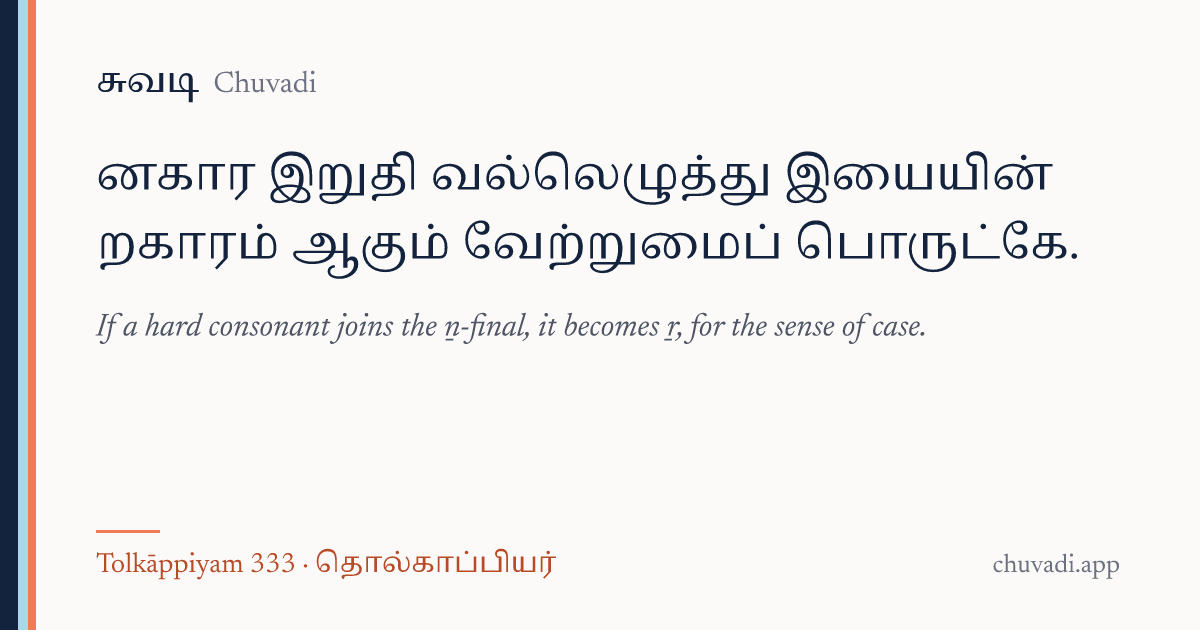
தொல்காப்பியம் 333 · எழுத்து 8.37
பாடல் · The poem
Tap a word to see where else it occurs.
பொருள் · Meaning in TamilAI
னகர மெய்யில் முடியும் பெயருக்குப் பின் வல்லெழுத்தில் தொடங்கும் சொல் வேற்றுமைப் பொருளில் வந்தால், அந்த னகரம் றகரமாக மாறும். பொன் என்பதோடு குடம் சேர்ந்தால் பொற்குடம் ஆகும்; பொற்சாடி, பொற்றூதை, பொற்பானை என்றும் வரும்.
இளம்பூரணர்
இவர் உரையும் இந்நூற்பா னகர ஈறு வேற்றுமையில் வல்லெழுத்து வந்தால் றகரமாவதைக் கூறுகிறது எனக் கொண்டு, மேற்கூறிய பொருளையே தருவதாகக் கொள்ளலாம்; இவர் தரும் எடுத்துக்காட்டுகள் இங்கு சரிபார்க்கப்படவில்லை.
ணகர ஈற்றுக்குச் சொன்ன விதியைப் போன்றதே இது; நச்சினார்க்கினியர் இவ்வெடுத்துக்காட்டுகளோடு இதை விளக்குகிறார்.
ஆங்கிலம் · English translationAI
Translation
- If a hard consonant joins the ṉ-final,
- it becomes ṟ, for the sense of case.
What the poem says
Parallel to the ṇ-rule of nūṟpā 303: a noun ending in the alveolar nasal ṉ turns it into the alveolar stop ṟ when a hard consonant follows in the case relation. Poṉ "gold" + kuṭam "pot" gives poṟkuṭam "golden pot"; likewise poṟcāṭi, poṟṟūtai, poṟpāṉai.
The nūṟpā follows the fixed order of the chapter, turning now to the ṉ-final words. Nacciṉārkkiṉiyar's comment simply restates the rule with these examples.
உரை · Commentary
நச்சினார்க்கினியர்
இது நிறுத்த முறையானே னகர இறுதி வேற்றுமைக்கண் புணருமாறு கூறுகின்றது.
(இ-ள்.) னகார இறுதி வல்லெழுத்து இயையின் றகாரமாகும்—னகார ஈற்றுப்பெயர் வல்லெழுத்து முதனமொழி வருமொழியாய் வந்து இயையின் றகாரமாகும், வேற்றுமைப் பொருட்கு—வேற்றுமைப்பொருட் புணர்ச்சிக்கண்; எ-று.
(எ-டு.) பொற்குடம் சாடி தூதை பானை என வரும்.