



தொல்காப்பியம் 350 · எழுத்து 8.54
பாடல் · The poem
Tap a word to see where else it occurs.
பொருள் · Meaning in TamilAI
இயற்பெயருக்கு முன் பண்பைக் குறிக்கும் அடைமொழி சேர்ந்து வரும்போது, முன்பு சொன்ன திரிபுகள் எதுவும் நிகழாமல் இயல்பாகவே புணரும். பெருஞ்சாத்தன் றந்தை, பெருங்கொற்றன் றந்தை என வரும்.
இளம்பூரணர்
இவர் உரையும் இந்நூற்பா அடைமொழியோடு வரும் இயற்பெயர் திரியாமல் புணர்வதைக் கூறுகிறது எனக் கொண்டு, மேற்கூறிய பொருளையே தருவதாகக் கொள்ளலாம்; இவர் தரும் எடுத்துக்காட்டுகள் இங்கு சரிபார்க்கப்படவில்லை.
நச்சினார்க்கினியர்
கொற்றங்கொற்றன் றந்தை போன்றவற்றில் வருவது பண்பு அல்ல, வேறு அடை; அவற்றை இவ்வியலின் புறனடையால் முடிக்க வேண்டும் என்று கூறுகிறார்.
ஆங்கிலம் · English translationAI
Translation
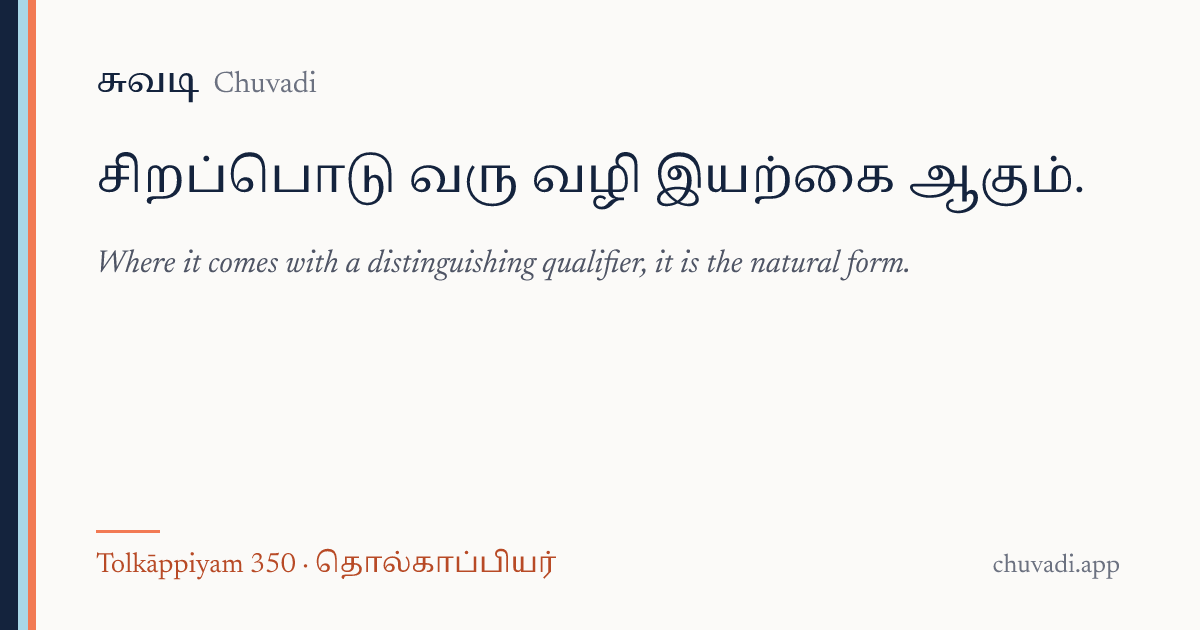
- Where it comes with a distinguishing qualifier, it is the natural form.
What the poem says
If the personal name is preceded by a qualifying adjective (ciṟappu), the reductions of the last two nūṟpās do not apply; the name and tantai join in the regular way. So peruñcāttaṉ ṟantai "the father of Cāttaṉ the elder", peruṅkoṟṟaṉ ṟantai.
Nacciṉārkkiṉiyar glosses ciṟappu as a quality word (paṇpu) placed before the name. Forms like koṟṟaṅkoṟṟaṉ ṟantai, where the qualifier is another name rather than a quality, he says are dealt with by the chapter's closing rule.
உரை · Commentary
நச்சினார்க்கினியர்
இஃது எய்தியது விலக்கிப் பிறிதுவிதி வகுத்தது.
(இ-ள்.) சிறப்பொடு வருவழி—அவ்வியற்பெயர் பண்பு அடுத்து வரும்வழி, இயற்கையாகும்—முற்கூறிய இருவகைச் செய்கையுந் தவிர்ந்து இயல்பாய் முடியும்; எ-று.
(எ-டு.) பெருஞ்சாத்தன் றந்தை பெருங்கொற்றன் றந்தை என வரும். கொற்றங்கொற்றன் றந்தை சாத்தங்கொற்றன் றந்தை என்றாற்போல்வன பண்பன்றி அடை அடுத்தனவாதலின் புறனடையான் முடிக்க.