



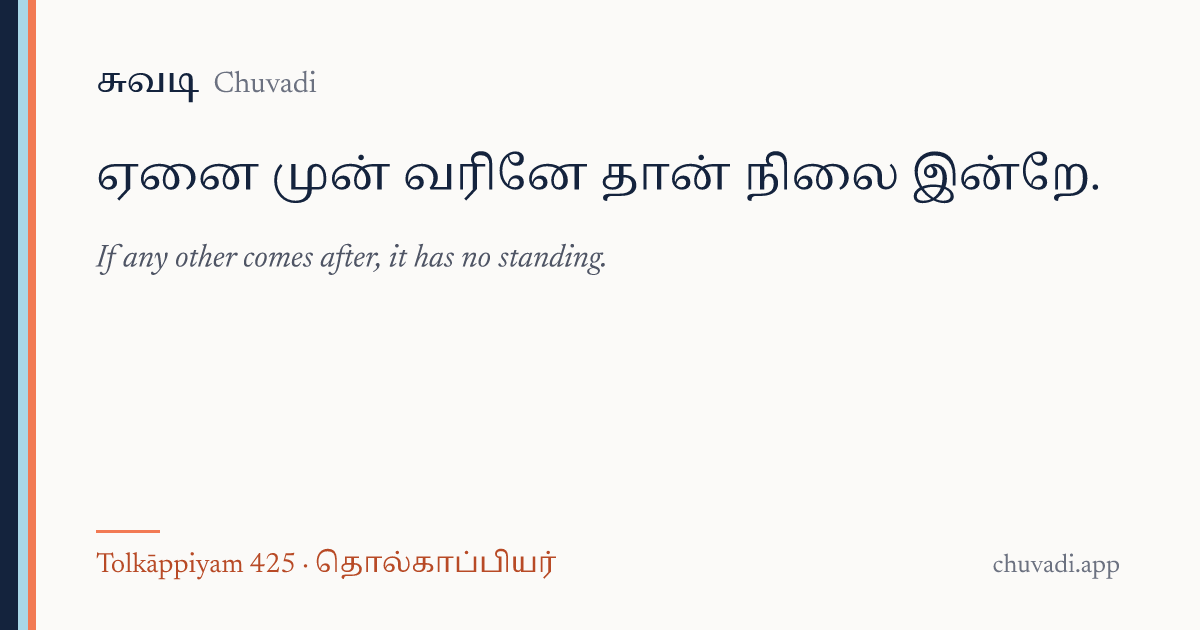
தொல்காப்பியம் 425 · எழுத்து 9.19
பாடல் · The poem
Tap a word to see where else it occurs.
பொருள் · Meaning in TamilAI
அஃது, இஃது, உஃது என்னும் சொற்களின் முன் உயிர் அல்லாத மெய்யெழுத்தில் தொடங்கும் சொல் வந்தால், அல்வழியில் ஆய்தம் கெட்டுவிடும். அது கடிது, இது சிறிது, உது பெரிது, அது வலிது என்பவை எடுத்துக்காட்டுகள்.
இளம்பூரணர்
இவர் உரையும் இந்நூற்பா பிற எழுத்துகள் வந்தால் ஆய்தம் கெடுவதைக் கூறுகிறது எனக் கொண்டு, மேற்கூறிய பொருளையே தருவதாகக் கொள்ளலாம்; இவர் தரும் எடுத்துக்காட்டுகள் இங்கு சரிபார்க்கப்படவில்லை.
நச்சினார்க்கினியர்
‘ஏனை’ என்பதை உயிர்க்கணம் அல்லாதவை என்றும், ‘நிலை இன்று’ என்பதை ஆய்தம் கெடும் என்றும் விளக்குகிறார்.
ஆங்கிலம் · English translationAI
Translation
- If any other comes after, it has no standing.
What the poem says
The counterpart of 424: in non-case sandhi, when the following word begins with a consonant, the āytam of these demonstratives is lost. Aḵtu + kaṭitu gives atu kaṭitu "that is hard", and likewise itu ciṟitu, utu peritu; also atu ñāṉṟatu, atu valitu.
Nacciṉārkkiṉiyar glosses "any other" as "anything other than the vowel class" and "it has no standing" as "the āytam perishes". He includes yātu here as well (yātu valitu).
உரை · Commentary
நச்சினார்க்கினியர்
இது மேலவற்றிற்குப் பிறகணத்தோடு அல்வழி முடிபு கூறுகின்றது
(இ-ள்.) ஏனை முன்வரின் — முற்கூறிய ஈறுகளின் முன்னர் உயிர்க்கணமல்லன வருமாயின், தான் நிலையின்று — அவ்வாய்தங் கெட்டு முடியும்; எ-று.
(எ-டு) அதுகடிது இதுகடிது உதுகடிது சிறிது தீது பெரிது ஞான்றது நீண்டது மாண்டது யாது வலிது என ஒட்டுக.