



தொல்காப்பியம் 428 · எழுத்து 9.22
பாடல் · The poem
Tap a word to see where else it occurs.
பொருள் · Meaning in TamilAI
சுட்டெழுத்து நீண்டு அமைந்த ஆங்கு, ஈங்கு, ஊங்கு என்னும் மென்றொடர் மொழிகளும், யா என்ற வினா எழுத்தில் தொடங்கும் யாங்கு என்னும் மென்றொடர் மொழியும், வல்லெழுத்து மிகும் அந்த இயல்பிலிருந்து மாறாது. ஆங்குக் கொண்டான், ஈங்குச் சென்றான், யாங்குத் தந்தான் என்பவை எடுத்துக்காட்டுகள்.
இளம்பூரணர்
இவர் உரையும் இந்நூற்பா ஆங்கு, ஈங்கு, ஊங்கு, யாங்கு என்பவற்றுக்கும் வல்லெழுத்து மிகுவதைக் கூறுகிறது எனக் கொண்டு, மேற்கூறிய பொருளையே தருவதாகக் கொள்ளலாம்; இவர் தரும் எடுத்துக்காட்டுகள் இங்கு சரிபார்க்கப்படவில்லை.
நச்சினார்க்கினியர்
இவை ஏழாம் வேற்றுமையின் இடப்பொருள் உணர்த்தும் சொற்கள் என்று கூறுகிறார்.
ஆங்கிலம் · English translationAI
Translation
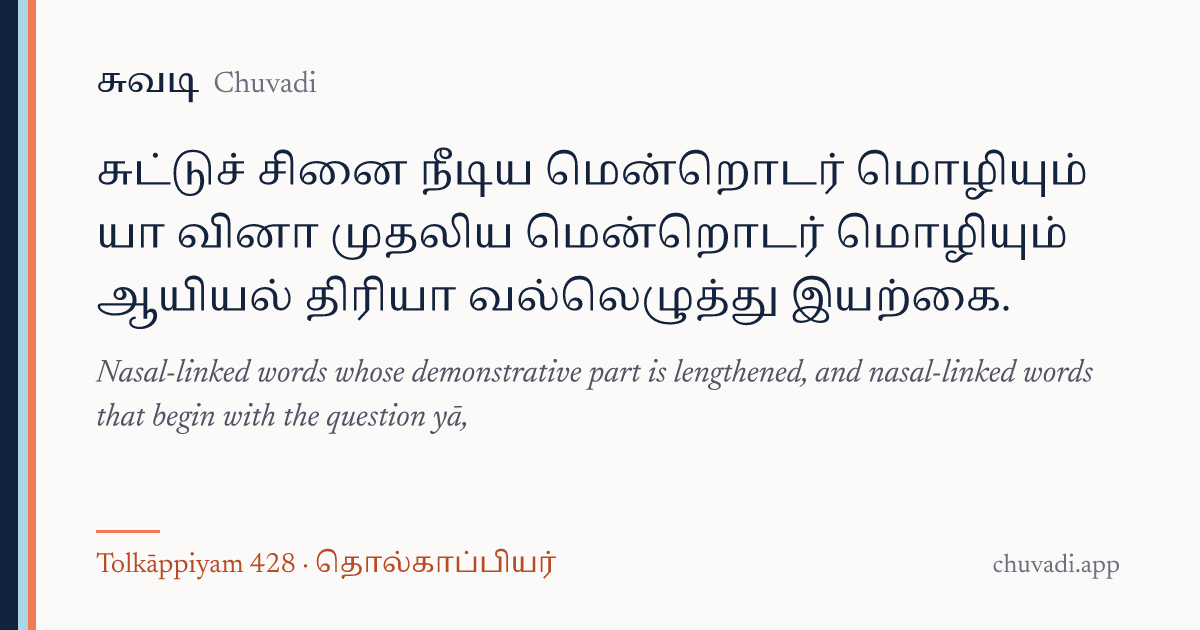
- Nasal-linked words whose demonstrative part is lengthened,
- and nasal-linked words that begin with the question yā,
- do not change from that way: the nature of the hard consonant.
What the poem says
Āṅku, īṅku, ūṅku ("there, here, yonder"), which are the demonstratives a, i, u lengthened, and yāṅku "where", which begins with the question syllable yā, are nasal-linked words. Before a hard consonant they keep the rule of doubling it: āṅkuk koṇṭāṉ "he took it there", īṅkuc ceṉṟāṉ, yāṅkut tantāṉ.
Nacciṉārkkiṉiyar explains that these words express the place sense of the seventh case. From "nature" (iyaṟkai) he notes that verbal participles in -u behave in two ways: nasal-linked ones stay natural (iruntu koṇṭāṉ), hard-linked ones double (cettuk kiṭantāṉ).
உரை · Commentary
நச்சினார்க்கினியர்
இதுவும் அவ் ஆறு ஈற்றுள் ஒன்றன்கண் ஏழாம் வேற்றுமை இடப்பொருள் உணர நின்ற இடைச் சொற்கு முடிபு கூறுகின்றது.
(இ-ள்.) சுட்டுச் சினை நீடிய மென்றொடர் மொழியும் — சுட்டாகிய சினையெழுத்து நீண்ட மென்றொடர்க் குற்றுகர ஈறும், யாவினா முதலிய மென்றொடர் மொழியும் — யாவென்னும் வினா முதலாகிய மென்றொடர்மொழிக் குற்றுகர ஈறும், வல்லெழுத்து இயற்கை ஆ இயல் திரியா — வல்லெழுத்துப்பெற்று முடியுந் தன்மையாகிய அவ்வியல்பிற் றிரியாது முடியும்; எ-று.
(எ-டு.) ஆங்குக் கொண்டான் ஈங்குக் கொண்டான் ஊங்குக் கொண்டான் யாங்குக் கொண்டான் சென்றான் தந்தான் போயினான் என வரும்
இயற்கையென்றதனான் மென்றொடர் மொழிக் குற்றியலுகர ஈற்று வினையெச்சம் இயல்பாயும் வன்றொடர்மொழிக் குற்றியலுகர ஈற்று வினையெச்சம் மிக்கும் முடிவன கொள்க. இருந்து கொண்டான் ஆண்டு சென்றான் தந்து தீர்ந்தான் வந்து போயினான் எனவும், செத்துக்கிடந்தான் செற்றுச் செய்தான், உய்த்துக்கொண்டான் நட்டுப் போனான் எனவும் வரும்.