



தொல்காப்பியம் 441 · எழுத்து 9.35
பாடல் · The poem
Tap a word to see where else it occurs.
பொருள் · Meaning in TamilAI
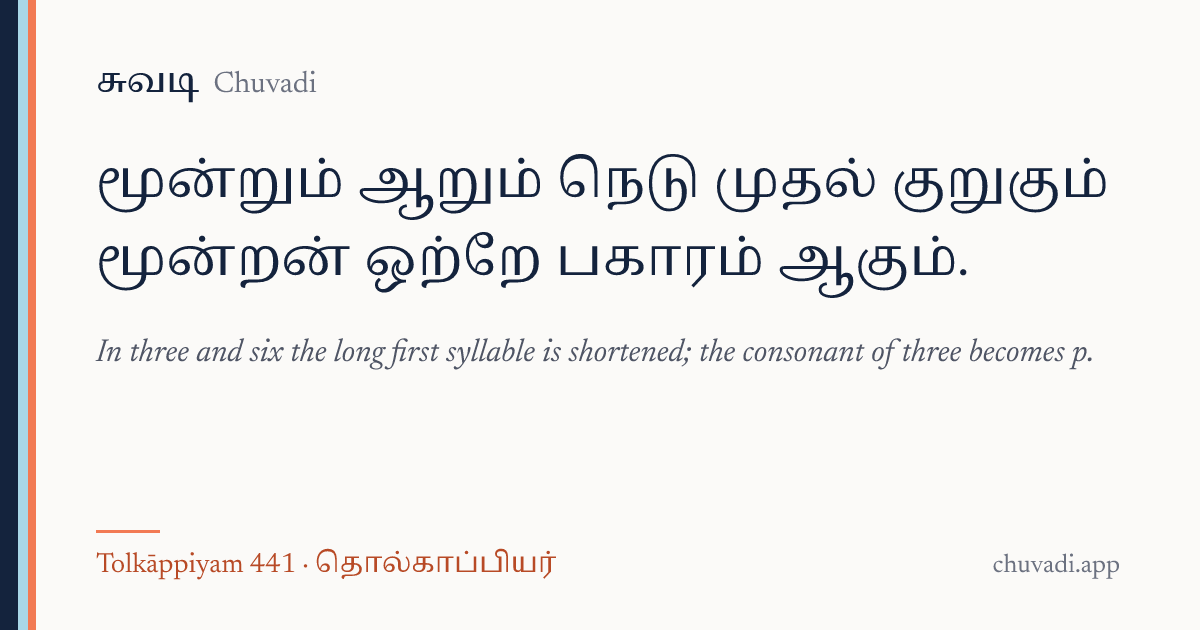
பஃது என்பதன் முன் மூன்று, ஆறு என்னும் எண்கள் நின்றால், அவற்றின் நெடிய முதல் எழுத்து குறுகும். மூன்று என்பதில் உள்ள னகர ஒற்று பகரமாக மாறும். ஆகவே முப்பஃது, அறுபஃது என்று வரும்.
இளம்பூரணர்
இவர் உரையும் இந்நூற்பா மூன்று, ஆறு என்பவற்றின் முதல் நெடில் குறுகுவதையும் மூன்றின் ஒற்று பகரமாவதையும் கூறுகிறது எனக் கொண்டு, மேற்கூறிய பொருளையே தருவதாகக் கொள்ளலாம்; இவர் தரும் எடுத்துக்காட்டுகள் இங்கு சரிபார்க்கப்படவில்லை.
நச்சினார்க்கினியர் உரையில் இவ்விரண்டு அடிகளும் தனித்தனி நூற்பாக்களாக உள்ளன; நம் பாடம் அவற்றை ஒன்றாக்குகிறது. பொருளில் மாற்றம் இல்லை.
ஆங்கிலம் · English translationAI
Translation
- In three and six the long first syllable is shortened;
- the consonant of three becomes p.
What the poem says
Before paḵtu, mūṉṟu "three" and āṟu "six" shorten their long first vowel (mū to mu, ā to a). In mūṉṟu, the remaining ṉ also becomes p, so it doubles with the p of paḵtu: muppaḵtu "thirty". Āṟu becomes aṟu and keeps its u (438): aṟupaḵtu "sixty".
In Nacciṉārkkiṉiyar's text these two lines are two separate nūṟpās, the first for both numbers and the second for mūṉṟu alone; our text joins them, with no change of meaning. He gives aṟupaḵtu and muppaḵtu as the examples.
உரை · Commentary
நச்சினார்க்கினியர்
இதுவும் அது.
(இ-ள்.) மூன்றும் ஆறும் நெடுமுதல் குறுகும் — மூன்றென்னு மெண்ணும் ஆறென்னு மெண்ணும் நெடுமுதல் குறுகி முடியும்; எ-று.
(எ-டு.) அறு எனக் குறுக்கிப் பஃது என வருவித்து அறுபஃது என முடிக்க.
இதுவும் அது.
(இ-ள்.) மூன்றன் ஒற்றே பகாரமாகும் — மூன்றென்னும் எண்ணின்கண் நின்ற னகர ஒற்றுப் பகர ஒற்றாய் முடியும்; எ-று.
(எ-டு.) முப்பஃது என வரும்.