



தொல்காப்பியம் 486 · சொல் 1.3
பாடல் · The poem
Tap a word to see where else it occurs.
பொருள் · Meaning in TamilAI
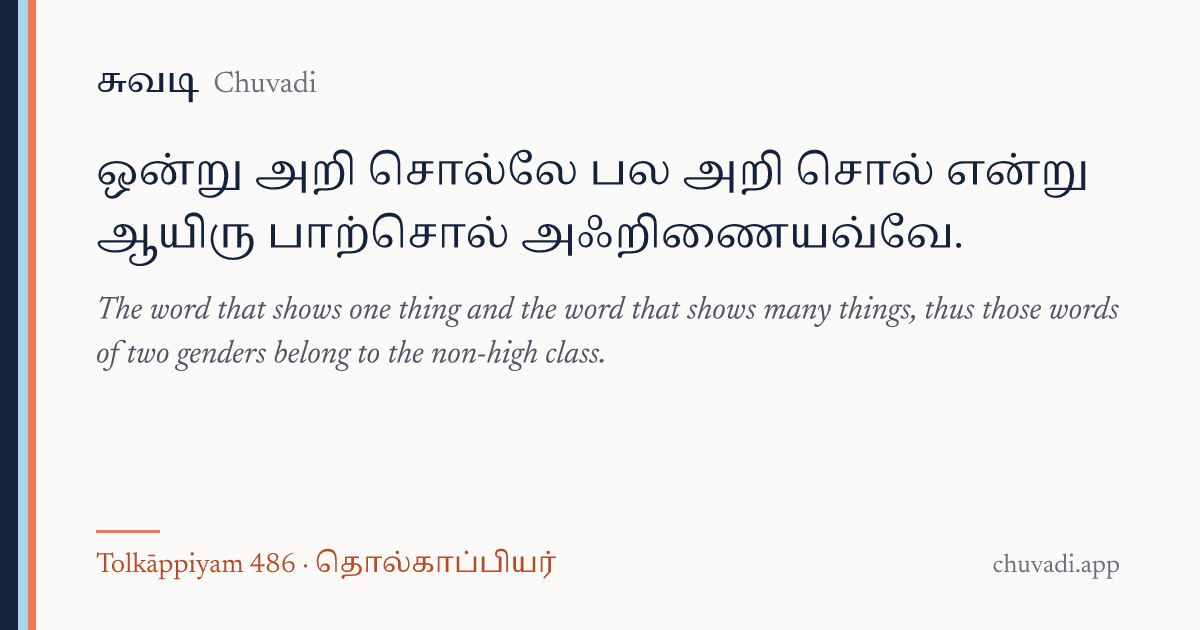
ஒன்றை அறிவிக்கும் சொல், பலவற்றை அறிவிக்கும் சொல் என்னும் இரண்டு பால்களுக்கு உரிய சொற்களும் அஃறிணைக்கு உரியவை. இவை ஒன்றன்பால், பலவின்பால் எனப்படும். எடுத்துக்காட்டு: அது வந்தது, அவை வந்தன.
இளம்பூரணர்
இளம்பூரணர் ஒன்று அறி சொல், பல அறி சொல் என்னும் இரண்டையும் ஒன்றன்பால், பலவின்பால் எனக் கொண்டு, இவ்விரு பாற் சொற்களும் அஃறிணைக்கு உரியவை எனப் பொருள் கொள்வார்.
நச்சினார்க்கினியர்
நச்சினார்க்கினியரும் இதே பொருளைக் கொண்டு, முந்தைய நூற்பாவின் முப்பாலோடு இவ்விரண்டையும் சேர்த்து ஐம்பால் ஆகும் என்று விளக்குவார்.
அஃறிணையில் ஆண் பெண் வேறுபாடு சொல்லின் ஈற்றால் காட்டப்படுவதில்லை. உயர்திணைக்கு மூன்றும் அஃறிணைக்கு இரண்டும் ஆக ஐம்பால் என்பது உரையாசிரியர்களின் விளக்கம்.
ஆங்கிலம் · English translationAI
Translation
- The word that shows one thing and the word that shows many things, thus
- those words of two genders belong to the non-high class.
What the poem says
The non-high class has only two pāl ("gender-number" divisions): the singular, "the word that marks one" (oṉṟaṟi col), and the plural, "the word that marks many" (palavaṟi col). There is no distinction of male and female in it: a bull and a cow alike take atu vantatu "it came", and many of them take avai vantaṉa "they came".
Together with the previous nūṟpā this gives the five pāl of Tamil grammar, three in the high class and two in the non-high class, a scheme the commentators treat as basic to all that follows.