



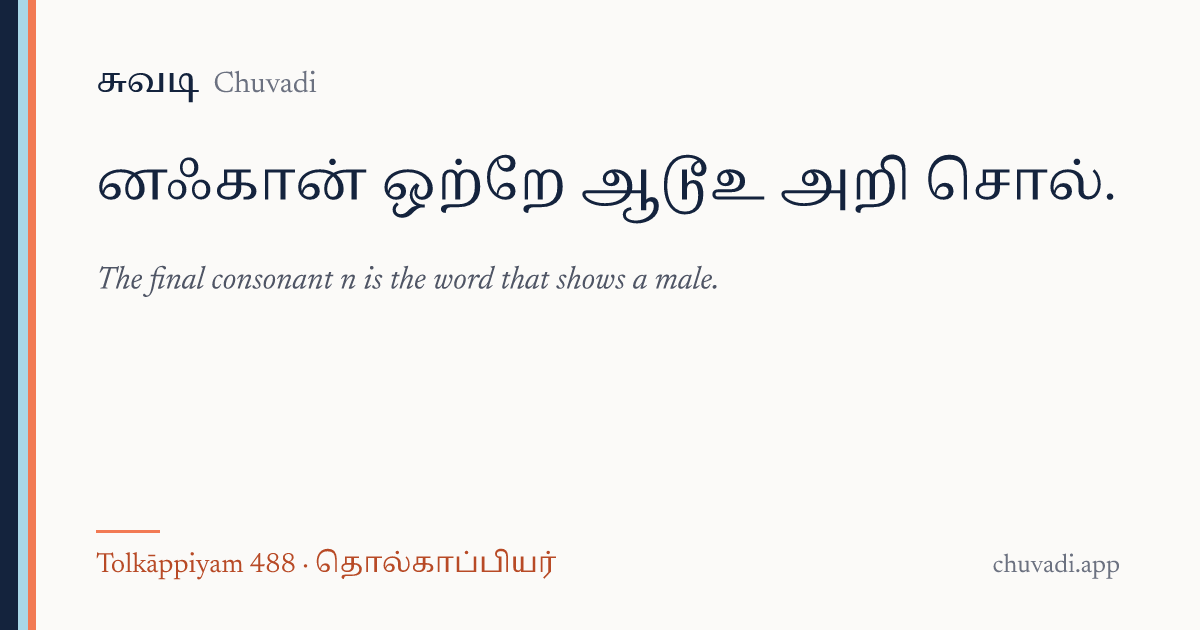
தொல்காப்பியம் 488 · சொல் 1.5
பாடல் · The poem
Tap a word to see where else it occurs.
பொருள் · Meaning in TamilAI
னகர மெய்யில் முடியும் சொல் ஆண்பாலை அறிவிக்கும். எடுத்துக்காட்டு: வந்தான், கரியன், அவன்.
இளம்பூரணர்
இளம்பூரணர் னஃகான் ஒற்று என்பதை னகர மெய் எனக் கொண்டு, அதனை இறுதியாக உடைய சொல் ஆண்பாலை அறிவிக்கும் எனப் பொருள் கொள்வார்; இவ்வீறு வினைச்சொல்லிலேயே பாலைக் காட்டுவது என்பது இவர் கருத்து.
நச்சினார்க்கினியர்
நச்சினார்க்கினியரும் இதே பொருளைக் கொண்டு, தெரிநிலை வினைமுற்றும் குறிப்பு வினைமுற்றும் இதில் அடங்கும் என்று விளக்குவார்.
இவ்வீறுகள் பெரும்பாலும் வினைமுற்றுகளிலும் குறிப்பு வினைகளிலும் பாலை உணர்த்துவன என்று உரையாசிரியர்கள் விளக்குவர். பெயர்ச்சொற்கள் தம் பாலை வேறு வழியிலும் காட்டும் என்பது பின்னர் சொல்லப்படுகிறது.
ஆங்கிலம் · English translationAI
Translation
- The final consonant n is the word that shows a male.
What the poem says
The first of the gender endings. A word ending in the consonant ṉ (the alveolar n) marks the masculine singular: vantāṉ "he came", avaṉ "he", kariyaṉ "he is dark". The nūṟpā names the letter by its formal name, ṉakāṉ, "the letter ṉ", and says "its consonant", that is, ṉ without a vowel.
The commentators observe that this and the following nūṟpās are chiefly about finite verbs and appellative verbs, where the ending is the sign of gender; a noun such as a personal name may end otherwise, which is why tol.494 keeps the two kinds of gender-marking apart.