



தொல்காப்பியம் 495 · சொல் 1.12
பாடல் · The poem
Tap a word to see where else it occurs.
பொருள் · Meaning in TamilAI
ஆண்தன்மை திரிந்தவரைக் குறிக்கும் பெயர்ச்சொல் ஆண்பாலை அறிவிக்கும் சொல்லாக வருவதற்கு இடமில்லை. ஆகவே பேடி வந்தாள் என்பதே முறை; பேடி வந்தான் என்று கூறலாகாது.
இளம்பூரணர்
இளம்பூரணர் ஆண்மை திரிந்த பெயர் ஆண்பால் வினையால் முடிவதற்கு இடமில்லை எனப் பொருள் கொள்வார்; ஆகவே பேடி வந்தாள் என்பதே முறை என்பது இவர் கருத்து.
நச்சினார்க்கினியர்
நச்சினார்க்கினியரும் இதனை முன்பு கூறிய பேடிப் பெயரின் முடிபைத் தெளிவுபடுத்தும் விதியாகவே கொள்வார்; பிறப்பால் ஆண் என்பதற்காக ஆண்பால் முடிபு கொடுக்கலாகாது என்பதே இவர் விளக்கம்.
ஆணாகப் பிறந்தவர் என்பதால் ஆண்பால் முடிபு கொள்ளலாம் என்று கருதாதிருக்கவே இவ்விதி தனியே கூறப்பட்டது என்று உரையாசிரியர்கள் விளக்குவர். பின்னர் வரும் நூற்பா ஒன்றில் தன்மை திரிபெயர் அஃறிணை முடிபும் கொள்ளும் எனச் சொல்லப்படுகிறது.
ஆங்கிலம் · English translationAI
Translation
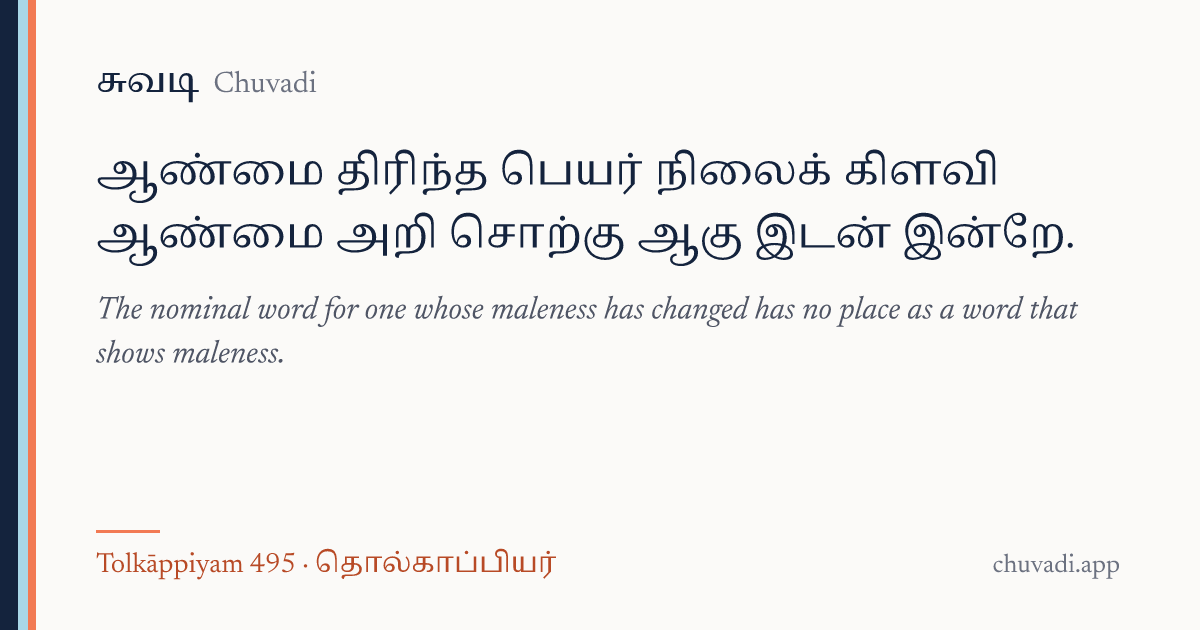
- The nominal word for one whose maleness has changed
- has no place as a word that shows maleness.
What the poem says
A supplement to tol.487. The noun for a person "whose maleness has changed" (the commentators' type is pēṭi) may not take the masculine agreement, even though the person was born male. One says pēṭi vantāḷ with the feminine, not pēṭi vantāṉ.
The commentators read this as a specific prohibition added because one might otherwise expect such a person to keep the masculine. A later nūṟpā (tol.540) also lists "the noun of changed nature" among high-class words that take neuter agreement, so the two rules together leave the masculine as the one excluded option.