



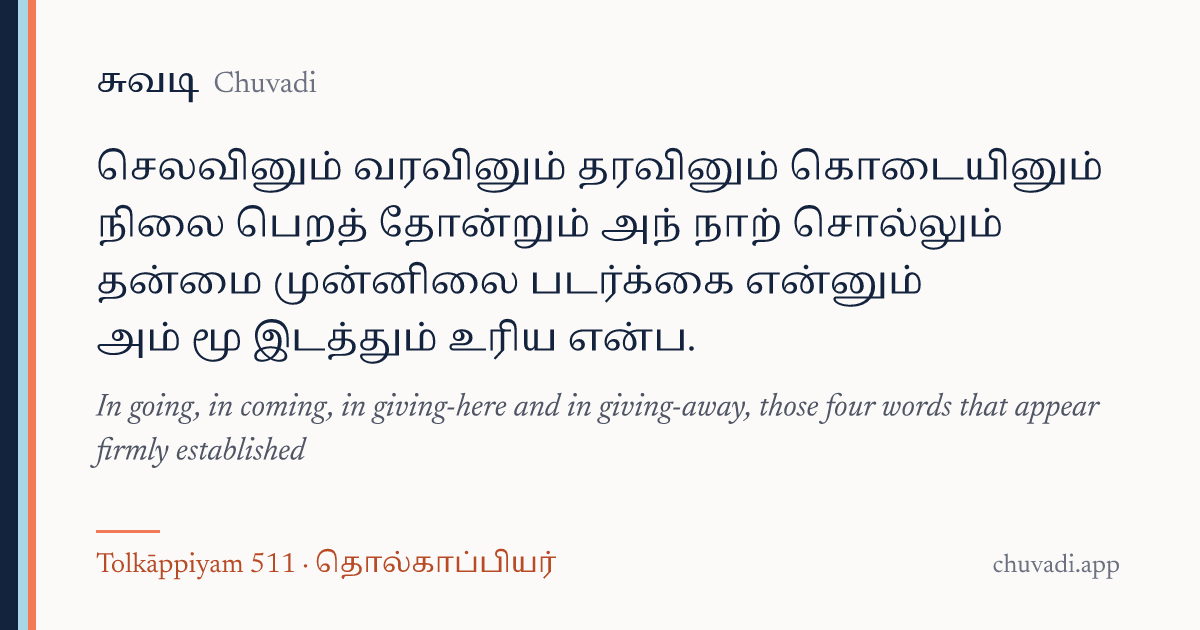
தொல்காப்பியம் 511 · சொல் 1.28
பாடல் · The poem
Tap a word to see where else it occurs.
பொருள் · Meaning in TamilAI
செல்லுதல், வருதல், தருதல், கொடுத்தல் ஆகியவற்றில் நிலைபெற்றுத் தோன்றும் செல், வா, தா, கொடு என்னும் நான்கு சொற்களும் தன்மை, முன்னிலை, படர்க்கை என்னும் மூன்று இடங்களுக்கும் உரியவை என்று கூறுவர். அவை எந்த இடத்தை நோக்கிச் செயல் நிகழ்கிறது என்பதைக் காட்டுகின்றன.
இளம்பூரணர்
இளம்பூரணர் செல், வா, தா, கொடு என்னும் நான்கு சொற்களும் தன்மை, முன்னிலை, படர்க்கை என்னும் மூவிடங்களுக்கும் உரியவை எனப் பொருள் கொள்வார்; இவை செயல் எந்த இடத்தை நோக்கி நிகழ்கிறது என்பதைக் காட்டும் என்பது இவர் கருத்து.
நச்சினார்க்கினியர்
நச்சினார்க்கினியரும் இதனை இந்நான்கு சொற்களும் மூவிடத்தையும் பற்றி வரும் என்னும் பொது விதியாகக் கொண்டு, எச்சொல் எவ்விடத்திற்கு என்பதை அடுத்த இரண்டு நூற்பாக்களோடு இயைத்து விளக்குவார்.
இந்நூற்பா செயலின் நோக்கிடத்தைப் பற்றியது, எழுவாயைப் பற்றியது அன்று என்று உரையாசிரியர்கள் விளக்குவர். எந்தச் சொல் எந்த இடத்திற்கு என்பது அடுத்த இரண்டு நூற்பாக்களில் சொல்லப்படுகிறது.
ஆங்கிலம் · English translationAI
Translation
- In going, in coming, in giving-here and in giving-away,
- those four words that appear firmly established
- in what are called the first, the second and the third person,
- in those three persons they are proper, they say.
What the poem says
Four verbs express movement or transfer with a direction: cel "go", vā "come", tā "give (to me or you)" and koṭu "give (to him or her)". Their meaning depends on the iṭam ("person": taṉmai first person, muṉṉilai second person, paṭarkkai third person) toward which the action is directed. This nūṟpā says that, taken together, the four cover all three persons; the next two nūṟpās say how they are divided.
The commentators read the rule as concerning the goal of the action, not the subject of the verb.