



தொல்காப்பியம் 514 · சொல் 1.31
பாடல் · The poem
Tap a word to see where else it occurs.
பொருள் · Meaning in TamilAI
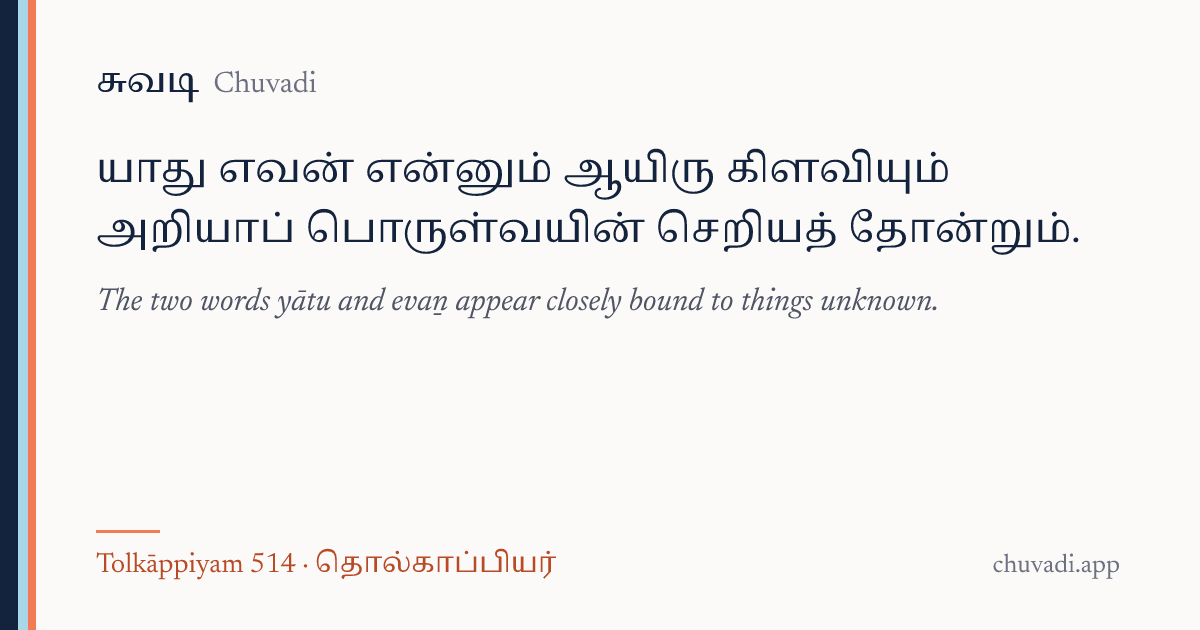
யாது, எவன் என்னும் இரண்டு வினாச்சொற்களும் அறியாத பொருளைப் பற்றிக் கேட்கும்போது நெருக்கமாகத் தோன்றும். இது யாது என்பது எடுத்துக்காட்டு.
இளம்பூரணர்
இளம்பூரணர் யாது, எவன் என்னும் இரண்டு வினாச்சொற்களும் அறியாத பொருளைப் பற்றி வினவும்போது வரும் எனப் பொருள் கொள்வார்.
நச்சினார்க்கினியர்
நச்சினார்க்கினியரும் இதே பொருளைக் கொண்டு, எவன் என்பது இங்கு ஆண்பாற் பெயர் அன்று, என்ன என்னும் பொருளில் வரும் அஃறிணை வினா என்று விளக்குவார்.
எவன் என்பது ஆண்பால் போலத் தோன்றினாலும் இங்கு என்ன, ஏன் என்னும் பொருளில் வரும் அஃறிணை வினா என்று உரையாசிரியர்கள் விளக்குவர்.
ஆங்கிலம் · English translationAI
Translation
- The two words yātu and evaṉ
- appear closely bound to things unknown.
What the poem says
The interrogative words yātu "what, which" and evaṉ "what" are used to ask about things one does not know: itu yātu? "what is this?", "what is it?". They belong to the non-high class.
The commentators note that evaṉ, though it looks like a masculine form, is a neuter interrogative here, meaning "what" or "why". The next nūṟpā gives yātu a second use.