



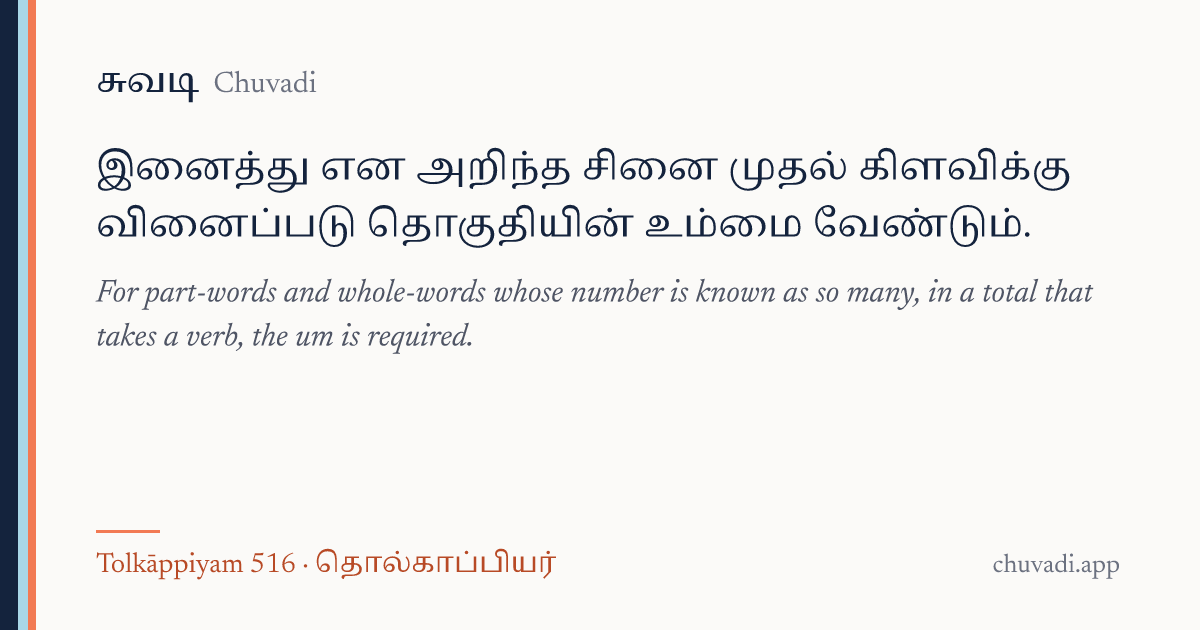
தொல்காப்பியம் 516 · சொல் 1.33
பாடல் · The poem
Tap a word to see where else it occurs.
பொருள் · Meaning in TamilAI
எண்ணிக்கை இத்தனை என்று அறியப்பட்ட சினைப்பொருளையோ முதற்பொருளையோ ஒரு வினையோடு முழுமையாகத் தொகுத்துக் கூறும்போது உம்மை வேண்டும். கண் இரண்டும் சிவந்தன, பாண்டவர் ஐவரும் வந்தார் என்று கூற வேண்டும்.
இளம்பூரணர்
இளம்பூரணர் இத்தனை என்று எண்ணிக்கை அறியப்பட்ட சினைப்பொருளையோ முதற்பொருளையோ வினையோடு முழுமையாகத் தொகுத்துக் கூறும்போது உம்மை வேண்டும் எனப் பொருள் கொள்வார்.
நச்சினார்க்கினியர்
நச்சினார்க்கினியரும் இதே பொருளைக் கொண்டு, அறிந்த முழுத்தொகையையும் குறிக்கவே உம்மை வருகிறது என்று விளக்குவார்.
அறியப்பட்ட முழுத்தொகையையும் குறிப்பதற்கே உம்மை வருகிறது என்பது உரையாசிரியர்களின் விளக்கம். கண் போன்ற இரட்டை உறுப்புகளையும் எண் அறிந்த கூட்டத்தையும் அவர்கள் எடுத்துக்காட்டாகக் கொள்வர்.
ஆங்கிலம் · English translationAI
Translation
- For part-words and whole-words whose number is known as so many,
- in a total that takes a verb, the um is required.
What the poem says
When a part or a whole is known to be of a definite number, and the whole number is gathered under one verb, the particle um ("all, both") must be added to the numeral. One says kaṇ iraṇṭum civantaṉa "both eyes became red" (not just "two eyes became red"), and Pāṇṭavar aivarum vantār "all five Pāṇṭavas came".
The um marks that the whole known set is meant. The commentators illustrate with paired parts such as eyes and with groups of a known size.