



தொல்காப்பியம் 534 · சொல் 1.51
பாடல் · The poem
Tap a word to see where else it occurs.
பொருள் · Meaning in TamilAI
செய்யுளில் பல இடங்களிலும், இரு திணைப் பெயர்களையும் கலந்து எண்ணிக் கூறும்போது அவை அஃறிணை முடிபு கொள்ளும். மனிதனையும் விலங்குகளையும் பொருள்களையும் சேர்த்து எண்ணி இவை என்று அஃறிணையால் முடிப்பது செய்யுளில் வரும்.
இளம்பூரணர்
இளம்பூரணர் இருதிணைப் பெயர்களையும் விரவி எண்ணும்போது அவை செய்யுளில் அஃறிணை முடிபு கொள்ளும் எனப் பொருள் கொள்வார்.
நச்சினார்க்கினியர்
நச்சினார்க்கினியரும் இதே பொருளைக் கொண்டு, பலவயினானும் என்பதால் இது செய்யுளில் பல இடங்களில் வரும், கட்டாயம் அன்று என்று கொள்வார் எனக் கொள்ளலாம்; இவர் தரும் செய்யுள் மேற்கோள்கள் இங்கு சரிபார்க்கப்படவில்லை.
பலவயினானும் என்பது இது செய்யுளில் பெரும்பாலும் வரும், ஆனால் கட்டாயமன்று என்பதைக் காட்டுகிறது. உலக வழக்கில் இவ்வாறு வருவது இயல்பன்று.
ஆங்கிலம் · English translationAI
Translation
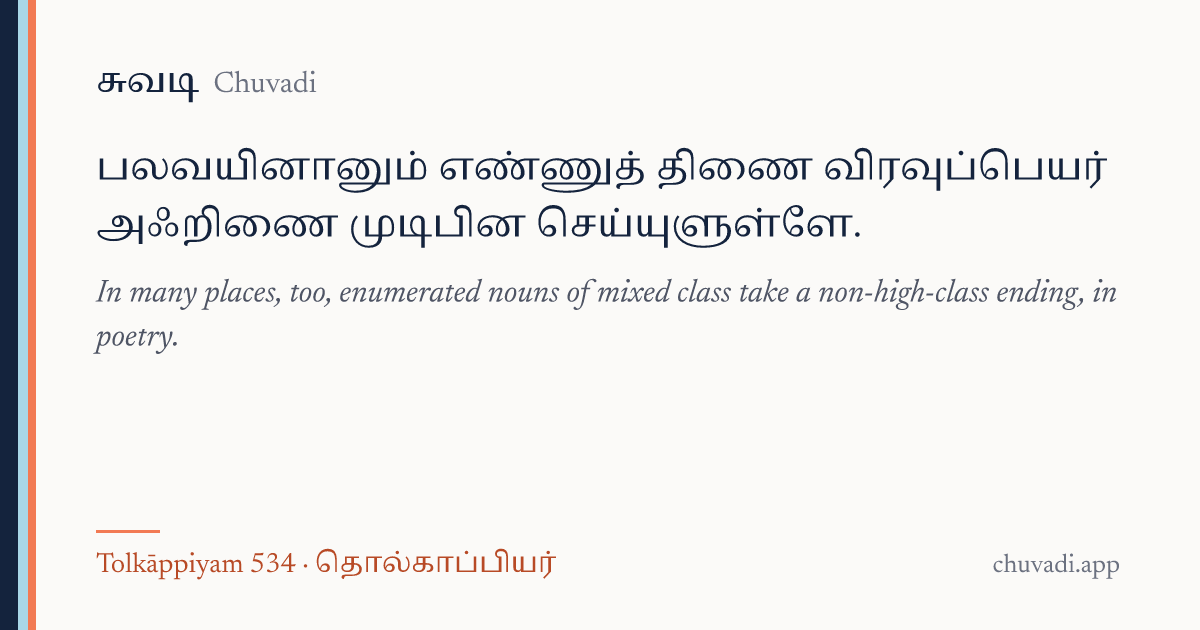
- In many places, too, enumerated nouns of mixed class
- take a non-high-class ending, in poetry.
What the poem says
In poetry, when nouns of both classes are listed together, the predicate is often in the non-high class. A poet may list a man together with animals or objects and close the list with a neuter verb or pronoun such as "these".
This contrasts with ordinary usage, where a mixed list normally takes the higher form. Palavayiṉāṉum, "in many places", indicates that this is common but not obligatory in verse.