



தொல்காப்பியம் 540 · சொல் 1.57
பாடல் · The poem
Tap a word to see where else it occurs.
பொருள் · Meaning in TamilAI
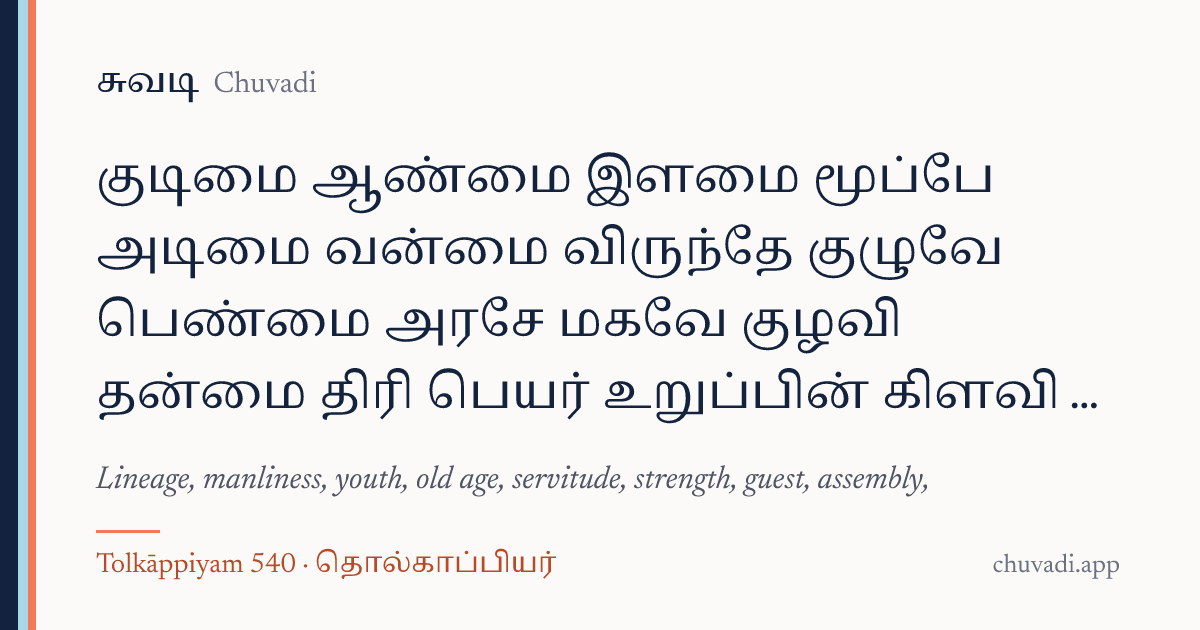
குடிமை, ஆண்மை, இளமை, மூப்பு, அடிமை, வன்மை, விருந்து, குழு, பெண்மை, அரசு, மக, குழவி, தன்மை திரிந்தவரைக் குறிக்கும் பெயர், உறுப்பைக் குறிக்கும் சொல், காதல் சொல், சிறப்புச் சொல், செறற்சொல், விறற்சொல் என்னும் பதினெட்டும், அவற்றைப் போன்ற பிறவும், குறிப்பால் உணரப்படும் சொற்கள் எல்லாம், உயர்திணைப் பொருளைக் குறித்தாலும், அஃறிணைக்குக் கூறிய முறையிலேயே முடிபு கொள்ளும். அரசு வந்தது, குழவி அழுதது, விருந்து வந்தது என வரும்.
இளம்பூரணர்
இளம்பூரணர் குடிமை, ஆண்மை முதலாக விறற்சொல் ஈறாக எண்ணப்பட்ட பதினெட்டும், அவை போன்ற பிறவும், உயர்திணைப் பொருளைக் குறித்தாலும் அஃறிணை முடிபு கொள்ளும் எனப் பொருள் கொள்வார்; ஆ அறு மூன்று என்பதைப் பதினெட்டு எனக் கொள்வார்.
நச்சினார்க்கினியர்
நச்சினார்க்கினியரும் இதே பொருளைக் கொண்டு, ஒவ்வொரு சொல்லுக்கும் எடுத்துக்காட்டுத் தந்து, சொல்லின் அமைப்பே முடிபைத் தீர்மானிக்கிறது என்று விளக்குவார்; இவர் தரும் தனித்தனி எடுத்துக்காட்டுகள் இங்கு சரிபார்க்கப்படவில்லை.
ஆ அறு மூன்று என்பது ஆறு மூன்று, அதாவது பதினெட்டு. ஒவ்வொரு வகைக்கும் உரையாசிரியர்கள் எடுத்துக்காட்டுத் தருவர்; பொருள் உயர்திணையாக இருந்தாலும் சொல்லின் அமைப்பே முடிபைத் தீர்மானிக்கிறது என்பது இதன் கருத்து.
ஆங்கிலம் · English translationAI
Translation
- Lineage, manliness, youth, old age,
- servitude, strength, guest, assembly,
- womanhood, royalty, child, infant,
- the noun of changed nature, the word for a bodily part,
- words of love, of distinction, of anger, of valour, thus
- gathering them, the six-times-three included,
- and others like them joining with them,
- all the words that are understood by implication,
- though they stand within the high class,
- proceed as stated for the non-high class.
What the poem says
Eighteen kinds of word are listed (āvaṟu mūṉṟu, "six three", that is six times three): kuṭimai "lineage", āṇmai "manliness", iḷamai "youth", mūppu "old age", aṭimai "servitude", vaṉmai "strength", viruntu "guest", kuḻu "assembly", peṇmai "womanhood", aracu "royalty", maka "child", kuḻavi "infant", taṉmai tiri peyar "the noun for one whose nature has changed", uṟuppiṉ kiḷavi "a word naming a bodily defect or part", kātal "words of endearment", ciṟappu "words of honour", ceṟal "words of contempt" and viṟal "words of valour". These words refer to human beings, and are understood as such by muṉṉam ("implication, context"), yet grammatically they take non-high-class agreement: aracu vantatu "the king (royalty) came", kuḻavi aḻutatu "the infant cried", viruntu vantatu "the guest came".
So a word's form, not only its referent, can decide its class. The commentators give examples of each kind; terms of endearment or contempt for a person, used with neuter verbs, are among them. The list is open: "others like them" are included.