



தொல்காப்பியம் 548 · சொல் 2.3
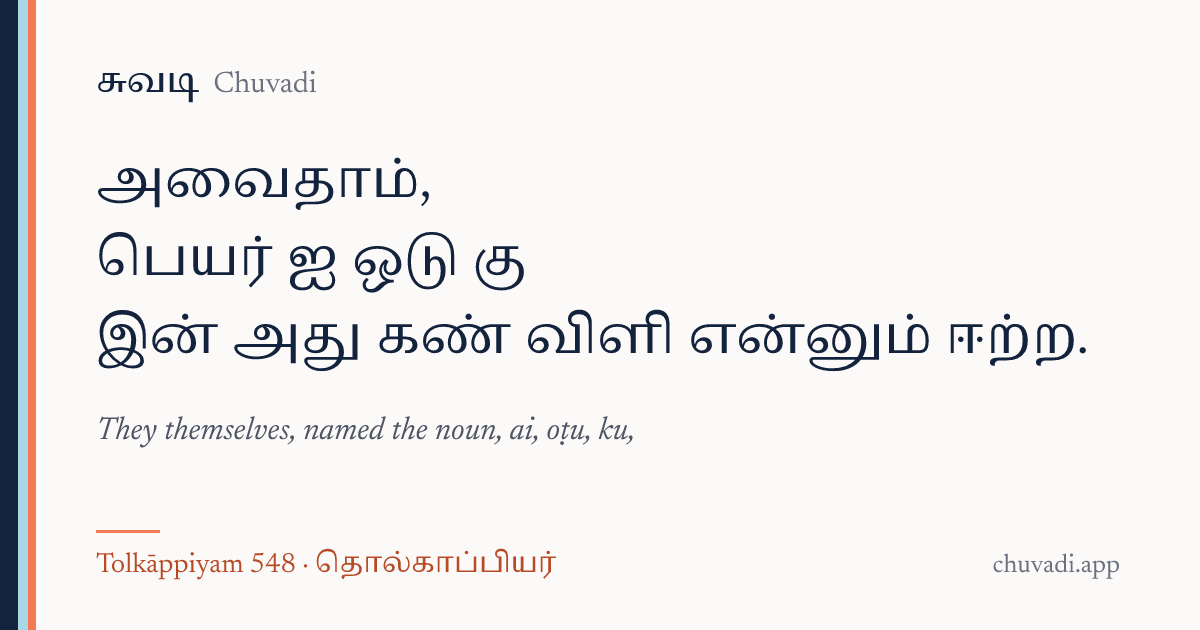
பாடல் · The poem
Tap a word to see where else it occurs.
பொருள் · Meaning in TamilAI
அவ்வேற்றுமைகள் பெயர், ஐ, ஒடு, கு, இன், அது, கண், விளி என்னும் பெயர்களை உடையவை. முதல் வேற்றுமை பெயரே; இரண்டாவது ஐ; மூன்றாவது ஒடு; நான்காவது கு; ஐந்தாவது இன்; ஆறாவது அது; ஏழாவது கண்; எட்டாவது விளி.
இளம்பூரணர்
இளம்பூரணர் எட்டு வேற்றுமைகளும் பெயர், ஐ, ஒடு, கு, இன், அது, கண், விளி என்னும் பெயர்களைப் பெறும் எனப் பொருள் கொள்வார்; ஒவ்வொரு வேற்றுமையும் அதன் முதன்மையான உருபின் பெயரால் குறிக்கப்படுகிறது என்பது இவர் கருத்து.
நச்சினார்க்கினியர்
நச்சினார்க்கினியரும் இதே பொருளைக் கொண்டு, மூன்றாம் வேற்றுமைக்கு ஆன் போல ஒரு வேற்றுமைக்கு வேறு உருபுகளும் உண்டு என்பதைக் குறிப்பிடுவார்.
மூன்றாம் வேற்றுமைக்கு ஆன் என்பதும் உருபாக வருவது போல ஒவ்வொரு வேற்றுமைக்கும் வேறு உருபுகளும் உண்டு; ஒன்றின் பெயரால் வேற்றுமை குறிக்கப்படுகிறது என்று உரையாசிரியர்கள் விளக்குவர்.
ஆங்கிலம் · English translationAI
Translation
- They themselves,
- named the noun, ai, oṭu, ku,
- iṉ, atu, kaṇ and the vocative, have these endings.
What the poem says
The eight cases are named after their markers: the first is the bare noun itself (peyar), the second ai (accusative), the third oṭu (sociative and instrumental), the fourth ku (dative), the fifth iṉ (ablative), the sixth atu (genitive), the seventh kaṇ (locative), and the eighth the vocative.
Several cases have more than one marker; the third, for example, also has āṉ. The commentators note that each case is named after one representative marker, not its only one.