



தொல்காப்பியம் 553 · சொல் 2.8
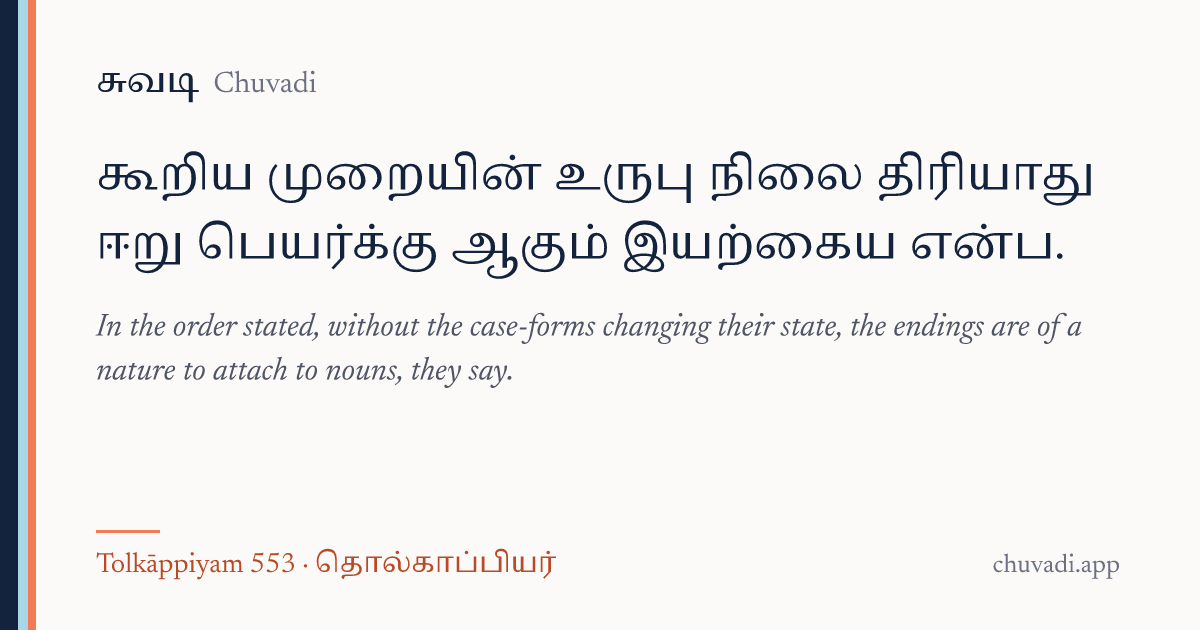
பாடல் · The poem
Tap a word to see where else it occurs.
பொருள் · Meaning in TamilAI
முன்னர்க் கூறிய முறையில் வரும் வேற்றுமை உருபுகள் தம் நிலை மாறாமல் பெயரின் இறுதியில் சேரும் இயல்பின என்று கூறுவர்.
இளம்பூரணர்
இளம்பூரணர் கூறிய முறையில் வரும் வேற்றுமை உருபுகள் தம் நிலை திரியாமல் பெயரின் இறுதியில் வந்து சேரும் எனப் பொருள் கொள்வார்.
நச்சினார்க்கினியர்
நச்சினார்க்கினியரும் இதே பொருளைக் கொண்டு, புணர்ச்சியில் நிகழும் ஒலி மாற்றம் எழுத்ததிகாரத்தில் சொல்லப்பட்டது, இங்கு உருபின் நிலையே கூறப்படுகிறது என்று விளக்குவார் எனக் கொள்ளலாம்.
நிலை திரியாது என்பது உருபுகள் தம் அடையாளத்தை இழக்காமல் நிற்பதைக் குறிக்கிறது; புணர்ச்சியில் ஒலி மாறுவது எழுத்ததிகாரத்தில் சொல்லப்பட்டது என்று உரையாசிரியர்கள் விளக்குவர்.
ஆங்கிலம் · English translationAI
Translation
- In the order stated, without the case-forms changing their state,
- the endings are of a nature to attach to nouns, they say.
What the poem says
The case markers listed in tol.548 attach to the end of nouns, in their fixed forms. Urupu ("case-form") here means the suffix. The rule establishes that the case markers are suffixes on nouns, not on verbs.
The commentators note that "without changing their state" refers to the markers keeping their identity, even though sandhi may alter their sounds in combination, as described in the Eḻuttatikāram.