



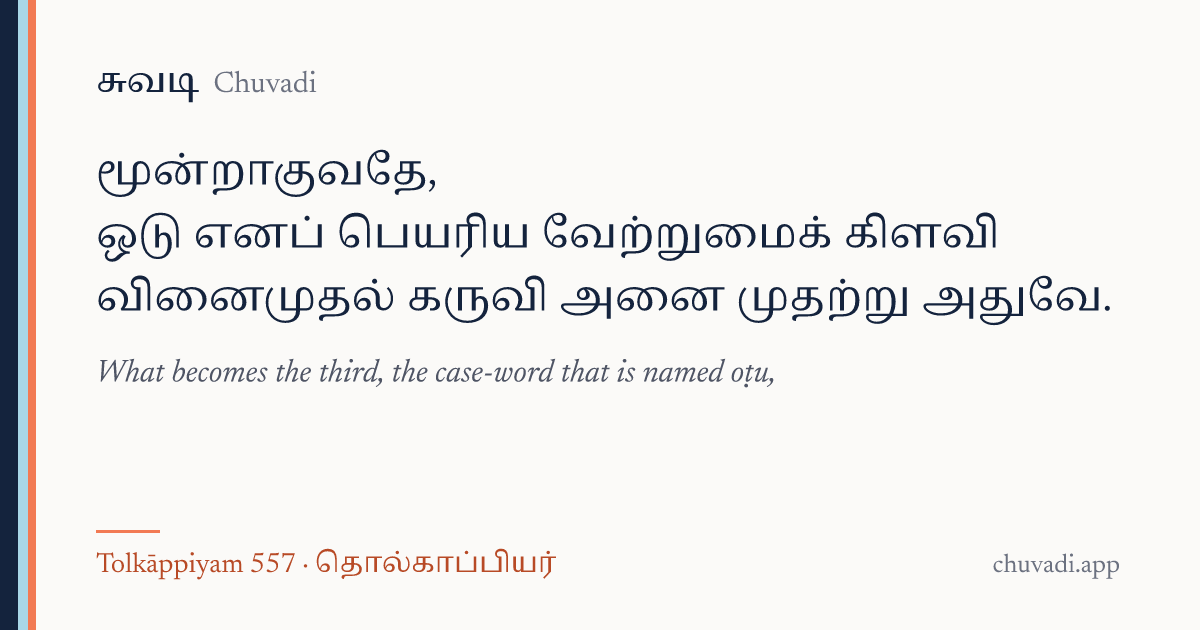
தொல்காப்பியம் 557 · சொல் 2.12
பாடல் · The poem
Tap a word to see where else it occurs.
பொருள் · Meaning in TamilAI
மூன்றாம் வேற்றுமை எனப்படும் ஒடு என்னும் உருபு, வினைமுதல், கருவி என்னும் இரண்டையும் அடிப்படையாகக் கொண்டு வரும். தச்சனால் செய்யப்பட்ட கட்டில் என்பதில் வினைமுதலும், வாளால் வெட்டினான் என்பதில் கருவியும் வருகின்றன.
இளம்பூரணர்
இளம்பூரணர் ஒடு என்னும் மூன்றாம் வேற்றுமை வினைமுதல், கருவி என்னும் இரண்டையும் அடிப்படைப் பொருளாக உடையது எனப் பொருள் கொள்வார்.
நச்சினார்க்கினியர்
நச்சினார்க்கினியரும் இதே பொருளைக் கொண்டு, ஆன் உருபும் இவ்வேற்றுமைக்கு உரியது என்பதைக் குறிப்பிடுவார்.
இவ்வேற்றுமைக்கு ஆன் என்பதும் உருபு. ஒடு என்பது உடனிகழ்ச்சிப் பொருளிலும் வரும் என்பதை அடுத்த நூற்பாவின் பட்டியல் காட்டுகிறது என்று உரையாசிரியர்கள் விளக்குவர்.
ஆங்கிலம் · English translationAI
Translation
- What becomes the third,
- the case-word that is named oṭu,
- has as its source the agent and the instrument.
What the poem says
The third case, named after its marker oṭu (also āṉ, later āl), expresses the viṉaimutal ("agent", the doer of an action, especially in passive-type statements) and the karuvi ("instrument"). Examples: taccaṉāl ceyyappaṭṭa kaṭṭil "a bed made by the carpenter" (agent), vāḷāṉ veṭṭiṉāṉ "he cut with the sword" (instrument).
The commentators note that oṭu also has a sociative sense ("with"), which is covered in the list of the next nūṟpā.