



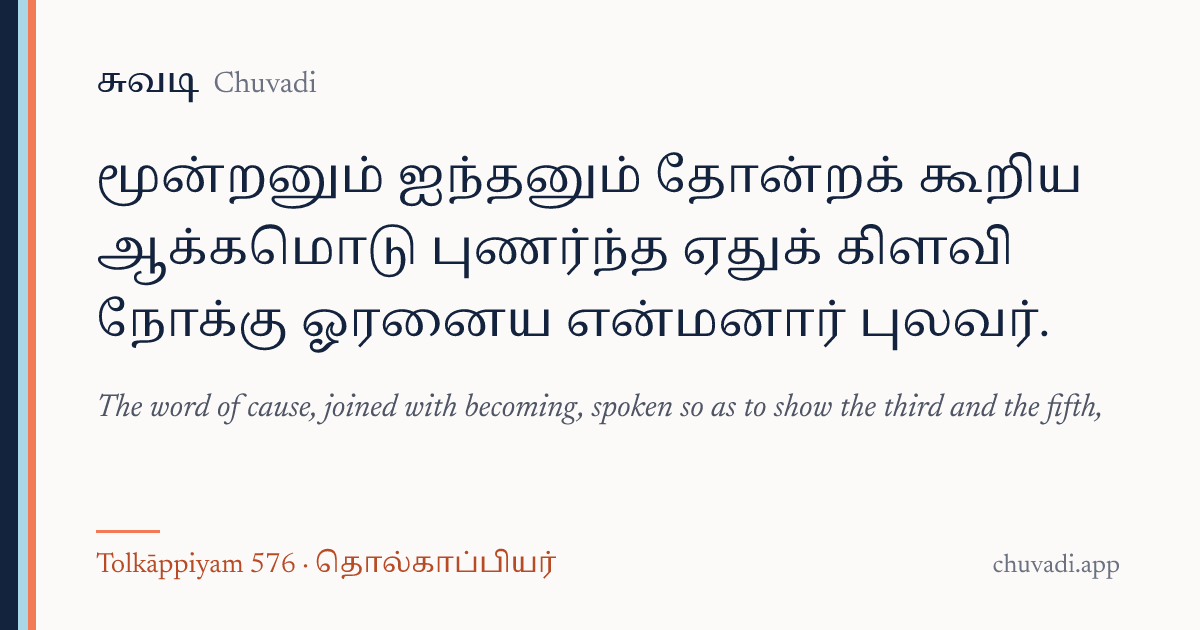
தொல்காப்பியம் 576 · சொல் 3.9
பாடல் · The poem
Tap a word to see where else it occurs.
பொருள் · Meaning in TamilAI
ஆதல் என்னும் ஆக்கப் பொருளோடு கூடி வரும் ஏதுச்சொல், மூன்றாம் வேற்றுமை உருபான ஆனையும் ஐந்தாம் வேற்றுமை உருபான இன்னையும் ஏற்கும்; இரண்டிலும் பொருள் ஒன்றே என்று புலவர் கூறுவர். வாணிகத்தான் ஆயினான், வாணிகத்தின் ஆயினான் என இரண்டும் வழங்கும்.
இளம்பூரணர்
இளம்பூரணர் ஆக்கப்பொருளோடு கூடிய ஏதுச்சொல்லுக்கு மூன்றாம் வேற்றுமையும் ஐந்தாம் வேற்றுமையும் ஒத்த பொருள் தரும் எனப் பொருள் கொள்வார்.
நச்சினார்க்கினியர்
நச்சினார்க்கினியரும் இதே பொருளைக் கொண்டு, ஆன் உருபும் இன் உருபும் ஏதுவை ஒரே முறையில் காட்டுகின்றன என்று விளக்குவார்.
நோக்கு என்பது பொருளை நோக்கும் முறை. இரண்டு உருபுகளும் ஏதுவை ஒரே முறையில் காட்டுகின்றன என்று உரையாசிரியர்கள் கொள்கின்றனர்.
ஆங்கிலம் · English translationAI
Translation
- The word of cause, joined with becoming,
- spoken so as to show the third and the fifth,
- has one and the same aspect, say the learned.
What the poem says
When a cause (ētu) is linked with a verb of becoming or gaining (ākkam), it may be marked either with the third case ending āṉ or with the fifth case ending iṉ, and the meaning is the same.
The standard illustration is "he became rich through trade": vāṇikattāṉ āyiṉāṉ with the third case, or vāṇikattiṉ āyiṉāṉ with the fifth. Nōkku here means "aspect, point of view": both endings view the cause in the same way.