



தொல்காப்பியம் 578 · சொல் 3.11
பாடல் · The poem
Tap a word to see where else it occurs.
பொருள் · Meaning in TamilAI
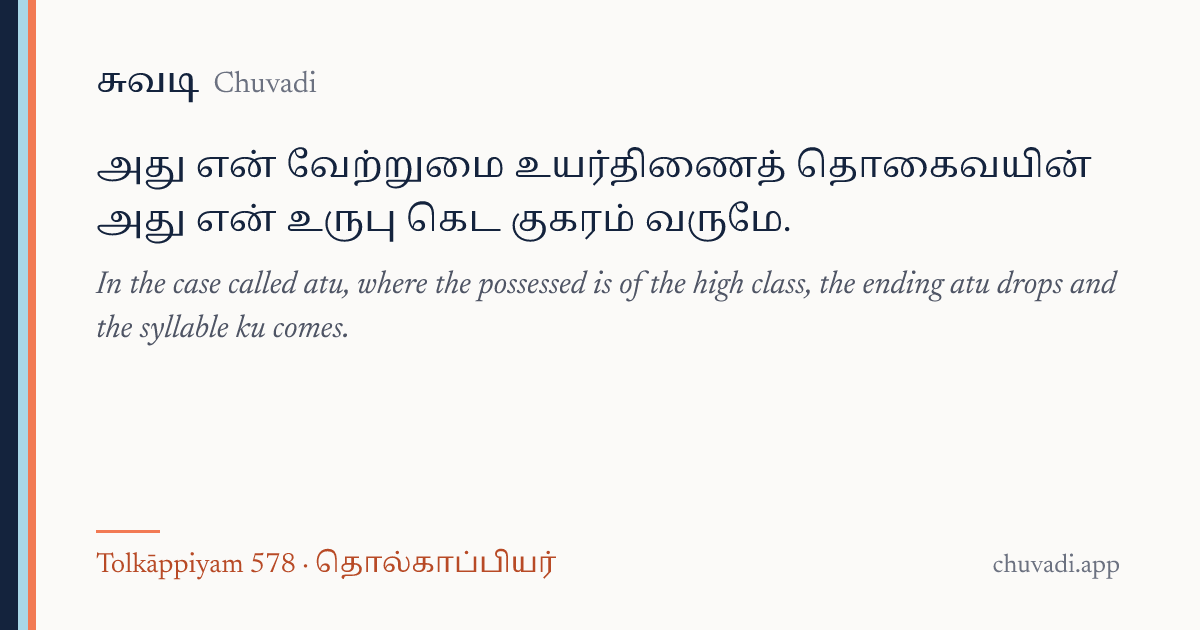
ஆறாம் வேற்றுமை உருபான அது, உடைமைப்பொருள் அஃறிணையாக இருக்கும்போதே வரும். உடைமைப்பொருள் உயர்திணையாக இருக்கும் இடத்தில் அது என்னும் உருபு நீங்கி, நான்காம் வேற்றுமை உருபான கு வரும். நம்பியது மகன் என்னாமல் நம்பிக்கு மகன் என்று சொல்லுவதே முறை.
இளம்பூரணர்
இளம்பூரணர் உடைமைப்பொருள் உயர்திணையாக வரும் தொகையில் அது உருபு கெட்டுக் கு உருபு வரும் எனப் பொருள் கொள்வார்.
நச்சினார்க்கினியர்
நச்சினார்க்கினியரும் இதே பொருளைக் கொண்டு, உறவுமுறையைக் கு உருபால் கூறும் வழக்கை இதனால் விளக்குவார்.
உறவுமுறைகளைக் குவ்வுருபால் சொல்லும் தமிழ் வழக்கை இந்நூற்பா விளக்குகிறது என்று உரையாசிரியர்கள் காட்டுவர்.
ஆங்கிலம் · English translationAI
Translation
- In the case called atu, where the possessed is of the high class,
- the ending atu drops and the syllable ku comes.
What the poem says
The genitive ending atu is used only when the thing possessed belongs to the lower class (aḵṟiṇai, things and animals). When the thing "possessed" is a person, of the higher class (uyartiṇai), atu cannot be used; the dative ku takes its place.
So one says nampikku makaṉ "son to Nampi", that is "Nampi's son", not nampiyatu makaṉ. The rule explains a familiar feature of Tamil: kinship and relations between persons are put with the dative. Tokaivayiṉ is taken as "in such a connection" rather than strictly "in a compound".