



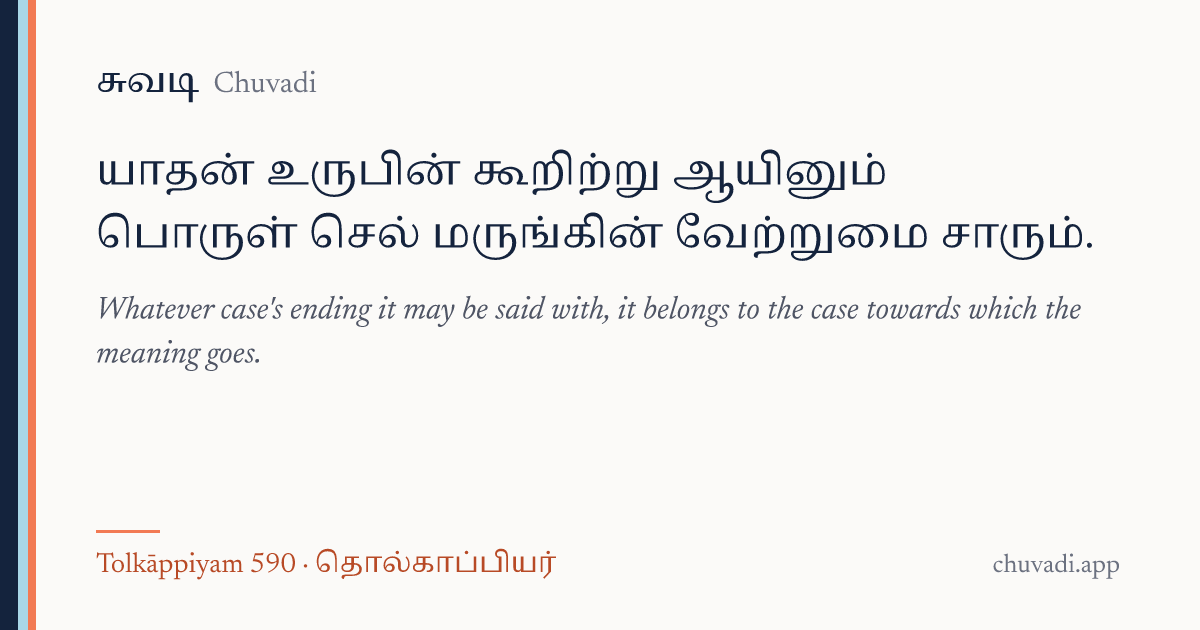
தொல்காப்பியம் 590 · சொல் 3.23
பாடல் · The poem
Tap a word to see where else it occurs.
பொருள் · Meaning in TamilAI
ஒரு சொல் எந்த வேற்றுமையின் உருபோடு கூறப்பட்டிருந்தாலும், அதன் பொருள் எந்த வேற்றுமைக்குச் செல்லுகிறதோ அந்த வேற்றுமையையே சாரும். உருபு ஒன்றாகவும் பொருள் வேறாகவும் இருந்தால் பொருளே முடிவு செய்யும்.
இளம்பூரணர்
இளம்பூரணர் ஒரு சொல் எந்த வேற்றுமை உருபோடு கூறப்பட்டிருந்தாலும் அதன் பொருள் செல்லும் வேற்றுமையையே சாரும் எனப் பொருள் கொள்வார்.
நச்சினார்க்கினியர்
நச்சினார்க்கினியரும் இதே பொருளைக் கொண்டு, உருபு ஒன்றாகவும் பொருள் வேறாகவும் இருந்தால் பொருளே வேற்றுமையைத் தீர்மானிக்கும் என்று விளக்குவார்.
இந்த இயல் முழுவதும் கூறப்படும் வேற்றுமை மயக்கங்களுக்கு இந்நூற்பா அடிப்படையாக அமைகிறது என்று கொள்ளலாம்.
ஆங்கிலம் · English translationAI
Translation
- Whatever case's ending it may be said with,
- it belongs to the case towards which the meaning goes.
What the poem says
A general principle: the case of a word is decided by its meaning, not by the outward ending it happens to wear. If a word carries the ending of one case but the sense of another, it is reckoned to the case whose meaning it expresses.
This justifies the many mixings in this chapter: an accusative ending used where the sense is locative still functions as a locative, and so on. The principle appears elsewhere in Tamil grammar too, that meaning rules over form.