



தொல்காப்பியம் 60 · எழுத்து 2.27
பாடல் · The poem
Tap a word to see where else it occurs.
பொருள் · Meaning in TamilAI
உயிரோடு கூடாத தனிமெய்கள் சொல்லுக்கு முதலாக வருவதில்லை. உயிரோடு கூடிய மெய்களே சொல்லுக்கு முதலாக வரும்.
இளம்பூரணர்
இளம்பூரணர் உயிரோடு கூடாத தனிமெய்கள் சொல்லுக்கு முதலாக வாரா என நேர்பொருள் கொள்வார்.
நச்சினார்க்கினியர்
இங்கு உயிர்மெய் என்றது தனிமெய்யிலிருந்து வேறுபடுத்திக் காட்டவே என்று விளக்குகிறார்.
ஆங்கிலம் · English translationAI
Translation
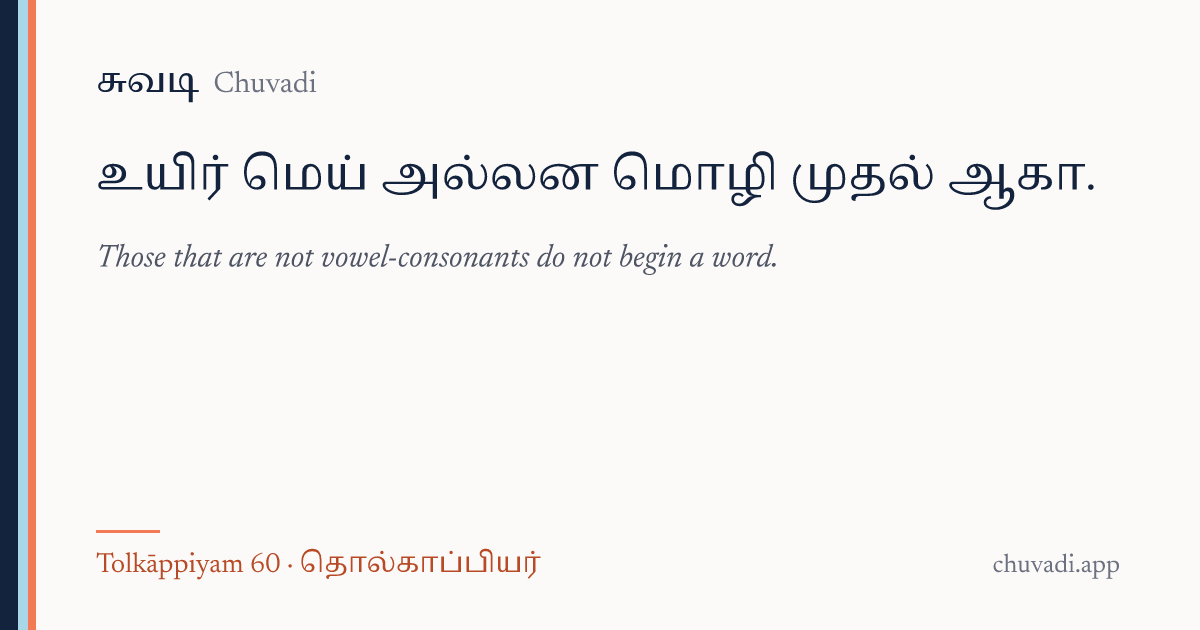
- Those that are not vowel-consonants do not begin a word.
What the poem says
A pure consonant (with the dot) never begins a word; consonants appear at the start of a word only carrying a vowel.
Nacciṉārkkiṉiyar notes that "vowel-consonant" here is used to set the combined letter apart from the bare consonant; the point is that a consonant begins a word only when joined with a vowel.
உரை · Commentary
நச்சினார்க்கினியர்
இஃது உயிர்மெய் மொழிக்கு முதலாம் என்கின்றது.
இ-ள். உயிர்மெய் அல்லன மொழிமுதல் ஆகா — உயிரோடு கூடிய மெய்யல்லாதனவாகிய தனி மெய்கள் மொழிக்கு முதலாகா எ-று:
எனவே உயிரோடுகூடிய மெய்களே மொழிக்கு முதலாவன என்றவாறாம். ஈண்டு உயிர்மெய் யென்றது வேற்றுமை நயங் கருதிற்று; ஒற்றுமை நயங்கருதின் மேலைச் சூத்திரத்து உயிரோடுகூடி ஆமென்றல் பயனின்றாம்.