



தொல்காப்பியம் 603 · சொல் 4.1
பாடல் · The poem
Tap a word to see where else it occurs.
பொருள் · Meaning in TamilAI
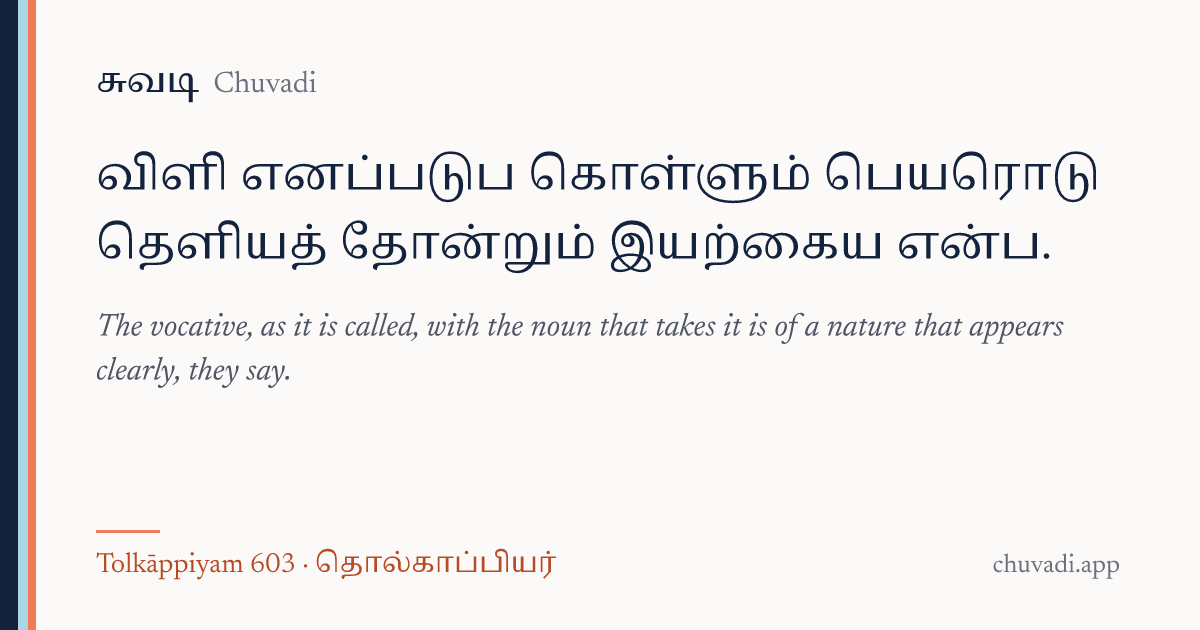
விளி என்பது தனிச்சொல் அன்று; அதனை ஏற்கும் பெயரோடு சேர்ந்தே, அப்பெயரின் மாற்றத்தால் தெளிவாகத் தோன்றும் இயல்புடையது என்று கூறுவர். ஒருவரை அழைக்கும்போது பெயரின் இறுதி நீள்வதும் மாறுவதும் இதனால் நிகழ்கிறது.
இளம்பூரணர்
இளம்பூரணர் விளி என்பது தனிச்சொல் அன்று, அதனை ஏற்கும் பெயரோடு சேர்ந்தே தெளிவாகத் தோன்றும் இயல்பினது எனப் பொருள் கொள்வார்.
நச்சினார்க்கினியர்
நச்சினார்க்கினியரும் இதே பொருளைக் கொண்டு, விளியை எட்டாம் வேற்றுமையாகக் கொண்டு இவ்வியல் பெயரின் இறுதிகளை ஒவ்வொன்றாக எடுத்து விளி அமையும் முறையைக் கூறுகிறது என்று விளக்குவார்.
விளி எட்டாம் வேற்றுமையாகக் கொள்ளப்படுகிறது. இந்த இயல் பெயர்களின் இறுதி எழுத்துகளை ஒவ்வொன்றாக எடுத்து விளி அமையும் முறையைக் கூறுகிறது.
ஆங்கிலம் · English translationAI
Translation
- The vocative, as it is called, with the noun that takes it
- is of a nature that appears clearly, they say.
What the poem says
Viḷimarapu, "the tradition of the vocative" (viḷi "calling, address"), describes how nouns change when someone is addressed. This opening nūṟpā says the vocative is not a separate word but shows itself clearly in the noun that receives it: the noun itself is altered, lengthened or extended, to mark that it is a call.
The vocative is counted in Tolkāppiyam as the eighth case (viḷi vēṟṟumai). The rest of the chapter goes through the noun endings one by one.